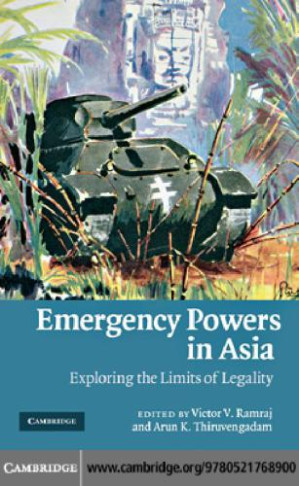
Emergency powers in Asia : exploring the limits of legality 🔍
Victor Vridar Ramraj, Arun K. Thiruvengadam
Cambridge University Press (Virtual Publishing), Cambridge [etc, 2009
英语 [en] · PDF · 3.4MB · 2009 · 📘 非小说类图书 · 🚀/lgli/lgrs/nexusstc/upload/zlib · Save
描述
Cover......Page 1
Half title......Page 3
Title......Page 5
Copyright......Page 6
Dedication......Page 7
Contents......Page 9
Contributors......Page 11
Preface......Page 13
I. Introduction......Page 15
II. Perspectives from legal and political theory......Page 18
III. Postcolonial and post-conflict transitions......Page 21
IV. Emergencies, executive power and constitutional order......Page 24
V. The role of the courts......Page 27
VI. Emergency powers in Asia: intellectual crossroads......Page 29
VII. Conclusion: out of the shadows......Page 31
Part I Perspectives from legal and political theory......Page 33
I. Introduction......Page 35
II. Contemporary theories of emergency powers......Page 37
III. Emergency powers and constitutionalism in Southeast Asia......Page 42
A. East Timor: emergency powers and post-conflict constitutionalism......Page 43
B. Thailand: emergency powers and constitutional instability......Page 48
C. Malaysia: constitutionalism and emergency powers at the crossroads......Page 52
D. Emergency powers and constitutionalism in Southeast Asia......Page 55
IV. Emergency powers, politics and the struggle for legality......Page 56
A. Existential threats and emergency powers......Page 57
B. Transitional constitutionalism and the struggle for legality......Page 59
C. The proportionality principle......Page 64
D. Final clarifications......Page 66
V. Conclusion......Page 68
I. Introduction......Page 70
II. Emergency powers: origins and transplant......Page 71
III. The case of Hong Kong......Page 79
IV. The case of Taiwan......Page 82
V. The case of South Korea......Page 86
VI. The case of mainland China......Page 93
VII. Concluding reflections......Page 96
I. Introduction......Page 103
II. Emergency as 'extraconstitution’......Page 106
A. Pakistan's 2007 judicial crisis......Page 107
B. Musharrafs 'emergency’......Page 110
C. Constitution versus 'extraconstitution’......Page 113
III. Constraining extraconstitutionality......Page 119
IV. Constitution as extraconstitution......Page 124
V. The colonial period and its legacy......Page 129
VI. Conclusion......Page 133
I. Introduction......Page 135
A. What edible-salt laws have to do with the fight against terror......Page 136
B. The compulsion to legality......Page 140
1. Law deficits and doctrinal remedies......Page 141
2. Institution deficits and Institutional reform......Page 143
3. Norm deficits and political culture remedies......Page 145
A. Producing legitimacy in exceptional moments......Page 146
B. Continuities and ruptures: the pathology of the everyday......Page 149
C. From the 'compulsion of legality’ to the 'force of law’......Page 153
IV. Conclusion: The Princely Impostor......Page 157
Part II Postcolonial and post-conflict transitions......Page 161
I. Introduction......Page 163
II. Reserve powers of the colonial masters......Page 165
A. The American influence and the Philippines......Page 166
B. The British model......Page 167
1. Burma (Myanmar)......Page 169
2. Malaysia and Singapore......Page 170
3. Brunei......Page 175
1. Vietnam......Page 177
2. Laos......Page 180
3. Cambodia......Page 181
D. Indonesia......Page 182
A. The Philippines......Page 183
B. Indonesia......Page 187
C. Burma (Myanmar)......Page 189
D. Thailand......Page 191
E. Malaysia, Singapore and Brunei......Page 194
IV. Concluding observations......Page 198
I. Introduction......Page 201
II. Historical context......Page 205
III. An epistemology of emergency......Page 208
IV. Legislating emergency......Page 211
V. The Burma Criminal Law Amendment Ordinance, monks and the Bengali connection......Page 213
VI. Debating emergency......Page 219
VII. Contemporary currents and colonial antecedents......Page 224
I. Introduction......Page 227
II. Indonesias emergency powers......Page 229
III. Emergency rule and Shari’a: empowering or constraining state authority?......Page 240
IV. From emergency rule to Islamic law......Page 245
V. Conclusion......Page 249
9 UNaccountable? The United Nations, emergency powers and the rule of law in Asia......Page 251
I. Invoking the rule of law as a response to emergency......Page 254
A. The Security Councils uses of the rule of law......Page 255
B. Applying the rule of law in East Timor......Page 260
A. Does the rule of law apply to the United Nations?......Page 266
1. Kosovo – executive detentions......Page 267
2. Targeted financial sanctions......Page 269
3. Compromising the rule of law in Afghanistan......Page 271
III. Conclusion: the 'ways of Orientals’?......Page 275
Part III Emergencies, executive power and constitutional order......Page 279
I. Introduction......Page 281
II. Emergency power in Indonesia: an overview......Page 282
III. Rule of law in Indonesia......Page 287
A. Negara hukum in Indonesia......Page 288
B. Implementing the rule of law: economic and political pressures......Page 290
C. Toward rule of law in Indonesia......Page 295
A. Under pressure......Page 298
B. Emergency response......Page 301
V. Conclusion......Page 305
I. Introduction......Page 308
II. Emergency powers: the constitutional provisions......Page 314
A. Scope of the powers......Page 315
B. Scrutiny......Page 317
D. Martial law......Page 319
III. The Internal Security Act 2007......Page 320
IV. Conclusion......Page 325
I. Introduction......Page 328
A. The prevalence of 'extra-legal’ administrative guidance......Page 331
B. Judicial review as facilitator of executive action......Page 335
C. The constraining effects of factionalism and consensus politics......Page 339
III. The limits of constitutionalism......Page 342
IV. Carving a space for the exception and constitutional politics......Page 347
I. The puzzle of emergency powers law in a 'Chinese-style’ regime......Page 356
II. Limiting damage to the '(socialist) rule of law’ project......Page 359
A. Establishing legal frameworks for emergency powers......Page 361
B. 'Incidents’ and exceptional powers without 'emergencies’......Page 368
III. Creating state power through law......Page 370
A. Authorising and defining emergency powers......Page 371
B. Strengthening state institutions and central control......Page 374
IV. Pursuing substantive priorities......Page 378
A. Preserving social and political order......Page 379
B. Sustaining economic growth......Page 383
V. Drawing on laws legitimacy......Page 384
VI. Constraining the state?......Page 389
A. Power-creating law as state-limiting law......Page 390
B. Substantive justifications as narrowing constructions......Page 393
C. Rights-protecting law, laws legitimacy and critiquing the state......Page 396
VII. Conclusion: emergency powers and emerging legality......Page 402
Part IV The role of the courts......Page 405
II. The dilemmas of constitutionalised emergency powers......Page 407
B. Abuse of emergency powers......Page 408
C. Entrenched emergency powers and constitutionalism......Page 410
D. Constitutionalised emergency powers and constitutional amendments......Page 413
III. Emergency powers as non-entrenched powers......Page 415
A. The case for ordinary emergency powers......Page 416
B. Ordinary emergency powers and proportionality......Page 417
C. Ordinary emergency powers: objections and refutations......Page 421
IV. Conclusion......Page 423
I. Introduction......Page 426
II. Historical and doctrinal context......Page 427
A. Survey of the constitutional history......Page 428
B. Institutionalised emergency under Marcos......Page 430
C. The post-Marcos Constitution: institutional checks on emergency powers......Page 433
1. The commander-in-chief clause......Page 434
3. Economic emergencies clause......Page 436
D. Arroyos 'rule-of-law’ brinkmanship: formalism pushed to the hilt......Page 437
1. Arroyo: textual compliance, normative evasion......Page 438
2. Dismal human rights record......Page 443
III. A nation of juridical 'schizoids’: pre-emption, subterfuge and -doing without naming’......Page 444
IV. Conclusion......Page 447
I. Introduction......Page 450
II. A.R. Cornelius......Page 453
III. Litigation during the first emergency......Page 455
IV. Opinions written after the first imposition of martial law......Page 458
V. Dialogue with the executive......Page 465
VI. The explicit turn to Islamism......Page 467
VII. The further evolution of Corneliuss thought......Page 473
VIII. Criticism of Cornelius and the declining awareness of his Islamist tendencies......Page 475
IX. Conclusion......Page 476
I. Introduction......Page 480
II. The shift in the conventional view: judicial checks on emergency powers post-9/11......Page 483
III. Post-independence India and emergency laws......Page 486
IV. Recent trends in judicial review in Asia......Page 495
V. Judicial review of emergency powers? Recent cases from India......Page 500
VI. Normative reasons for strong judicial review of emergency powers......Page 503
VII. Conclusion......Page 508
Index......Page 509
Half title......Page 3
Title......Page 5
Copyright......Page 6
Dedication......Page 7
Contents......Page 9
Contributors......Page 11
Preface......Page 13
I. Introduction......Page 15
II. Perspectives from legal and political theory......Page 18
III. Postcolonial and post-conflict transitions......Page 21
IV. Emergencies, executive power and constitutional order......Page 24
V. The role of the courts......Page 27
VI. Emergency powers in Asia: intellectual crossroads......Page 29
VII. Conclusion: out of the shadows......Page 31
Part I Perspectives from legal and political theory......Page 33
I. Introduction......Page 35
II. Contemporary theories of emergency powers......Page 37
III. Emergency powers and constitutionalism in Southeast Asia......Page 42
A. East Timor: emergency powers and post-conflict constitutionalism......Page 43
B. Thailand: emergency powers and constitutional instability......Page 48
C. Malaysia: constitutionalism and emergency powers at the crossroads......Page 52
D. Emergency powers and constitutionalism in Southeast Asia......Page 55
IV. Emergency powers, politics and the struggle for legality......Page 56
A. Existential threats and emergency powers......Page 57
B. Transitional constitutionalism and the struggle for legality......Page 59
C. The proportionality principle......Page 64
D. Final clarifications......Page 66
V. Conclusion......Page 68
I. Introduction......Page 70
II. Emergency powers: origins and transplant......Page 71
III. The case of Hong Kong......Page 79
IV. The case of Taiwan......Page 82
V. The case of South Korea......Page 86
VI. The case of mainland China......Page 93
VII. Concluding reflections......Page 96
I. Introduction......Page 103
II. Emergency as 'extraconstitution’......Page 106
A. Pakistan's 2007 judicial crisis......Page 107
B. Musharrafs 'emergency’......Page 110
C. Constitution versus 'extraconstitution’......Page 113
III. Constraining extraconstitutionality......Page 119
IV. Constitution as extraconstitution......Page 124
V. The colonial period and its legacy......Page 129
VI. Conclusion......Page 133
I. Introduction......Page 135
A. What edible-salt laws have to do with the fight against terror......Page 136
B. The compulsion to legality......Page 140
1. Law deficits and doctrinal remedies......Page 141
2. Institution deficits and Institutional reform......Page 143
3. Norm deficits and political culture remedies......Page 145
A. Producing legitimacy in exceptional moments......Page 146
B. Continuities and ruptures: the pathology of the everyday......Page 149
C. From the 'compulsion of legality’ to the 'force of law’......Page 153
IV. Conclusion: The Princely Impostor......Page 157
Part II Postcolonial and post-conflict transitions......Page 161
I. Introduction......Page 163
II. Reserve powers of the colonial masters......Page 165
A. The American influence and the Philippines......Page 166
B. The British model......Page 167
1. Burma (Myanmar)......Page 169
2. Malaysia and Singapore......Page 170
3. Brunei......Page 175
1. Vietnam......Page 177
2. Laos......Page 180
3. Cambodia......Page 181
D. Indonesia......Page 182
A. The Philippines......Page 183
B. Indonesia......Page 187
C. Burma (Myanmar)......Page 189
D. Thailand......Page 191
E. Malaysia, Singapore and Brunei......Page 194
IV. Concluding observations......Page 198
I. Introduction......Page 201
II. Historical context......Page 205
III. An epistemology of emergency......Page 208
IV. Legislating emergency......Page 211
V. The Burma Criminal Law Amendment Ordinance, monks and the Bengali connection......Page 213
VI. Debating emergency......Page 219
VII. Contemporary currents and colonial antecedents......Page 224
I. Introduction......Page 227
II. Indonesias emergency powers......Page 229
III. Emergency rule and Shari’a: empowering or constraining state authority?......Page 240
IV. From emergency rule to Islamic law......Page 245
V. Conclusion......Page 249
9 UNaccountable? The United Nations, emergency powers and the rule of law in Asia......Page 251
I. Invoking the rule of law as a response to emergency......Page 254
A. The Security Councils uses of the rule of law......Page 255
B. Applying the rule of law in East Timor......Page 260
A. Does the rule of law apply to the United Nations?......Page 266
1. Kosovo – executive detentions......Page 267
2. Targeted financial sanctions......Page 269
3. Compromising the rule of law in Afghanistan......Page 271
III. Conclusion: the 'ways of Orientals’?......Page 275
Part III Emergencies, executive power and constitutional order......Page 279
I. Introduction......Page 281
II. Emergency power in Indonesia: an overview......Page 282
III. Rule of law in Indonesia......Page 287
A. Negara hukum in Indonesia......Page 288
B. Implementing the rule of law: economic and political pressures......Page 290
C. Toward rule of law in Indonesia......Page 295
A. Under pressure......Page 298
B. Emergency response......Page 301
V. Conclusion......Page 305
I. Introduction......Page 308
II. Emergency powers: the constitutional provisions......Page 314
A. Scope of the powers......Page 315
B. Scrutiny......Page 317
D. Martial law......Page 319
III. The Internal Security Act 2007......Page 320
IV. Conclusion......Page 325
I. Introduction......Page 328
A. The prevalence of 'extra-legal’ administrative guidance......Page 331
B. Judicial review as facilitator of executive action......Page 335
C. The constraining effects of factionalism and consensus politics......Page 339
III. The limits of constitutionalism......Page 342
IV. Carving a space for the exception and constitutional politics......Page 347
I. The puzzle of emergency powers law in a 'Chinese-style’ regime......Page 356
II. Limiting damage to the '(socialist) rule of law’ project......Page 359
A. Establishing legal frameworks for emergency powers......Page 361
B. 'Incidents’ and exceptional powers without 'emergencies’......Page 368
III. Creating state power through law......Page 370
A. Authorising and defining emergency powers......Page 371
B. Strengthening state institutions and central control......Page 374
IV. Pursuing substantive priorities......Page 378
A. Preserving social and political order......Page 379
B. Sustaining economic growth......Page 383
V. Drawing on laws legitimacy......Page 384
VI. Constraining the state?......Page 389
A. Power-creating law as state-limiting law......Page 390
B. Substantive justifications as narrowing constructions......Page 393
C. Rights-protecting law, laws legitimacy and critiquing the state......Page 396
VII. Conclusion: emergency powers and emerging legality......Page 402
Part IV The role of the courts......Page 405
II. The dilemmas of constitutionalised emergency powers......Page 407
B. Abuse of emergency powers......Page 408
C. Entrenched emergency powers and constitutionalism......Page 410
D. Constitutionalised emergency powers and constitutional amendments......Page 413
III. Emergency powers as non-entrenched powers......Page 415
A. The case for ordinary emergency powers......Page 416
B. Ordinary emergency powers and proportionality......Page 417
C. Ordinary emergency powers: objections and refutations......Page 421
IV. Conclusion......Page 423
I. Introduction......Page 426
II. Historical and doctrinal context......Page 427
A. Survey of the constitutional history......Page 428
B. Institutionalised emergency under Marcos......Page 430
C. The post-Marcos Constitution: institutional checks on emergency powers......Page 433
1. The commander-in-chief clause......Page 434
3. Economic emergencies clause......Page 436
D. Arroyos 'rule-of-law’ brinkmanship: formalism pushed to the hilt......Page 437
1. Arroyo: textual compliance, normative evasion......Page 438
2. Dismal human rights record......Page 443
III. A nation of juridical 'schizoids’: pre-emption, subterfuge and -doing without naming’......Page 444
IV. Conclusion......Page 447
I. Introduction......Page 450
II. A.R. Cornelius......Page 453
III. Litigation during the first emergency......Page 455
IV. Opinions written after the first imposition of martial law......Page 458
V. Dialogue with the executive......Page 465
VI. The explicit turn to Islamism......Page 467
VII. The further evolution of Corneliuss thought......Page 473
VIII. Criticism of Cornelius and the declining awareness of his Islamist tendencies......Page 475
IX. Conclusion......Page 476
I. Introduction......Page 480
II. The shift in the conventional view: judicial checks on emergency powers post-9/11......Page 483
III. Post-independence India and emergency laws......Page 486
IV. Recent trends in judicial review in Asia......Page 495
V. Judicial review of emergency powers? Recent cases from India......Page 500
VI. Normative reasons for strong judicial review of emergency powers......Page 503
VII. Conclusion......Page 508
Index......Page 509
备用文件名
lgli/shared\9780511765384.pdf
备用文件名
lgrsnf/shared\9780511765384.pdf
备用文件名
nexusstc/Emergency powers in Asia : exploring the limits of legality/f44e6ad3a8fb1eb8d8cd5566bcd71012.pdf
备用文件名
zlib/no-category/Victor Vridar Ramraj; Arun K Thiruvengadam/Emergency powers in Asia : exploring the limits of legality_2073680.pdf
备选作者
LaTeX with hyperref package + hypdvips
备用出版商
Greenwich Medical Media Ltd
备用版本
United Kingdom and Ireland, United Kingdom
元数据中的注释
lg919413
元数据中的注释
producers:
dvips + Distiller
dvips + Distiller
元数据中的注释
{"isbns":["051176538X","9780511765384"],"last_page":531,"publisher":"Cambridge University Press"}
备用描述
VICTOR V. RAMRAJ and ARUN K. THIRUVENGADAM
Cover 1
Half title 3
Title 5
Copyright 6
Dedication 7
Contents 9
Contributors 11
Preface 13
1 Introduction: emergency powers and constitutionalism in Asia 15
I. Introduction 15
II. Perspectives from legal and political theory 18
III. Postcolonial and post-conflict transitions 21
IV. Emergencies, executive power and constitutional order 24
V. The role of the courts 27
VI. Emergency powers in Asia: intellectual crossroads 29
VII. Conclusion: out of the shadows 31
Part I Perspectives from legal and political theory 33
2 The emergency powers paradox 35
I. Introduction 35
II. Contemporary theories of emergency powers 37
III. Emergency powers and constitutionalism in Southeast Asia 42
A. East Timor: emergency powers and post-conflict constitutionalism 43
B. Thailand: emergency powers and constitutional instability 48
C. Malaysia: constitutionalism and emergency powers at the crossroads 52
D. Emergency powers and constitutionalism in Southeast Asia 55
IV. Emergency powers, politics and the struggle for legality 56
A. Existential threats and emergency powers 57
B. Transitional constitutionalism and the struggle for legality 59
C. The proportionality principle 64
D. Final clarifications 66
V. Conclusion 68
3 Emergency powers, constitutionalism and legal transplants: the East Asian experience 70
I. Introduction 70
II. Emergency powers: origins and transplant 71
III. The case of Hong Kong 79
IV. The case of Taiwan 82
V. The case of South Korea 86
VI. The case of mainland China 93
VII. Concluding reflections 96
4 Constitution and 'extraconstitution’: colonial emergency regimes in postcolonial India and Pakistan 103
I. Introduction 103
II. Emergency as 'extraconstitution’ 106
A. Pakistan's 2007 judicial crisis 107
B. Musharrafs 'emergency’ 110
C. Constitution versus 'extraconstitution’ 113
III. Constraining extraconstitutionality 119
IV. Constitution as extraconstitution 124
V. The colonial period and its legacy 129
VI. Conclusion 133
5 The princely impostor: stories of law and pathology in the exercise of emergency powers 135
I. Introduction 135
II. Producing a state of emergency 136
A. What edible-salt laws have to do with the fight against terror 136
B. The compulsion to legality 140
1. Law deficits and doctrinal remedies 141
2. Institution deficits and Institutional reform 143
3. Norm deficits and political culture remedies 145
III. Crisis constitutionalism 146
A. Producing legitimacy in exceptional moments 146
B. Continuities and ruptures: the pathology of the everyday 149
C. From the 'compulsion of legality’ to the 'force of law’ 153
IV. Conclusion: The Princely Impostor 157
Part II Postcolonial and post-conflict transitions 161
6 From Myanmar to Manila: a brief study of emergency powers in Southeast Asia 163
I. Introduction 163
II. Reserve powers of the colonial masters 165
A. The American influence and the Philippines 166
B. The British model 167
1. Burma (Myanmar) 169
2. Malaysia and Singapore 170
3. Brunei 175
C. The 'communisation’ of French Indochina 177
1. Vietnam 177
2. Laos 180
3. Cambodia 181
D. Indonesia 182
III. Postcolonial developments 183
A. The Philippines 183
B. Indonesia 187
C. Burma (Myanmar) 189
D. Thailand 191
E. Malaysia, Singapore and Brunei 194
IV. Concluding observations 198
7 Discourses of emergency in colonial and postcolonial Burma 201
I. Introduction 201
II. Historical context 205
III. An epistemology of emergency 208
IV. Legislating emergency 211
V. The Burma Criminal Law Amendment Ordinance, monks and the Bengali connection 213
VI. Debating emergency 219
VII. Contemporary currents and colonial antecedents 224
8 Emergency and Islamic law in Aceh 227
I. Introduction 227
II. Indonesias emergency powers 229
III. Emergency rule and Shari’a: empowering or constraining state authority? 240
IV. From emergency rule to Islamic law 245
V. Conclusion 249
9 UNaccountable? The United Nations, emergency powers and the rule of law in Asia 251
I. Invoking the rule of law as a response to emergency 254
A. The Security Councils uses of the rule of law 255
B. Applying the rule of law in East Timor 260
II. Compromising the rule of law because of emergency 266
A. Does the rule of law apply to the United Nations? 266
1. Kosovo – executive detentions 267
2. Targeted financial sanctions 269
3. Compromising the rule of law in Afghanistan 271
III. Conclusion: the 'ways of Orientals’? 275
Part III Emergencies, executive power and constitutional order 279
10 Emergency powers and the rule of law in Indonesia 281
I. Introduction 281
II. Emergency power in Indonesia: an overview 282
III. Rule of law in Indonesia 287
A. Negara hukum in Indonesia 288
B. Implementing the rule of law: economic and political pressures 290
C. Toward rule of law in Indonesia 295
IV. Post 911 and Indonesias dilemma 298
A. Under pressure 298
B. Emergency response 301
V. Conclusion 305
11 Emergency powers with a moustache: special powers, military rule and evolving constitutionalism in Thailand 308
I. Introduction 308
II. Emergency powers: the constitutional provisions 314
A. Scope of the powers 315
B. Scrutiny 317
C. Relationship to fundamental rights 319
D. Martial law 319
III. The Internal Security Act 2007 320
IV. Conclusion 325
12 Emergency powers and the limits of constitutionalism in Japan 328
I. Introduction 328
II. The developmental state, the rule of law and emergencies 331
A. The prevalence of 'extra-legal’ administrative guidance 331
B. Judicial review as facilitator of executive action 335
C. The constraining effects of factionalism and consensus politics 339
III. The limits of constitutionalism 342
IV. Carving a space for the exception and constitutional politics 347
13 States of exception in an exceptional state: emergency powers law in China 356
I. The puzzle of emergency powers law in a 'Chinese-style’ regime 356
II. Limiting damage to the '(socialist) rule of law’ project 359
A. Establishing legal frameworks for emergency powers 361
B. 'Incidents’ and exceptional powers without 'emergencies’ 368
III. Creating state power through law 370
A. Authorising and defining emergency powers 371
B. Strengthening state institutions and central control 374
IV. Pursuing substantive priorities 378
A. Preserving social and political order 379
B. Sustaining economic growth 383
V. Drawing on laws legitimacy 384
VI. Constraining the state? 389
A. Power-creating law as state-limiting law 390
B. Substantive justifications as narrowing constructions 393
C. Rights-protecting law, laws legitimacy and critiquing the state 396
VII. Conclusion: emergency powers and emerging legality 402
Part IV The role of the courts 405
14 Constitutionalised emergency powers: a plague on Asian constitutionalism? 407
I. Introduction 407
II. The dilemmas of constitutionalised emergency powers 407
A. Constitutionalised emergency powers: general features 408
B. Abuse of emergency powers 408
C. Entrenched emergency powers and constitutionalism 410
D. Constitutionalised emergency powers and constitutional amendments 413
III. Emergency powers as non-entrenched powers 415
A. The case for ordinary emergency powers 416
B. Ordinary emergency powers and proportionality 417
C. Ordinary emergency powers: objections and refutations 421
IV. Conclusion 423
15 Political emergencies in the Philippines: changing labels and the unchanging need for legitimacy 426
I. Introduction 426
II. Historical and doctrinal context 427
A. Survey of the constitutional history 428
B. Institutionalised emergency under Marcos 430
C. The post-Marcos Constitution: institutional checks on emergency powers 433
1. The commander-in-chief clause 434
2. War powers clause 436
3. Economic emergencies clause 436
D. Arroyos 'rule-of-law’ brinkmanship: formalism pushed to the hilt 437
1. Arroyo: textual compliance, normative evasion 438
2. Dismal human rights record 443
III. A nation of juridical 'schizoids’: pre-emption, subterfuge and -doing without naming’ 444
IV. Conclusion 447
16 Islamism as a response to emergency rule in Pakistan: the surprising proposal of Justice A.R. Cornelius 450
I. Introduction 450
II. A.R. Cornelius 453
III. Litigation during the first emergency 455
IV. Opinions written after the first imposition of martial law 458
V. Dialogue with the executive 465
VI. The explicit turn to Islamism 467
VII. The further evolution of Corneliuss thought 473
VIII. Criticism of Cornelius and the declining awareness of his Islamist tendencies 475
IX. Conclusion 476
17 Asian judiciaries and emergency powers: reasons for optimism? 480
I. Introduction 480
II. The shift in the conventional view: judicial checks on emergency powers post-9/11 483
III. Post-independence India and emergency laws 486
IV. Recent trends in judicial review in Asia 495
V. Judicial review of emergency powers? Recent cases from India 500
VI. Normative reasons for strong judicial review of emergency powers 503
VII. Conclusion 508
Index 509
Cover 1
Half title 3
Title 5
Copyright 6
Dedication 7
Contents 9
Contributors 11
Preface 13
1 Introduction: emergency powers and constitutionalism in Asia 15
I. Introduction 15
II. Perspectives from legal and political theory 18
III. Postcolonial and post-conflict transitions 21
IV. Emergencies, executive power and constitutional order 24
V. The role of the courts 27
VI. Emergency powers in Asia: intellectual crossroads 29
VII. Conclusion: out of the shadows 31
Part I Perspectives from legal and political theory 33
2 The emergency powers paradox 35
I. Introduction 35
II. Contemporary theories of emergency powers 37
III. Emergency powers and constitutionalism in Southeast Asia 42
A. East Timor: emergency powers and post-conflict constitutionalism 43
B. Thailand: emergency powers and constitutional instability 48
C. Malaysia: constitutionalism and emergency powers at the crossroads 52
D. Emergency powers and constitutionalism in Southeast Asia 55
IV. Emergency powers, politics and the struggle for legality 56
A. Existential threats and emergency powers 57
B. Transitional constitutionalism and the struggle for legality 59
C. The proportionality principle 64
D. Final clarifications 66
V. Conclusion 68
3 Emergency powers, constitutionalism and legal transplants: the East Asian experience 70
I. Introduction 70
II. Emergency powers: origins and transplant 71
III. The case of Hong Kong 79
IV. The case of Taiwan 82
V. The case of South Korea 86
VI. The case of mainland China 93
VII. Concluding reflections 96
4 Constitution and 'extraconstitution’: colonial emergency regimes in postcolonial India and Pakistan 103
I. Introduction 103
II. Emergency as 'extraconstitution’ 106
A. Pakistan's 2007 judicial crisis 107
B. Musharrafs 'emergency’ 110
C. Constitution versus 'extraconstitution’ 113
III. Constraining extraconstitutionality 119
IV. Constitution as extraconstitution 124
V. The colonial period and its legacy 129
VI. Conclusion 133
5 The princely impostor: stories of law and pathology in the exercise of emergency powers 135
I. Introduction 135
II. Producing a state of emergency 136
A. What edible-salt laws have to do with the fight against terror 136
B. The compulsion to legality 140
1. Law deficits and doctrinal remedies 141
2. Institution deficits and Institutional reform 143
3. Norm deficits and political culture remedies 145
III. Crisis constitutionalism 146
A. Producing legitimacy in exceptional moments 146
B. Continuities and ruptures: the pathology of the everyday 149
C. From the 'compulsion of legality’ to the 'force of law’ 153
IV. Conclusion: The Princely Impostor 157
Part II Postcolonial and post-conflict transitions 161
6 From Myanmar to Manila: a brief study of emergency powers in Southeast Asia 163
I. Introduction 163
II. Reserve powers of the colonial masters 165
A. The American influence and the Philippines 166
B. The British model 167
1. Burma (Myanmar) 169
2. Malaysia and Singapore 170
3. Brunei 175
C. The 'communisation’ of French Indochina 177
1. Vietnam 177
2. Laos 180
3. Cambodia 181
D. Indonesia 182
III. Postcolonial developments 183
A. The Philippines 183
B. Indonesia 187
C. Burma (Myanmar) 189
D. Thailand 191
E. Malaysia, Singapore and Brunei 194
IV. Concluding observations 198
7 Discourses of emergency in colonial and postcolonial Burma 201
I. Introduction 201
II. Historical context 205
III. An epistemology of emergency 208
IV. Legislating emergency 211
V. The Burma Criminal Law Amendment Ordinance, monks and the Bengali connection 213
VI. Debating emergency 219
VII. Contemporary currents and colonial antecedents 224
8 Emergency and Islamic law in Aceh 227
I. Introduction 227
II. Indonesias emergency powers 229
III. Emergency rule and Shari’a: empowering or constraining state authority? 240
IV. From emergency rule to Islamic law 245
V. Conclusion 249
9 UNaccountable? The United Nations, emergency powers and the rule of law in Asia 251
I. Invoking the rule of law as a response to emergency 254
A. The Security Councils uses of the rule of law 255
B. Applying the rule of law in East Timor 260
II. Compromising the rule of law because of emergency 266
A. Does the rule of law apply to the United Nations? 266
1. Kosovo – executive detentions 267
2. Targeted financial sanctions 269
3. Compromising the rule of law in Afghanistan 271
III. Conclusion: the 'ways of Orientals’? 275
Part III Emergencies, executive power and constitutional order 279
10 Emergency powers and the rule of law in Indonesia 281
I. Introduction 281
II. Emergency power in Indonesia: an overview 282
III. Rule of law in Indonesia 287
A. Negara hukum in Indonesia 288
B. Implementing the rule of law: economic and political pressures 290
C. Toward rule of law in Indonesia 295
IV. Post 911 and Indonesias dilemma 298
A. Under pressure 298
B. Emergency response 301
V. Conclusion 305
11 Emergency powers with a moustache: special powers, military rule and evolving constitutionalism in Thailand 308
I. Introduction 308
II. Emergency powers: the constitutional provisions 314
A. Scope of the powers 315
B. Scrutiny 317
C. Relationship to fundamental rights 319
D. Martial law 319
III. The Internal Security Act 2007 320
IV. Conclusion 325
12 Emergency powers and the limits of constitutionalism in Japan 328
I. Introduction 328
II. The developmental state, the rule of law and emergencies 331
A. The prevalence of 'extra-legal’ administrative guidance 331
B. Judicial review as facilitator of executive action 335
C. The constraining effects of factionalism and consensus politics 339
III. The limits of constitutionalism 342
IV. Carving a space for the exception and constitutional politics 347
13 States of exception in an exceptional state: emergency powers law in China 356
I. The puzzle of emergency powers law in a 'Chinese-style’ regime 356
II. Limiting damage to the '(socialist) rule of law’ project 359
A. Establishing legal frameworks for emergency powers 361
B. 'Incidents’ and exceptional powers without 'emergencies’ 368
III. Creating state power through law 370
A. Authorising and defining emergency powers 371
B. Strengthening state institutions and central control 374
IV. Pursuing substantive priorities 378
A. Preserving social and political order 379
B. Sustaining economic growth 383
V. Drawing on laws legitimacy 384
VI. Constraining the state? 389
A. Power-creating law as state-limiting law 390
B. Substantive justifications as narrowing constructions 393
C. Rights-protecting law, laws legitimacy and critiquing the state 396
VII. Conclusion: emergency powers and emerging legality 402
Part IV The role of the courts 405
14 Constitutionalised emergency powers: a plague on Asian constitutionalism? 407
I. Introduction 407
II. The dilemmas of constitutionalised emergency powers 407
A. Constitutionalised emergency powers: general features 408
B. Abuse of emergency powers 408
C. Entrenched emergency powers and constitutionalism 410
D. Constitutionalised emergency powers and constitutional amendments 413
III. Emergency powers as non-entrenched powers 415
A. The case for ordinary emergency powers 416
B. Ordinary emergency powers and proportionality 417
C. Ordinary emergency powers: objections and refutations 421
IV. Conclusion 423
15 Political emergencies in the Philippines: changing labels and the unchanging need for legitimacy 426
I. Introduction 426
II. Historical and doctrinal context 427
A. Survey of the constitutional history 428
B. Institutionalised emergency under Marcos 430
C. The post-Marcos Constitution: institutional checks on emergency powers 433
1. The commander-in-chief clause 434
2. War powers clause 436
3. Economic emergencies clause 436
D. Arroyos 'rule-of-law’ brinkmanship: formalism pushed to the hilt 437
1. Arroyo: textual compliance, normative evasion 438
2. Dismal human rights record 443
III. A nation of juridical 'schizoids’: pre-emption, subterfuge and -doing without naming’ 444
IV. Conclusion 447
16 Islamism as a response to emergency rule in Pakistan: the surprising proposal of Justice A.R. Cornelius 450
I. Introduction 450
II. A.R. Cornelius 453
III. Litigation during the first emergency 455
IV. Opinions written after the first imposition of martial law 458
V. Dialogue with the executive 465
VI. The explicit turn to Islamism 467
VII. The further evolution of Corneliuss thought 473
VIII. Criticism of Cornelius and the declining awareness of his Islamist tendencies 475
IX. Conclusion 476
17 Asian judiciaries and emergency powers: reasons for optimism? 480
I. Introduction 480
II. The shift in the conventional view: judicial checks on emergency powers post-9/11 483
III. Post-independence India and emergency laws 486
IV. Recent trends in judicial review in Asia 495
V. Judicial review of emergency powers? Recent cases from India 500
VI. Normative reasons for strong judicial review of emergency powers 503
VII. Conclusion 508
Index 509
开源日期
2013-05-13
🚀 快速下载
成为会员以支持书籍、论文等的长期保存。为了感谢您对我们的支持,您将获得高速下载权益。❤️
如果您在本月捐款,您将获得双倍的快速下载次数。
🐢 低速下载
由可信的合作方提供。 更多信息请参见常见问题解答。 (可能需要验证浏览器——无限次下载!)
- 低速服务器(合作方提供) #1 (稍快但需要排队)
- 低速服务器(合作方提供) #2 (稍快但需要排队)
- 低速服务器(合作方提供) #3 (稍快但需要排队)
- 低速服务器(合作方提供) #4 (稍快但需要排队)
- 低速服务器(合作方提供) #5 (无需排队,但可能非常慢)
- 低速服务器(合作方提供) #6 (无需排队,但可能非常慢)
- 低速服务器(合作方提供) #7 (无需排队,但可能非常慢)
- 低速服务器(合作方提供) #8 (无需排队,但可能非常慢)
- 低速服务器(合作方提供) #9 (无需排队,但可能非常慢)
- 下载后: 在我们的查看器中打开
所有选项下载的文件都相同,应该可以安全使用。即使这样,从互联网下载文件时始终要小心。例如,确保您的设备更新及时。
外部下载
-
对于大文件,我们建议使用下载管理器以防止中断。
推荐的下载管理器:JDownloader -
您将需要一个电子书或 PDF 阅读器来打开文件,具体取决于文件格式。
推荐的电子书阅读器:Anna的档案在线查看器、ReadEra和Calibre -
使用在线工具进行格式转换。
推荐的转换工具:CloudConvert和PrintFriendly -
您可以将 PDF 和 EPUB 文件发送到您的 Kindle 或 Kobo 电子阅读器。
推荐的工具:亚马逊的“发送到 Kindle”和djazz 的“发送到 Kobo/Kindle” -
支持作者和图书馆
✍️ 如果您喜欢这个并且能够负担得起,请考虑购买原版,或直接支持作者。
📚 如果您当地的图书馆有这本书,请考虑在那里免费借阅。
下面的文字仅以英文继续。
总下载量:
“文件的MD5”是根据文件内容计算出的哈希值,并且基于该内容具有相当的唯一性。我们这里索引的所有影子图书馆都主要使用MD5来标识文件。
一个文件可能会出现在多个影子图书馆中。有关我们编译的各种数据集的信息,请参见数据集页面。
有关此文件的详细信息,请查看其JSON 文件。 Live/debug JSON version. Live/debug page.