nexusstc/Strategic Analysis Of U.S. Special Operations During The Korean Conflict/460d06ef9aaecb8b20d233ac773fbd78.epub
Strategic analysis of U.S. special operations during the Korean Conflict, 1950-1953 🔍
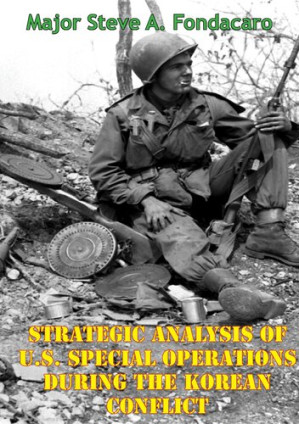
Major Steve A. Fondacaro
Pickle Partners Publishing : Made available through hoopla, INscribe Digital, San Francisco, 2015
英语 [en] · EPUB · 2.1MB · 2015 · 📘 非小说类图书 · 🚀/lgli/lgrs/nexusstc/zlib · Save
描述
This study analyzes the strategic effectiveness of special operations conducted by the Far East Command (FECOM) and the Central Intelligence Agency (CIA) in Korea during the Korean Conflict from 1950 to 1953. Each organization's effectiveness is determined by examining the areas of strategy, organization and operations. Special operations as defined in Joint Chiefs of Staff Publication Number 2, Unified Action Armed Forces (UNAAF) was the standard by which operations were selected for examination. The study answers four questions: 1) What were the U.N. Command strategic objectives within the Korean theater, and how did these change? , 2) How these changing strategic objectives development and coordination of special operations objectives, forces and headquarters?, 3) What did U.S. special operations in Korea accomplish strategically? 4) What conclusions can be drawn from U.S. special operations forces' effectiveness or ineffectiveness in Korea?
FECOM special operations were limited to partisan operations and psychological operations. The partisans consisted of anti-communist North Koreans organized and led by U.S. cadre beginning in January, 1951. Psychological operations were conducted continuously from July, 1950 by a separate staff element whose capabilities expanded dramatically during the course of the conflict. CIA operations within Korea consisted of intelligence gathering and special (or covert) activities controlled from headquarters in Japan. CIA operations remained autonomous of FECOM control throughout the conflict. The control issue was the source of bureaucratic conflict that inhibited operational coordination between FECOM and CIA throughout the conflict.
FECOM special operations were limited to partisan operations and psychological operations. The partisans consisted of anti-communist North Koreans organized and led by U.S. cadre beginning in January, 1951. Psychological operations were conducted continuously from July, 1950 by a separate staff element whose capabilities expanded dramatically during the course of the conflict. CIA operations within Korea consisted of intelligence gathering and special (or covert) activities controlled from headquarters in Japan. CIA operations remained autonomous of FECOM control throughout the conflict. The control issue was the source of bureaucratic conflict that inhibited operational coordination between FECOM and CIA throughout the conflict.
备用文件名
lgli/Strategic Analysis of U.S. Spec - Major Steve A. Fondacaro.epub
备用文件名
lgrsnf/Strategic Analysis of U.S. Spec - Major Steve A. Fondacaro.epub
备用文件名
zlib/no-category/Major Steve A. Fondacaro/Strategic Analysis Of U.S. Special Operations During The Korean Conflict_24436459.epub
备选作者
Fondacaro, Major Steve A.
备用出版商
Normanby Press
备用版本
United Kingdom and Ireland, United Kingdom
备用版本
Place of publication not identified, 2014
备用版本
United States, 2015
元数据中的注释
{"isbns":["1782899626","9781782899624"],"publisher":"Pickle Partners Publishing"}
备用描述
Annotation This study analyzes the strategic effectiveness of special operations conducted by the Far East Command (FECOM) and the Central Intelligence Agency (CIA) in Korea during the Korean Conflict from 1950 to 1953. Each organization's effectiveness is determined by examining the areas of strategy, organization and operations. Special operations as defined in Joint Chiefs of Staff Publication Number 2, Unified Action Armed Forces (UNAAF) was the standard by which operations were selected for examination. The study answers four questions: 1) What were the U.N. Command strategic objectives within the Korean theater, and how did these change? , 2) How these changing strategic objectives development and coordination of special operations objectives, forces and headquarters?, 3) What did U.S. special operations in Korea accomplish strategically? 4) What conclusions can be drawn from U.S. special operations forces' effectiveness or ineffectiveness in Korea?FECOM special operations were limited to partisan operations and psychological operations. The partisans consisted of anti-communist North Koreans organized and led by U.S. cadre beginning in January, 1951. Psychological operations were conducted continuously from July, 1950 by a separate staff element whose capabilities expanded dramatically during the course of the conflict. CIA operations within Korea consisted of intelligence gathering and special (or covert) activities controlled from headquarters in Japan. CIA operations remained autonomous of FECOM control throughout the conflict. The control issue was the source of bureaucratic conflict that inhibited operational coordination between FECOM and CIA throughout the conflict
开源日期
2023-01-06
🚀 快速下载
成为会员以支持书籍、论文等的长期保存。为了感谢您对我们的支持,您将获得高速下载权益。❤️
如果您在本月捐款,您将获得双倍的快速下载次数。
🐢 低速下载
由可信的合作方提供。 更多信息请参见常见问题解答。 (可能需要验证浏览器——无限次下载!)
- 低速服务器(合作方提供) #1 (稍快但需要排队)
- 低速服务器(合作方提供) #2 (稍快但需要排队)
- 低速服务器(合作方提供) #3 (稍快但需要排队)
- 低速服务器(合作方提供) #4 (稍快但需要排队)
- 低速服务器(合作方提供) #5 (无需排队,但可能非常慢)
- 低速服务器(合作方提供) #6 (无需排队,但可能非常慢)
- 低速服务器(合作方提供) #7 (无需排队,但可能非常慢)
- 低速服务器(合作方提供) #8 (无需排队,但可能非常慢)
- 低速服务器(合作方提供) #9 (无需排队,但可能非常慢)
- 下载后: 在我们的查看器中打开
所有选项下载的文件都相同,应该可以安全使用。即使这样,从互联网下载文件时始终要小心。例如,确保您的设备更新及时。
外部下载
-
对于大文件,我们建议使用下载管理器以防止中断。
推荐的下载管理器:JDownloader -
您将需要一个电子书或 PDF 阅读器来打开文件,具体取决于文件格式。
推荐的电子书阅读器:Anna的档案在线查看器、ReadEra和Calibre -
使用在线工具进行格式转换。
推荐的转换工具:CloudConvert和PrintFriendly -
您可以将 PDF 和 EPUB 文件发送到您的 Kindle 或 Kobo 电子阅读器。
推荐的工具:亚马逊的“发送到 Kindle”和djazz 的“发送到 Kobo/Kindle” -
支持作者和图书馆
✍️ 如果您喜欢这个并且能够负担得起,请考虑购买原版,或直接支持作者。
📚 如果您当地的图书馆有这本书,请考虑在那里免费借阅。
下面的文字仅以英文继续。
总下载量:
“文件的MD5”是根据文件内容计算出的哈希值,并且基于该内容具有相当的唯一性。我们这里索引的所有影子图书馆都主要使用MD5来标识文件。
一个文件可能会出现在多个影子图书馆中。有关我们编译的各种数据集的信息,请参见数据集页面。
有关此文件的详细信息,请查看其JSON 文件。 Live/debug JSON version. Live/debug page.