Metadata record
这是元数据记录,而非可下载的文件。你可以使用这个链接来请求文件。 若你拥有的文件未被安娜的档案收录,请考虑上传文件。
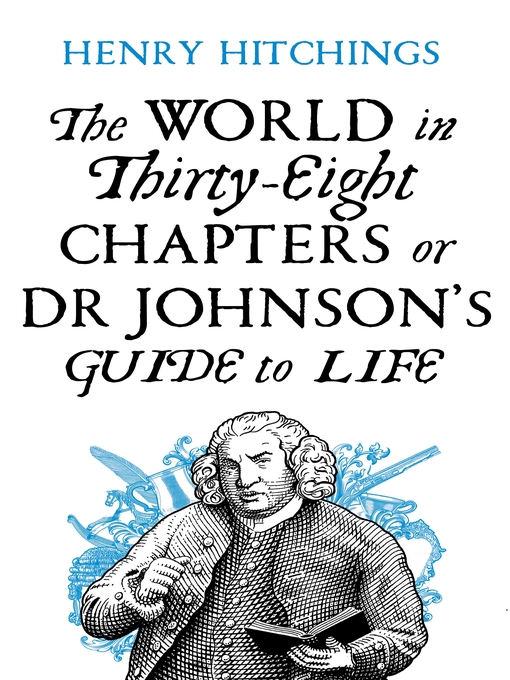
The World in Thirty-Eight Chapters or Dr Johnson's Guide to Life 🔍
Henry Hitchings
Pan Macmillan, 2018
元数据 · 英语 [en] · 2018 · 📗 未知类型的图书 · libby · Libby 3709090
描述
'Hitchings is extremely good at unravelling Johnson's most bullish assertions . . . lucid and empathetic, scholarly but lively. A model Johnsonian, in fact.' The Times
The World in Thirty-Eight Chapters or Dr Johnson's Guide to Life is a source of profound good sense about what it means to teach, read, write and travel. More than that, though, Henry Hitchings continually translates Samuel Johnson's experience of poverty, scorn, pain and madness into a rich understanding of how to be.
Samuel Johnson was a critic, an essayist, a poet and a biographer. He was also, famously, the compiler of the first good English dictionary, published in 1755. A polymath and a great conversationalist, his intellectual and social curiosity were boundless. Yet he was a deeply melancholy man, haunted by dark thoughts, sickness and a diseased imagination. In his own life, both public and private, he sought to choose a virtuous and prudent path, negotiating everyday hazards and temptations. His writings and aphorisms illuminate what it means to lead a life of integrity, and his experience, abundantly documented by him and by others (such as James Boswell and Hester Thrale), is a lesson in the art of regulating the mind and the body.
Johnson's story touches on many themes that have enduring significance. He was, and remains, a perceptive commentator on the vanity of human wishes, the rewards and dangers of charity, the need to cultivate kindness, the complexities of family life (especially marriage), the effects of boredom and the fleeting nature of pleasure. He writes and speaks incisively and humanely about the ego, ambition, hypocrisy, fallibility and disorders of the mind, as well as the corrosive effects of obsession, the precariousness of fame and the skulduggery of the literary world.
The World in Thirty-Eight Chapters or Dr Johnson's Guide to Life is a source of profound good sense about what it means to teach, read, write and travel. More than that, though, Henry Hitchings continually translates Samuel Johnson's experience of poverty, scorn, pain and madness into a rich understanding of how to be.
Samuel Johnson was a critic, an essayist, a poet and a biographer. He was also, famously, the compiler of the first good English dictionary, published in 1755. A polymath and a great conversationalist, his intellectual and social curiosity were boundless. Yet he was a deeply melancholy man, haunted by dark thoughts, sickness and a diseased imagination. In his own life, both public and private, he sought to choose a virtuous and prudent path, negotiating everyday hazards and temptations. His writings and aphorisms illuminate what it means to lead a life of integrity, and his experience, abundantly documented by him and by others (such as James Boswell and Hester Thrale), is a lesson in the art of regulating the mind and the body.
Johnson's story touches on many themes that have enduring significance. He was, and remains, a perceptive commentator on the vanity of human wishes, the rewards and dangers of charity, the need to cultivate kindness, the complexities of family life (especially marriage), the effects of boredom and the fleeting nature of pleasure. He writes and speaks incisively and humanely about the ego, ambition, hypocrisy, fallibility and disorders of the mind, as well as the corrosive effects of obsession, the precariousness of fame and the skulduggery of the literary world.
备选作者
Hitchings, Henry
开源日期
2024-09-11
- 未找到下载。
有关此文件的详细信息,请查看其JSON 文件。 Live/debug JSON version. Live/debug page.