nexusstc/Archaeological Perspectives on Conflict and Warfare in Australia and the Pacific/fc514d7a4997919a0177265e3374cda5.pdf
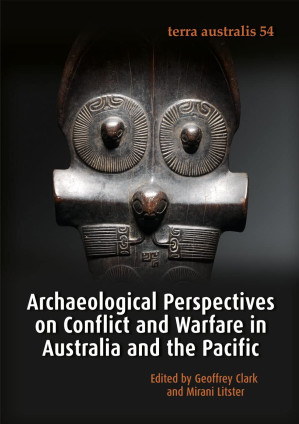
Archaeological Perspectives on Conflict and Warfare in Australia and the Pacific 🔍
Geoffrey Clarke, Mirani Litster
Australian National University, ANU Press, Terra Australis, 54, Canberra, ACT, Australia, 2022
英语 [en] · PDF · 38.7MB · 2022 · 📘 非小说类图书 · 🚀/lgli/lgrs/nexusstc/zlib · Save
描述
When James Boswell famously lamented the irrationality of war in 1777, he noted the universality of conflict across history and across space – even reaching what he described as the gentle and benign southern ocean nations. This volume discusses archaeological evidence of conflict from those southern oceans, from Palau and Guam, to Australia, Vanuatu and Tonga, the Marquesas, Easter Island and New Zealand. The evidence for conflict and warfare encompasses defensive earthworks on Palau, fortifications on Tonga, and intricate pa sites in New Zealand. It reports evidence of reciprocal sacrifice to appease deities in several island nations, and skirmishes and smaller scale conflicts, including in Easter Island. This volume traces aspects of colonial-era conflict in Australia and frontier battles in Vanuatu, and discusses depictions of World War II materiel in the rock art of Arnhem Land. Among the causes and motives discussed in these papers are pressure on resources, the ebb and flow of significant climate events, and the significant association of conflict with culture contact. The volume, necessarily selective, eclectic and wide-ranging, includes an incisive introduction that situates the evidence persuasively in the broader scholarship addressing the history of human warfare.
备用文件名
lgli/Archaeological Perspectives on Conflict and Warfare in Australia and the Pacific.pdf
备用文件名
lgrsnf/Archaeological Perspectives on Conflict and Warfare in Australia and the Pacific.pdf
备用文件名
zlib/History/Archaeology/Geoffrey Clarke, Mirani Litster/Archaeological Perspectives on Conflict and Warfare in Australia and the Pacific_23391097.pdf
备选作者
Geoffrey Clark; Mirani Litster; Australian National University Press
备用版本
ANU Press, Canberra, ACT, Australia, 2022
元数据中的注释
{"isbns":["1760464880","9781760464882"],"last_page":280,"publisher":"ANU Press","series":"Terra Australis, 54"}
备用描述
List of figures
Figure 1.1. Relative abundance of fortified/defensive sites in the Pacific.
Figure 2.1. Distribution of pa sites and approximate latitudinal spans of marginal cultivation at the fourteenth century (A) and sixteenth century (B).
Figure 2.2. Temporal distribution of traditional Maori migrations by groups originating on the east and west coasts of the North Island, and their canoe ancestors from East Polynesia.
Figure 2.3. Phase I and II migrations.
Figure 2.4. Phase III migrations. Oval area with diagonal lines shows approximate area of origin of most Phase III migrations.
Figure 4.1. Map of Rapa Nui with main locations mentioned in text.
Figure 4.2. Two mata‘a showing tanged attachment and crescent-shaped cutting edge.
Figure 4.3. The statue Paro at Ahu Te Pito Kura.
Figure 5.1. Guam and Ritidian with the Northern Mariana Islands.
Figure 5.2. Selected traditional places in conflict across Micronesia.
Figure 5.3. First depiction of a Chamorro warrior, c. 1590–1591 CE.
Figure 5.4. Ritidian Point to the south-east from the Guam National Wildlife Refuge.
Figure 5.5. Limestone and volcanic sling stones and human bone spearpoints.
Figure 5.6. Reconstruction of a Spanish raid on a Chamorro Village, c. 1680 CE.
Figure 5.7. B-29 over Northwest Field, Guam c. 1945.
Figure 6.1. Map of the Marquesas Islands.
Figure 6.2. Mouina, chief warrior of the Tayehs (Tei‘i tribe, Nuku Hiva).
Figure 6.3. Marquesan trophy skull.
Figure 6.4. Map of observation posts on the Penau ridge, Ua Huka.
Figure 6.5. Map of the cut-ridge of Penau, Hane valley, Ua Huka.
Figure 6.6. Map of Hanaipa defensive system, Hiva Oa.
Figure 6.7. Photo of the western Makahi trench, Ua Huka island.
Figure 7.1. Aerial view of the Type II Ngermedangeb complex and the Ngermelkii crown and ditch in the Ngatpang (1969-6-2-53).
Figure 7.2. A ridge-cut impeding access to the Ngetilai crown, a Type IIIa complex in Ngardmau.
Figure 7.3. Infilled ring-ditch around base of the Oratelruul crown in Ngiwal.
Figure 7.4. A ditch bisecting a levelled ridge crest at Ked ra Ikerbeluu in Ngatpang (1976-4-217).
Figure 7.5. Aerial view of a lateral ditch (lower ditch in photo) that may be a trail or water control feature leading to a crown in Aimeliik (1976-6-2).
Figure 7.6. Section where the Compact Road has cut through east side of the Ngebars earthworks in Ngatpang.
Figure 7.7. Profile of road cut through the Ngebars earthwork complex.
Figure 7.8. A Type III earthwork complex in Ngardmau.
Figure 7.9. Ngerkelalk, a Type IIIb complex with ridge-cuts and high step-terraces leading to a crown in Aimeliik.
Figure 7.10. Documented crowns and Type III complexes in the Ngaraard Earthwork District.
Figure 8.1. Map of Lapaha and hinterlands with location of Fisi Tea and other defensive earthworks highlighted.
Figure 8.2. Detail of Fisi Tea.
Figure 8.3. Pictorial overview of morphological attributes calculated at each elevation profile.
Figure 8.4. Plots of morphological variables.
Figure 8.5. Idealised rampart construction sequence.
Figure 8.6. Energetics calculation for construction of Fisi Tea.
Figure 8.7. Selected elevation profiles extracted from the length of Fisi Tea.
Figure 9.1. Topographic map (2 m isoclines) of Tongatapu with lidar digital elevation model (DEM) and site location of fortifications.
Figure 9.2. Map of Tongatapu with boundaries of 1500 m (solid black line) and 4500 m (dashed line) from the north shore showing area of intensive inhabitation and extent of intensive agriculture.
Figure 9.3. Density map of depressions indicating potential freshwater resources.
Figure 9.4. Map of Tongatapu with soil types based on the geospatial database from the Tongan Ministry Department for Land, Survey and Natural Resources
Figure 9.5. Sightline analysis of fort locations 5 km in distance from each other.
Figure 9.6. Intervisibility analysis of fort location.
Figure 9.7. Ortho-image of Tongatapu showing modern settlements in relation to fort location.
Figure 10.1. Attack on a settler’s hut.
Figure 10.2. Rear view of the ‘men’s hut’, once part of Central Outstation, a sheep run on the western Eyre Peninsula of South Australia.
Figure 10.3. Plan view of the ‘men’s hut’ at Central Outstation, with collapsed portions reconstructed based on physical evidence and a historical photograph.
Figure 10.4. Exterior of extant embrasure in the ‘men’s hut’ at Central Outstation, subsequently blocked up.
Figure 10.5. Interior of extant embrasure in the ‘men’s hut’ at Central Outstation, subsequently blocked up.
Figure 10.6. Door from ‘Avenue Range’ (later ‘Keilira’) pastoral station.
Figure 10.7. Eastern aspect of the ‘coach-house’ at the site of Lizard Lodge, once a semi-remote farm, now in suburban Adelaide.
Figure 10.8. Plan of the ‘coach-house’ at the site of Lizard Lodge showing the position of the internally splayed embrasures in relation to the fireplace and conventional casement window.
Figure 10.9. Western elevation of ‘the Old Fort’ store building at the former site of Springvale St
Figure 10.10. Interior (left) and exterior (right) of the circular embrasures either side of the rear door of Springvale homestead.
Figure 11.1. A. Southwest Pacific and Vanuatu inset; B. Northern Malakula showing locations of 1. Bridges Store, Tautu; 2. Sanwer beach, landing location; 3. Bartanar village; 4. Mae village.
Figure 11.2. Australian troops who had been engaged in the Malakula campaign of 1916.
Figure 11.3. Memorial plaque to eight native policemen who had fallen for France on Malakula since 1914. The plaque was bulldozed during roadworks in south Malakula, Vanuatu Cultural Centre, 2015.
Figure 11.4. Remnant standing stones, Bartanar nasara, north Malakula, 2016.
Figure 11.5. Large impression said to be due to the result of naval shelling. Massing Tamendal (far left) and Chief Liten (second from right), 2016.
Figure 11.6. A. Fragment of 4-inch naval shell (inscribed on the nose: 1.05.No4.M.83 164.7.158.6⚓); B. Same shell fragment held by André Ralle, Peterpu village, north Malakula, 2015.
Figure 12.1. Location of World War II sites mentioned in text including Walliabup (Bibra Lake).
Figure 12.2. Sunday Times auction notice ‘Lot 7, Searchlight Station 10’, 16 September 1945.
Figure 12.3. Area surveyed and excavated by 2017 UWA Archaeology Fieldschool.
Figure 12.4. Site map of excavated areas, pathways (indicated by black lines) and compacted areas (grey ovals).
Figure 12.5. Selected finds from excavations at Walliabup (Bibra Lake).
Figure 12.6. General aspect, plan and section of BLA 002 (pathway) excavation.
Figure 12.7. General aspect, plan and section of BLA 007 (toilet block) excavation. Blue tarpaulin protecting large grass tree (Xanthorrhoea sp.).
Figure 12.8. General aspect and plan of BLA 040 (?laundry) clearance.
Figure 12.9. BLA 041 (septic tank) and finds.
Figure 12.10. Concrete pad, inset wooden supports and borehole.
Figure 12.11. Photographs of AWAS personnel at distinctive jarrah tree, Walliabup (Bibra Lake), 1 January 1944.
Figure 12.12. Photographs of AWAS personnel, Walliabup (Bibra Lake).
Figure 12.13. Community poster of 2017 AWAS archaeology fieldschool.
Figure 13.1. Location of the study area.
Figure 13.2. Rock art panel from Djulirri, Arnhem Land, illustrating the maritime imagery recorded by Indigenous artists.
Figure 13.3. Line drawing and photograph of Djulirri ship.
Figure 13.4. HMAS Moresby c. 1933, Bowen Queensland.
Figure 13.5. HMAS Moresby shooting party on Melville Island.
Figure 13.6. Rock art motif and D-stretch image of the aircraft from Maliwawa.
Figure 13.7. RAAF Avro Anson circa 1940 in flight.
List of tables
Table 3.1. Change in occurrence of violence from the Early to Late Holocene in what is now traditional Barapa territory, as measured by cranial trauma of the vault.
Table 6.1. List of Marquesan defensive sites identified as such in the archaeological literature.
Table 8.1. Root mean square (RMS) values calculated per vegetation type used in error analysis.
Table 8.2. Error matrix and accuracy assessment of vegetation classification for determination of digital elevation model (DEM) error zones.
Table 8.3. Fisi Tea radiocarbon ages from FT–2 and FT–11 excavations.
Table 9.1. Site names/locations for fortified sites on Tongatapu with basic geographic data for elevation, slope, distance to coast, distance to water sources and soil types.
Table 10.1. Textual references to the use of defensive architecture on the Australian frontier.
Table 12.1. Summary artefact table from excavations at Walliabup (Bibra Lake).
1. Archaeological perspectives on conflict and warfare in Australia and the Pacific
2. War is their principal profession: On the frequency and causes of Maori warfare and migration 1250–1850 CE
3. Violence and warfare in Aboriginal Australia
4. Warfare in Rapa Nui (Easter Island)
5. Traditional places in conflict and their historic context: Ritidian, Guam
6. The ʻenata way of war: An ethnoarchaeological perspective on warfare dynamics in the Marquesas Islands
7. Practical defensive features in Palau’s earthwork landscape
8. High-resolution lidar analysis of the Fisi Tea defensive earthwork at Lapaha, Kingdom of Tonga
9. Geospatial analysis of fortification locations on the island of Tongatapu, Tonga
10. The fortified homestead of the Australian frontier
11. Archives, oral traditions and archaeology: Dissonant narratives concerning punitive expeditions on Malakula Island, Vanuatu
12. Invisible women at war in the West: An archaeology of the Australian Women’s Army Service camp, Walliabup (Bibra Lake), Western Australia, c. 1943–1945
13. Painting war: The end of contact rock art in Arnhem Land
Contributors
Пустая страница
Figure 1.1. Relative abundance of fortified/defensive sites in the Pacific.
Figure 2.1. Distribution of pa sites and approximate latitudinal spans of marginal cultivation at the fourteenth century (A) and sixteenth century (B).
Figure 2.2. Temporal distribution of traditional Maori migrations by groups originating on the east and west coasts of the North Island, and their canoe ancestors from East Polynesia.
Figure 2.3. Phase I and II migrations.
Figure 2.4. Phase III migrations. Oval area with diagonal lines shows approximate area of origin of most Phase III migrations.
Figure 4.1. Map of Rapa Nui with main locations mentioned in text.
Figure 4.2. Two mata‘a showing tanged attachment and crescent-shaped cutting edge.
Figure 4.3. The statue Paro at Ahu Te Pito Kura.
Figure 5.1. Guam and Ritidian with the Northern Mariana Islands.
Figure 5.2. Selected traditional places in conflict across Micronesia.
Figure 5.3. First depiction of a Chamorro warrior, c. 1590–1591 CE.
Figure 5.4. Ritidian Point to the south-east from the Guam National Wildlife Refuge.
Figure 5.5. Limestone and volcanic sling stones and human bone spearpoints.
Figure 5.6. Reconstruction of a Spanish raid on a Chamorro Village, c. 1680 CE.
Figure 5.7. B-29 over Northwest Field, Guam c. 1945.
Figure 6.1. Map of the Marquesas Islands.
Figure 6.2. Mouina, chief warrior of the Tayehs (Tei‘i tribe, Nuku Hiva).
Figure 6.3. Marquesan trophy skull.
Figure 6.4. Map of observation posts on the Penau ridge, Ua Huka.
Figure 6.5. Map of the cut-ridge of Penau, Hane valley, Ua Huka.
Figure 6.6. Map of Hanaipa defensive system, Hiva Oa.
Figure 6.7. Photo of the western Makahi trench, Ua Huka island.
Figure 7.1. Aerial view of the Type II Ngermedangeb complex and the Ngermelkii crown and ditch in the Ngatpang (1969-6-2-53).
Figure 7.2. A ridge-cut impeding access to the Ngetilai crown, a Type IIIa complex in Ngardmau.
Figure 7.3. Infilled ring-ditch around base of the Oratelruul crown in Ngiwal.
Figure 7.4. A ditch bisecting a levelled ridge crest at Ked ra Ikerbeluu in Ngatpang (1976-4-217).
Figure 7.5. Aerial view of a lateral ditch (lower ditch in photo) that may be a trail or water control feature leading to a crown in Aimeliik (1976-6-2).
Figure 7.6. Section where the Compact Road has cut through east side of the Ngebars earthworks in Ngatpang.
Figure 7.7. Profile of road cut through the Ngebars earthwork complex.
Figure 7.8. A Type III earthwork complex in Ngardmau.
Figure 7.9. Ngerkelalk, a Type IIIb complex with ridge-cuts and high step-terraces leading to a crown in Aimeliik.
Figure 7.10. Documented crowns and Type III complexes in the Ngaraard Earthwork District.
Figure 8.1. Map of Lapaha and hinterlands with location of Fisi Tea and other defensive earthworks highlighted.
Figure 8.2. Detail of Fisi Tea.
Figure 8.3. Pictorial overview of morphological attributes calculated at each elevation profile.
Figure 8.4. Plots of morphological variables.
Figure 8.5. Idealised rampart construction sequence.
Figure 8.6. Energetics calculation for construction of Fisi Tea.
Figure 8.7. Selected elevation profiles extracted from the length of Fisi Tea.
Figure 9.1. Topographic map (2 m isoclines) of Tongatapu with lidar digital elevation model (DEM) and site location of fortifications.
Figure 9.2. Map of Tongatapu with boundaries of 1500 m (solid black line) and 4500 m (dashed line) from the north shore showing area of intensive inhabitation and extent of intensive agriculture.
Figure 9.3. Density map of depressions indicating potential freshwater resources.
Figure 9.4. Map of Tongatapu with soil types based on the geospatial database from the Tongan Ministry Department for Land, Survey and Natural Resources
Figure 9.5. Sightline analysis of fort locations 5 km in distance from each other.
Figure 9.6. Intervisibility analysis of fort location.
Figure 9.7. Ortho-image of Tongatapu showing modern settlements in relation to fort location.
Figure 10.1. Attack on a settler’s hut.
Figure 10.2. Rear view of the ‘men’s hut’, once part of Central Outstation, a sheep run on the western Eyre Peninsula of South Australia.
Figure 10.3. Plan view of the ‘men’s hut’ at Central Outstation, with collapsed portions reconstructed based on physical evidence and a historical photograph.
Figure 10.4. Exterior of extant embrasure in the ‘men’s hut’ at Central Outstation, subsequently blocked up.
Figure 10.5. Interior of extant embrasure in the ‘men’s hut’ at Central Outstation, subsequently blocked up.
Figure 10.6. Door from ‘Avenue Range’ (later ‘Keilira’) pastoral station.
Figure 10.7. Eastern aspect of the ‘coach-house’ at the site of Lizard Lodge, once a semi-remote farm, now in suburban Adelaide.
Figure 10.8. Plan of the ‘coach-house’ at the site of Lizard Lodge showing the position of the internally splayed embrasures in relation to the fireplace and conventional casement window.
Figure 10.9. Western elevation of ‘the Old Fort’ store building at the former site of Springvale St
Figure 10.10. Interior (left) and exterior (right) of the circular embrasures either side of the rear door of Springvale homestead.
Figure 11.1. A. Southwest Pacific and Vanuatu inset; B. Northern Malakula showing locations of 1. Bridges Store, Tautu; 2. Sanwer beach, landing location; 3. Bartanar village; 4. Mae village.
Figure 11.2. Australian troops who had been engaged in the Malakula campaign of 1916.
Figure 11.3. Memorial plaque to eight native policemen who had fallen for France on Malakula since 1914. The plaque was bulldozed during roadworks in south Malakula, Vanuatu Cultural Centre, 2015.
Figure 11.4. Remnant standing stones, Bartanar nasara, north Malakula, 2016.
Figure 11.5. Large impression said to be due to the result of naval shelling. Massing Tamendal (far left) and Chief Liten (second from right), 2016.
Figure 11.6. A. Fragment of 4-inch naval shell (inscribed on the nose: 1.05.No4.M.83 164.7.158.6⚓); B. Same shell fragment held by André Ralle, Peterpu village, north Malakula, 2015.
Figure 12.1. Location of World War II sites mentioned in text including Walliabup (Bibra Lake).
Figure 12.2. Sunday Times auction notice ‘Lot 7, Searchlight Station 10’, 16 September 1945.
Figure 12.3. Area surveyed and excavated by 2017 UWA Archaeology Fieldschool.
Figure 12.4. Site map of excavated areas, pathways (indicated by black lines) and compacted areas (grey ovals).
Figure 12.5. Selected finds from excavations at Walliabup (Bibra Lake).
Figure 12.6. General aspect, plan and section of BLA 002 (pathway) excavation.
Figure 12.7. General aspect, plan and section of BLA 007 (toilet block) excavation. Blue tarpaulin protecting large grass tree (Xanthorrhoea sp.).
Figure 12.8. General aspect and plan of BLA 040 (?laundry) clearance.
Figure 12.9. BLA 041 (septic tank) and finds.
Figure 12.10. Concrete pad, inset wooden supports and borehole.
Figure 12.11. Photographs of AWAS personnel at distinctive jarrah tree, Walliabup (Bibra Lake), 1 January 1944.
Figure 12.12. Photographs of AWAS personnel, Walliabup (Bibra Lake).
Figure 12.13. Community poster of 2017 AWAS archaeology fieldschool.
Figure 13.1. Location of the study area.
Figure 13.2. Rock art panel from Djulirri, Arnhem Land, illustrating the maritime imagery recorded by Indigenous artists.
Figure 13.3. Line drawing and photograph of Djulirri ship.
Figure 13.4. HMAS Moresby c. 1933, Bowen Queensland.
Figure 13.5. HMAS Moresby shooting party on Melville Island.
Figure 13.6. Rock art motif and D-stretch image of the aircraft from Maliwawa.
Figure 13.7. RAAF Avro Anson circa 1940 in flight.
List of tables
Table 3.1. Change in occurrence of violence from the Early to Late Holocene in what is now traditional Barapa territory, as measured by cranial trauma of the vault.
Table 6.1. List of Marquesan defensive sites identified as such in the archaeological literature.
Table 8.1. Root mean square (RMS) values calculated per vegetation type used in error analysis.
Table 8.2. Error matrix and accuracy assessment of vegetation classification for determination of digital elevation model (DEM) error zones.
Table 8.3. Fisi Tea radiocarbon ages from FT–2 and FT–11 excavations.
Table 9.1. Site names/locations for fortified sites on Tongatapu with basic geographic data for elevation, slope, distance to coast, distance to water sources and soil types.
Table 10.1. Textual references to the use of defensive architecture on the Australian frontier.
Table 12.1. Summary artefact table from excavations at Walliabup (Bibra Lake).
1. Archaeological perspectives on conflict and warfare in Australia and the Pacific
2. War is their principal profession: On the frequency and causes of Maori warfare and migration 1250–1850 CE
3. Violence and warfare in Aboriginal Australia
4. Warfare in Rapa Nui (Easter Island)
5. Traditional places in conflict and their historic context: Ritidian, Guam
6. The ʻenata way of war: An ethnoarchaeological perspective on warfare dynamics in the Marquesas Islands
7. Practical defensive features in Palau’s earthwork landscape
8. High-resolution lidar analysis of the Fisi Tea defensive earthwork at Lapaha, Kingdom of Tonga
9. Geospatial analysis of fortification locations on the island of Tongatapu, Tonga
10. The fortified homestead of the Australian frontier
11. Archives, oral traditions and archaeology: Dissonant narratives concerning punitive expeditions on Malakula Island, Vanuatu
12. Invisible women at war in the West: An archaeology of the Australian Women’s Army Service camp, Walliabup (Bibra Lake), Western Australia, c. 1943–1945
13. Painting war: The end of contact rock art in Arnhem Land
Contributors
Пустая страница
备用描述
1. Archaeological perspectives on conflict and warfare in Australia and the Pacific / Geoffrey Clark and Mirani Litster -- 2. War is their principal profession: On the frequency and causes of Maori warfare and migration, 1250-1850 / Atholl Anderson -- 3. Violence and warfare in Aboriginal Australia / Colin Pardoe -- 4. Warfare in Rapa Nui (Easter Island) / Helene Martinsson-Wallin -- 5. Traditional places in conflict and their historic context: Ritidian, Guam / Boyd Dixon, Andrea Jalandoni and Maria Kottermair -- 6. The 'enata way of war: An ethnoarchaeological perspective on warfare dynamics in the Marquesas Islands / Guillaume Molle and Vincent Marolleau -- 7. Practical defensive features in Palau's earthwork landscape / Jolie Liston -- 8. High-resolution lidar analysis of the Fisi Tea defensive earthwork at Lapaha, Kingdom of Tonga / Phillip Parton, Geoffrey Clark and Christian Reepmeyer -- 9. Geospatial analysis of fortification locations on the island of Tongatapu, Tonga / Christian Reepmeyer, Geoffrey Clark, Phillip Parton, Malia Melekiola and David Burley -- 10. The fortified homestead of the Australian frontier / Nic Grguric -- 11. Archives, oral traditions and archaeology: Dissonant narratives concerning punitive expeditions on Malakula Island, Vanuatu / Stuart Bedford -- 12. Invisible women at war in the West: An archaeology of the Australian Women's Army Service camp, Walliabup (Bibra Lake), Western Australia, c. 1943-1945 / Sven Ouzman, Jillian Barteaux, Christine Cooper and the UWA Archaeology Fieldschool Class of 2017 -- 13. Painting war: The end of contact rock art in Arnhem Land 251 / Daryl Wesley and Jessica Viney
开源日期
2022-10-25
We strongly recommend that you support the author by buying or donating on their personal website, or borrowing in your local library.
🚀 快速下载
成为会员以支持书籍、论文等的长期保存。为了感谢您对我们的支持,您将获得高速下载权益。❤️
如果您在本月捐款,您将获得双倍的快速下载次数。
🐢 低速下载
由可信的合作方提供。 更多信息请参见常见问题解答。 (可能需要验证浏览器——无限次下载!)
- 低速服务器(合作方提供) #1 (稍快但需要排队)
- 低速服务器(合作方提供) #2 (稍快但需要排队)
- 低速服务器(合作方提供) #3 (稍快但需要排队)
- 低速服务器(合作方提供) #4 (稍快但需要排队)
- 低速服务器(合作方提供) #5 (无需排队,但可能非常慢)
- 低速服务器(合作方提供) #6 (无需排队,但可能非常慢)
- 低速服务器(合作方提供) #7 (无需排队,但可能非常慢)
- 低速服务器(合作方提供) #8 (无需排队,但可能非常慢)
- 低速服务器(合作方提供) #9 (无需排队,但可能非常慢)
- 下载后: 在我们的查看器中打开
所有选项下载的文件都相同,应该可以安全使用。即使这样,从互联网下载文件时始终要小心。例如,确保您的设备更新及时。
外部下载
-
对于大文件,我们建议使用下载管理器以防止中断。
推荐的下载管理器:JDownloader -
您将需要一个电子书或 PDF 阅读器来打开文件,具体取决于文件格式。
推荐的电子书阅读器:Anna的档案在线查看器、ReadEra和Calibre -
使用在线工具进行格式转换。
推荐的转换工具:CloudConvert和PrintFriendly -
您可以将 PDF 和 EPUB 文件发送到您的 Kindle 或 Kobo 电子阅读器。
推荐的工具:亚马逊的“发送到 Kindle”和djazz 的“发送到 Kobo/Kindle” -
支持作者和图书馆
✍️ 如果您喜欢这个并且能够负担得起,请考虑购买原版,或直接支持作者。
📚 如果您当地的图书馆有这本书,请考虑在那里免费借阅。
下面的文字仅以英文继续。
总下载量:
“文件的MD5”是根据文件内容计算出的哈希值,并且基于该内容具有相当的唯一性。我们这里索引的所有影子图书馆都主要使用MD5来标识文件。
一个文件可能会出现在多个影子图书馆中。有关我们编译的各种数据集的信息,请参见数据集页面。
有关此文件的详细信息,请查看其JSON 文件。 Live/debug JSON version. Live/debug page.