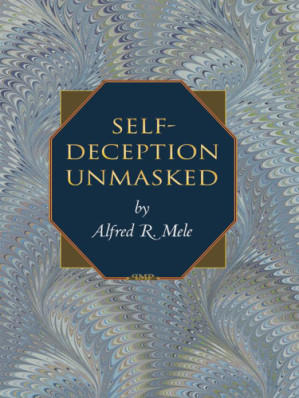
Self-Deception Unmasked 🔍
Mele, Alfred R.; Mele, Alfred R. R.;
Princeton University Press, Princeton monographs in philosophy; Princeton paperbacks, Paperback ed., 2nd print, 2008
英语 [en] · EPUB · 0.6MB · 2008 · 📘 非小说类图书 · 🚀/lgli/lgrs/nexusstc/upload/zlib · Save
描述
Self-deception raises complex questions about the nature of belief and the structure of the human mind. In this book, Alfred Mele addresses four of the most critical of these questions: What is it to deceive oneself? How do we deceive ourselves? Why do we deceive ourselves? Is self-deception really possible?
Drawing on cutting-edge empirical research on everyday reasoning and biases, Mele takes issue with commonplace attempts to equate the processes of self-deception with those of stereotypical interpersonal deception. Such attempts, he demonstrates, are fundamentally misguided, particularly in the assumption that self-deception is intentional. In their place, Mele proposes a compelling, empirically informed account of the motivational causes of biased beliefs. At the heart of this theory is an appreciation of how emotion and motivation may, without our knowing it, bias our assessment of evidence for beliefs. Highlighting motivation and emotion, Mele develops a pair of approaches for explaining the two forms of self-deception: the "straight" form, in which we believe what we want to be true, and the "twisted" form, in which we believe what we wish to be false.
Underlying Mele's work is an abiding interest in understanding and explaining the behavior of real human beings. The result is a comprehensive, elegant, empirically grounded theory of everyday self-deception that should engage philosophers and social scientists alike.
Drawing on cutting-edge empirical research on everyday reasoning and biases, Mele takes issue with commonplace attempts to equate the processes of self-deception with those of stereotypical interpersonal deception. Such attempts, he demonstrates, are fundamentally misguided, particularly in the assumption that self-deception is intentional. In their place, Mele proposes a compelling, empirically informed account of the motivational causes of biased beliefs. At the heart of this theory is an appreciation of how emotion and motivation may, without our knowing it, bias our assessment of evidence for beliefs. Highlighting motivation and emotion, Mele develops a pair of approaches for explaining the two forms of self-deception: the "straight" form, in which we believe what we want to be true, and the "twisted" form, in which we believe what we wish to be false.
Underlying Mele's work is an abiding interest in understanding and explaining the behavior of real human beings. The result is a comprehensive, elegant, empirically grounded theory of everyday self-deception that should engage philosophers and social scientists alike.
备用文件名
lgli/Z:\Bibliotik_\35\S\Self-Deception Unmasked - Mele, Alfred R._253B Mele, Alfred R.epub
备用文件名
lgrsnf/Z:\Bibliotik_\35\S\Self-Deception Unmasked - Mele, Alfred R._253B Mele, Alfred R.epub
备用文件名
nexusstc/Self-Deception Unmasked/f5aeb3d43433d339262f106fd85d6a60.epub
备用文件名
zlib/Society, Politics & Philosophy/General & Miscellaneous Philosophy/Mele, Alfred R/Self-Deception Unmasked_5947063.epub
备用出版商
Princeton University, Department of Art & Archaeology
备用版本
Princeton monographs in philosophy, Princeton paperbacks, Princeton, N.J, New Jersey, 2001
备用版本
Princeton University Press, Princeton, N.J., 2001
备用版本
United States, United States of America
备用版本
1st, First Edition, PS, 2001
备用版本
January 15, 2001
元数据中的注释
lg2663978
元数据中的注释
{"content":{"parsed_at":1701989543,"source_extension":"epub"},"edition":"paperback ed., 2nd print","isbns":["0691057451","9780691057453"],"publisher":"Princeton University Press","series":"Princeton monographs in philosophy; Princeton paperbacks"}
元数据中的注释
Includes bibliographical references (p. [137]-144) and index.
备用描述
Annotation Self-deception Raises Complex Questions About The Nature Of Belief And The Structure Of The Human Mind. In This Book, Alfred Mele Addresses Four Of The Most Critical Of These Questions: What Is It To Deceive Oneself? How Do We Deceive Ourselves? Why Do We Deceive Ourselves? Is Self-deception Really Possible?drawing On Cutting-edge Empirical Research On Everyday Reasoning And Biases, Mele Takes Issue With Commonplace Attempts To Equate The Processes Of Self-deception With Those Of Stereotypical Interpersonal Deception. Such Attempts, He Demonstrates, Are Fundamentally Misguided, Particularly In The Assumption That Self-deception Is Intentional. In Their Place, Mele Proposes A Compelling, Empirically Informed Account Of The Motivational Causes Of Biased Beliefs. At The Heart Of This Theory Is An Appreciation Of How Emotion And Motivation May, Without Our Knowing It, Bias Our Assessment Of Evidence For Beliefs. Highlighting Motivation And Emotion, Mele Develops A Pair Of Approaches For Explaining The Two Forms Of Self-deception: The Straight Form, In Which We Believe What We Want To Be True, And The Twisted Form, In Which We Believe What We Wish To Be False.underlying Mele's Work Is An Abiding Interest In Understanding And Explaining The Behavior Of Real Human Beings. The Result Is A Comprehensive, Elegant, Empirically Grounded Theory Of Everyday Self-deception That Should Engage Philosophers And Social Scientists Alike. Ch. 1. Introduction: Approaches, Puzzles, Biases, And Agency -- Ch. 2. Garden-variety Straight Self-deception: Some Psychological Processes -- Ch. 3. Self-deception Without Puzzles -- Ch. 4. Attempted Empirical Demonstrations Of Strict Self-deception -- Ch. 5. Twisted Self-deception -- Ch. 6. Conclusion. Alfred R. Mele. Includes Bibliographical References And Index.
备用描述
Annotation Self-deception raises complex questions about the nature of belief and the structure of the human mind. In this book, Alfred Mele addresses four of the most critical of these questions: What is it to deceive oneself? How do we deceive ourselves? Why do we deceive ourselves? Is self-deception really possible?Drawing on cutting-edge empirical research on everyday reasoning and biases, Mele takes issue with commonplace attempts to equate the processes of self-deception with those of stereotypical interpersonal deception. Such attempts, he demonstrates, are fundamentally misguided, particularly in the assumption that self-deception is intentional. In their place, Mele proposes a compelling, empirically informed account of the motivational causes of biased beliefs. At the heart of this theory is an appreciation of how emotion and motivation may, without our knowing it, bias our assessment of evidence for beliefs. Highlighting motivation and emotion, Mele develops a pair of approaches for explaining the two forms of self-deception: the "straight" form, in which we believe what we want to be true, and the "twisted" form, in which we believe what we wish to be false. Underlying Mele's work is an abiding interest in understanding and explaining the behavior of real human beings. The result is a comprehensive, elegant, empirically grounded theory of everyday self-deception that should engage philosophers and social scientists alike
备用描述
Preface ix Chapter 1. Introduction: Approaches, Puzzles, Biases,and Agency 3 Chapter 2. Graden-Variety Straight Self-Deception: Some Psychological Process 25 Chapter 3. Self-Deception without Puzzles 50 Chapter 4. Attempted Empirical Demostrations of Strict Self-Deception 76 Chapter 5. Twisted Self-Deception 94 Chapter 6. Conclusion 119 Notes 125 References 137 Index 145
备用描述
"A SURVEY of university professors found that 94% thought they were better at their jobs than their average colleague" (Gilovich 1991, p. 77).
开源日期
2020-07-26
🚀 快速下载
成为会员以支持书籍、论文等的长期保存。为了感谢您对我们的支持,您将获得高速下载权益。❤️
如果您在本月捐款,您将获得双倍的快速下载次数。
🐢 低速下载
由可信的合作方提供。 更多信息请参见常见问题解答。 (可能需要验证浏览器——无限次下载!)
- 低速服务器(合作方提供) #1 (稍快但需要排队)
- 低速服务器(合作方提供) #2 (稍快但需要排队)
- 低速服务器(合作方提供) #3 (稍快但需要排队)
- 低速服务器(合作方提供) #4 (稍快但需要排队)
- 低速服务器(合作方提供) #5 (无需排队,但可能非常慢)
- 低速服务器(合作方提供) #6 (无需排队,但可能非常慢)
- 低速服务器(合作方提供) #7 (无需排队,但可能非常慢)
- 低速服务器(合作方提供) #8 (无需排队,但可能非常慢)
- 低速服务器(合作方提供) #9 (无需排队,但可能非常慢)
- 下载后: 在我们的查看器中打开
所有选项下载的文件都相同,应该可以安全使用。即使这样,从互联网下载文件时始终要小心。例如,确保您的设备更新及时。
外部下载
-
对于大文件,我们建议使用下载管理器以防止中断。
推荐的下载管理器:JDownloader -
您将需要一个电子书或 PDF 阅读器来打开文件,具体取决于文件格式。
推荐的电子书阅读器:Anna的档案在线查看器、ReadEra和Calibre -
使用在线工具进行格式转换。
推荐的转换工具:CloudConvert和PrintFriendly -
您可以将 PDF 和 EPUB 文件发送到您的 Kindle 或 Kobo 电子阅读器。
推荐的工具:亚马逊的“发送到 Kindle”和djazz 的“发送到 Kobo/Kindle” -
支持作者和图书馆
✍️ 如果您喜欢这个并且能够负担得起,请考虑购买原版,或直接支持作者。
📚 如果您当地的图书馆有这本书,请考虑在那里免费借阅。
下面的文字仅以英文继续。
总下载量:
“文件的MD5”是根据文件内容计算出的哈希值,并且基于该内容具有相当的唯一性。我们这里索引的所有影子图书馆都主要使用MD5来标识文件。
一个文件可能会出现在多个影子图书馆中。有关我们编译的各种数据集的信息,请参见数据集页面。
有关此文件的详细信息,请查看其JSON 文件。 Live/debug JSON version. Live/debug page.