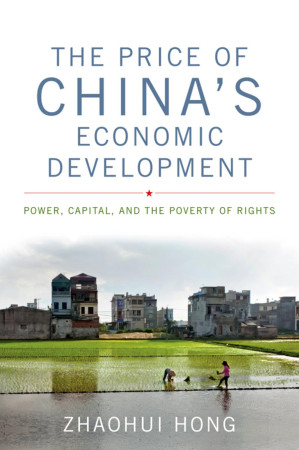
The Price of China's Economic Development: Power, Capital, and the Poverty of Rights (Asia in the New Millennium) 🔍
Hong, Zhaohui
The University Press of Kentucky, Asia in the New Millennium #1, 2015
英语 [en] · PDF · 2.0MB · 2015 · 📘 非小说类图书 · 🚀/lgli/upload/zlib · Save
描述
"This work provides a theoretically sophisticated analysis of major political, social, economic, and cultural trends in China." —Roger des Forges, author of Chinese Walls in Time and Space
The People's Republic of China has experienced significant transformations since Deng Xiaoping instituted economic reforms in 1978. Subsequent leaders continued and often broadened Deng's policies, shifting the nation from agrarianism to industrialism, from isolation to internationalism, and from centralized planning to market-based economics. As the world strives to understand the nation's rapid development, few observers have comprehensively examined the social and cultural price of the economic boom for the majority of the Chinese people.
Zhaohui Hong assesses the sociocultural consequences of these reforms in this provocative study. He contends that modern China functions as an oligarchy or plutocracy ruled by an alliance of political power and private capital where the boundaries between the private and public sectors are constantly shifting. This "power-capital institution" based on three millennia of Confucian ideology and decades of Maoist communism exercises monopolistic control of public resources at the expense of civil society and social justice for the majority of citizens.
The Price of China's Economic Development urges policymakers to alter their analytic lens. While industrial and commercial development is quantitatively measured, Hong argues that social progress should be assessed qualitatively, with justice its ultimate goal and fair allocation of resources and opportunity as the main index of success. This sophisticated analysis introduces English speakers to the varied and significant work of contemporary Chinese scholars and substantially enriches the international dialogue.
"Presents a new perspective on China's economic growth and ongoing political problems." —Xiaobing Li, author of China's War in Korea
The People's Republic of China has experienced significant transformations since Deng Xiaoping instituted economic reforms in 1978. Subsequent leaders continued and often broadened Deng's policies, shifting the nation from agrarianism to industrialism, from isolation to internationalism, and from centralized planning to market-based economics. As the world strives to understand the nation's rapid development, few observers have comprehensively examined the social and cultural price of the economic boom for the majority of the Chinese people.
Zhaohui Hong assesses the sociocultural consequences of these reforms in this provocative study. He contends that modern China functions as an oligarchy or plutocracy ruled by an alliance of political power and private capital where the boundaries between the private and public sectors are constantly shifting. This "power-capital institution" based on three millennia of Confucian ideology and decades of Maoist communism exercises monopolistic control of public resources at the expense of civil society and social justice for the majority of citizens.
The Price of China's Economic Development urges policymakers to alter their analytic lens. While industrial and commercial development is quantitatively measured, Hong argues that social progress should be assessed qualitatively, with justice its ultimate goal and fair allocation of resources and opportunity as the main index of success. This sophisticated analysis introduces English speakers to the varied and significant work of contemporary Chinese scholars and substantially enriches the international dialogue.
"Presents a new perspective on China's economic growth and ongoing political problems." —Xiaobing Li, author of China's War in Korea
备用文件名
motw/The Price of China's Economic Development_ - Zhaohui Hong.epub
备用文件名
motw/The Price of China's Economic Development_ - Zhaohui Hong.pdf
备用文件名
lgli/R:\ebooks\978-0-8131-6116-7\The Price of China's Economic Development Power, Capital, and the Poverty of Rights by Zhaohui Hong.pdf
备用文件名
zlib/Society, Politics & Philosophy/Zhaohui Hong/The Price of China's Economic Development_11701395.pdf
备选作者
Zhaohui Hong
备用版本
Asia in the new millennium, Lexington, Kentucky, 2015
备用版本
Place of publication not identified, 2015
备用版本
United States, United States of America
备用版本
1, 20150721
备用版本
2, 2015
元数据中的注释
producers:
Adobe PDF Library 9.9
Adobe PDF Library 9.9
元数据中的注释
Memory of the World Librarian: Quintus
备用描述
The People's Republic of China has experienced significant transformations since Deng Xiaoping instituted economic reforms in 1978. Subsequent leaders continued and often broadened Deng's policies, shifting the nation from agrarianism to industrialism, from isolation to internationalism, and from centralized planning to market-based economics. As the world strives to understand the nation's rapid development, few observers have comprehensively examined the social and cultural price of the economic boom for the majority of the Chinese people.
Zhaohui Hong assesses the sociocultural consequences of these reforms in this provocative study. He contends that modern China functions as an oligarchy or plutocracy ruled by an alliance of political power and private capital where the boundaries between the private and public sectors are constantly shifting. This "power-capital institution" based on three millennia of Confucian ideology and decades of Maoist communism exercises monopolistic control of public resources at the expense of civil society and social justice for the majority of citizens.
The Price of China's Economic Development urges policymakers to alter their analytic lens. While industrial and commercial development is quantitatively measured, Hong argues that social progress should be assessed qualitatively, with justice its ultimate goal and fair allocation of resources and opportunity as the main index of success. This sophisticated analysis introduces English speakers to the varied and significant work of contemporary Chinese scholars and substantially enriches the international dialogue.
Front cover 1
Copyright 5
Contents 8
Introduction 10
1 Economy 34
2 Entrepreneurs 48
3 Political Culture 68
4 Urban China 98
5 Rural China 116
6 Migrant Laborers 136
7 Protestant House Churches 168
Conclusion 202
Acknowledgments 210
Notes 214
Selected Bibliography 268
Index 290
Asian,China,Communism & Socialism,Economic Conditions,Government,History,Nonfiction,Political Science,Politics,Social & Cultural Studies
Zhaohui Hong assesses the sociocultural consequences of these reforms in this provocative study. He contends that modern China functions as an oligarchy or plutocracy ruled by an alliance of political power and private capital where the boundaries between the private and public sectors are constantly shifting. This "power-capital institution" based on three millennia of Confucian ideology and decades of Maoist communism exercises monopolistic control of public resources at the expense of civil society and social justice for the majority of citizens.
The Price of China's Economic Development urges policymakers to alter their analytic lens. While industrial and commercial development is quantitatively measured, Hong argues that social progress should be assessed qualitatively, with justice its ultimate goal and fair allocation of resources and opportunity as the main index of success. This sophisticated analysis introduces English speakers to the varied and significant work of contemporary Chinese scholars and substantially enriches the international dialogue.
Front cover 1
Copyright 5
Contents 8
Introduction 10
1 Economy 34
2 Entrepreneurs 48
3 Political Culture 68
4 Urban China 98
5 Rural China 116
6 Migrant Laborers 136
7 Protestant House Churches 168
Conclusion 202
Acknowledgments 210
Notes 214
Selected Bibliography 268
Index 290
Asian,China,Communism & Socialism,Economic Conditions,Government,History,Nonfiction,Political Science,Politics,Social & Cultural Studies
备用描述
<P>The People's Republic of China has experienced significant transformations since Deng Xiaoping instituted economic reforms in 1978. Subsequent leaders continued and often broadened Deng's policies, shifting the nation from agrarianism to industrialism, from isolation to internationalism, and from centralized planning to market-based economics. As the world strives to understand the nation's rapid development, few observers have comprehensively examined the social and cultural price of the economic boom for the majority of the Chinese people. </P><P>Zhaohui Hong assesses the sociocultural consequences of these reforms in this provocative study. He contends that modern China functions as an oligarchy or plutocracy ruled by an alliance of political power and private capital where the boundaries between the private and public sectors are constantly shifting. This "power-capital institution" based on three millennia of Confucian ideology and decades of Maoist communism exercises monopolistic control of public resources at the expense of civil society and social justice for the majority of citizens.</P><P><I>The Price of China's Economic Development</I> urges policymakers to alter their analytic lens. While industrial and commercial development is quantitatively measured, Hong argues that social progress should be assessed qualitatively, with justice its ultimate goal and fair allocation of resources and opportunity as the main index of success. This sophisticated analysis introduces English speakers to the varied and significant work of contemporary Chinese scholars and substantially enriches the international dialogue.</P>
开源日期
2021-02-24
🚀 快速下载
成为会员以支持书籍、论文等的长期保存。为了感谢您对我们的支持,您将获得高速下载权益。❤️
如果您在本月捐款,您将获得双倍的快速下载次数。
🐢 低速下载
由可信的合作方提供。 更多信息请参见常见问题解答。 (可能需要验证浏览器——无限次下载!)
- 低速服务器(合作方提供) #1 (稍快但需要排队)
- 低速服务器(合作方提供) #2 (稍快但需要排队)
- 低速服务器(合作方提供) #3 (稍快但需要排队)
- 低速服务器(合作方提供) #4 (稍快但需要排队)
- 低速服务器(合作方提供) #5 (无需排队,但可能非常慢)
- 低速服务器(合作方提供) #6 (无需排队,但可能非常慢)
- 低速服务器(合作方提供) #7 (无需排队,但可能非常慢)
- 低速服务器(合作方提供) #8 (无需排队,但可能非常慢)
- 低速服务器(合作方提供) #9 (无需排队,但可能非常慢)
- 下载后: 在我们的查看器中打开
所有选项下载的文件都相同,应该可以安全使用。即使这样,从互联网下载文件时始终要小心。例如,确保您的设备更新及时。
外部下载
-
对于大文件,我们建议使用下载管理器以防止中断。
推荐的下载管理器:JDownloader -
您将需要一个电子书或 PDF 阅读器来打开文件,具体取决于文件格式。
推荐的电子书阅读器:Anna的档案在线查看器、ReadEra和Calibre -
使用在线工具进行格式转换。
推荐的转换工具:CloudConvert和PrintFriendly -
您可以将 PDF 和 EPUB 文件发送到您的 Kindle 或 Kobo 电子阅读器。
推荐的工具:亚马逊的“发送到 Kindle”和djazz 的“发送到 Kobo/Kindle” -
支持作者和图书馆
✍️ 如果您喜欢这个并且能够负担得起,请考虑购买原版,或直接支持作者。
📚 如果您当地的图书馆有这本书,请考虑在那里免费借阅。
下面的文字仅以英文继续。
总下载量:
“文件的MD5”是根据文件内容计算出的哈希值,并且基于该内容具有相当的唯一性。我们这里索引的所有影子图书馆都主要使用MD5来标识文件。
一个文件可能会出现在多个影子图书馆中。有关我们编译的各种数据集的信息,请参见数据集页面。
有关此文件的详细信息,请查看其JSON 文件。 Live/debug JSON version. Live/debug page.