upload/alexandrina/Collections/Project-Muse/Johns Hopkins University Press/Violence after War- Explaining Instability in Post-Conflict States.pdf
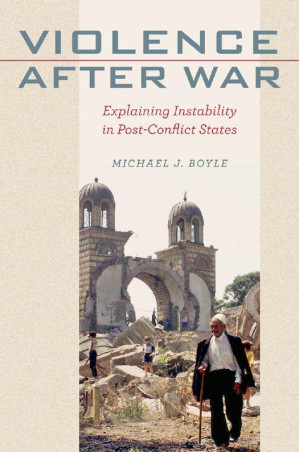
Violence After War: Explaining Instability In Post-conflict States Project Muse Upcc Books 🔍
Boyle, Michael J.
Johns Hopkins University Press, Johns Hopkins University Press, Baltimore, 2014
英语 [en] · PDF · 3.9MB · 2014 · 📘 非小说类图书 · 🚀/lgli/upload/zlib · Save
描述
Developing a better understanding of the dynamics of violence in post-war states can lead to a more durable peace.
The end of one war is frequently the beginning of another because the cessation of conflict produces two new challenges: a contest between the winners and losers over the terms of peace, and a battle within the winning party over the spoils of war. As the victors and the vanquished struggle to establish a new political order, incidents of low-level violence frequently occur and can escalate into an unstable peace or renewed conflict. Michael J. Boyle evaluates the dynamics of post-conflict violence and their consequences in Violence after War .
In this systematic comparative study, Boyle analyzes a cross-national dataset of violent acts from 52 post-conflict states and examines, in depth, violence patterns from five recent post-conflict states: Bosnia, Rwanda, Kosovo, East Timor, and Iraq.
In each of the case studies, Boyle traces multiple pathways through which violence emerges in post-conflict states and highlights how the fragmentation of combatants, especially rebel groups, produces unexpected and sometimes surprising shifts in the nature, type, and targets of attack. His case studies are based on unpublished data on violent crime, including some from fieldwork in Kosovo, East Timor, and Bosnia, and a thorough review of narrative and witness accounts of the attacks. The case study of Iraq comes from data that Boyle obtained directly from U.S. Central Command, published here for the first time.
Violence after War will be essential reading for all those interested in political violence, peacekeeping, and post-conflict reconstruction.
The end of one war is frequently the beginning of another because the cessation of conflict produces two new challenges: a contest between the winners and losers over the terms of peace, and a battle within the winning party over the spoils of war. As the victors and the vanquished struggle to establish a new political order, incidents of low-level violence frequently occur and can escalate into an unstable peace or renewed conflict. Michael J. Boyle evaluates the dynamics of post-conflict violence and their consequences in Violence after War .
In this systematic comparative study, Boyle analyzes a cross-national dataset of violent acts from 52 post-conflict states and examines, in depth, violence patterns from five recent post-conflict states: Bosnia, Rwanda, Kosovo, East Timor, and Iraq.
In each of the case studies, Boyle traces multiple pathways through which violence emerges in post-conflict states and highlights how the fragmentation of combatants, especially rebel groups, produces unexpected and sometimes surprising shifts in the nature, type, and targets of attack. His case studies are based on unpublished data on violent crime, including some from fieldwork in Kosovo, East Timor, and Bosnia, and a thorough review of narrative and witness accounts of the attacks. The case study of Iraq comes from data that Boyle obtained directly from U.S. Central Command, published here for the first time.
Violence after War will be essential reading for all those interested in political violence, peacekeeping, and post-conflict reconstruction.
备用文件名
lgli/R:\Project-Muse\md5_rep\C8A17CDD4FBA823B232D22DA2186C276.pdf
备用文件名
zlib/no-category/Michael J. Boyle/Violence after War: Explaining Instability in Post-Conflict States_29411007.pdf
备选作者
Project MUSE (https://muse.jhu.edu/)
备选作者
Michael J. Boyle
备用版本
United States, United States of America
备用版本
Illustrated, PS, 2014
备用版本
2, 20140415
元数据中的注释
producers:
Muse-DL/1.0.0
Muse-DL/1.0.0
备用描述
Cover 1
Title Page, Copyright Page 2
Contents 6
Acknowledgments 8
Abbreviations 12
1. The Challenge of Violence in Post-Conflict States 16
2. Understanding Violence after Wars: Concepts and Contexts 36
3. Explaining Violence after Wars: Patterns and Pathways 58
4. Bosnia-Herzegovina 110
5. Rwanda 154
6. Kosovo 186
7. East Timor 238
8. Iraq 268
9. Controlling Violence: Implications and Policy Recommendations 314
Notes 332
Bibliography 392
Index 432
Publisher:Johns Hopkins University Press,Published:2014,ISBN:9781421412580,Related ISBN:9781421412573,DOI:10.1353/book.29443,Language:English,OCLC:875894390
The end of one war is frequently the beginning of another because the cessation of conflict produces two new challenges: a contest between the winners and losers over the terms of peace, and a battle within the winning party over the spoils of war. As the victors and the vanquished struggle to establish a new political order, incidents of low-level violence frequently occur and can escalate into an unstable peace or renewed conflict. Michael J. Boyle evaluates the dynamics of post-conflict violence and their consequences in Violence after War. In this systematic comparative study, Boyle analyzes a cross-national dataset of violent acts from 52 post-conflict states and examines, in depth, violence patterns from five recent post-conflict states: Bosnia, Rwanda, Kosovo, East Timor, and Iraq. In each of the case studies, Boyle traces multiple pathways through which violence emerges in post-conflict states and highlights how the fragmentation of combatants, especially rebel groups, produces unexpected and sometimes surprising shifts in the nature, type, and targets of attack. His case studies are based on unpublished data on violent crime, including some from fieldwork in Kosovo, East Timor, and Bosnia, and a thorough review of narrative and witness accounts of the attacks. The case study of Iraq comes from data that Boyle obtained directly from U.S. Central Command, published here for the first time. Violence after War will be essential reading for all those interested in political violence, peacekeeping, and post-conflict reconstruction.
Title Page, Copyright Page 2
Contents 6
Acknowledgments 8
Abbreviations 12
1. The Challenge of Violence in Post-Conflict States 16
2. Understanding Violence after Wars: Concepts and Contexts 36
3. Explaining Violence after Wars: Patterns and Pathways 58
4. Bosnia-Herzegovina 110
5. Rwanda 154
6. Kosovo 186
7. East Timor 238
8. Iraq 268
9. Controlling Violence: Implications and Policy Recommendations 314
Notes 332
Bibliography 392
Index 432
Publisher:Johns Hopkins University Press,Published:2014,ISBN:9781421412580,Related ISBN:9781421412573,DOI:10.1353/book.29443,Language:English,OCLC:875894390
The end of one war is frequently the beginning of another because the cessation of conflict produces two new challenges: a contest between the winners and losers over the terms of peace, and a battle within the winning party over the spoils of war. As the victors and the vanquished struggle to establish a new political order, incidents of low-level violence frequently occur and can escalate into an unstable peace or renewed conflict. Michael J. Boyle evaluates the dynamics of post-conflict violence and their consequences in Violence after War. In this systematic comparative study, Boyle analyzes a cross-national dataset of violent acts from 52 post-conflict states and examines, in depth, violence patterns from five recent post-conflict states: Bosnia, Rwanda, Kosovo, East Timor, and Iraq. In each of the case studies, Boyle traces multiple pathways through which violence emerges in post-conflict states and highlights how the fragmentation of combatants, especially rebel groups, produces unexpected and sometimes surprising shifts in the nature, type, and targets of attack. His case studies are based on unpublished data on violent crime, including some from fieldwork in Kosovo, East Timor, and Bosnia, and a thorough review of narrative and witness accounts of the attacks. The case study of Iraq comes from data that Boyle obtained directly from U.S. Central Command, published here for the first time. Violence after War will be essential reading for all those interested in political violence, peacekeeping, and post-conflict reconstruction.
备用描述
<P>The end of one war is frequently the beginning of another because the cessation of conflict produces two new challenges: a contest between the winners and losers over the terms of peace, and a battle within the winning party over the spoils of war. As the victors and the vanquished struggle to establish a new political order, incidents of low-level violence frequently occur and can escalate into an unstable peace or renewed conflict. Michael J. Boyle evaluates the dynamics of post-conflict violence and their consequences in <I>Violence after War</I>.</P><P>In this systematic comparative study, Boyle analyzes a cross-national dataset of violent acts from 52 post-conflict states and examines, in depth, violence patterns from five recent post-conflict states: Bosnia, Rwanda, Kosovo, East Timor, and Iraq. </P><P>In each of the case studies, Boyle traces multiple pathways through which violence emerges in post-conflict states and highlights how the fragmentation of combatants, especially rebel groups, produces unexpected and sometimes surprising shifts in the nature, type, and targets of attack. His case studies are based on unpublished data on violent crime, including some from fieldwork in Kosovo, East Timor, and Bosnia, and a thorough review of narrative and witness accounts of the attacks. The case study of Iraq comes from data that Boyle obtained directly from U.S. Central Command, published here for the first time.</P><P><I>Violence after War</I> will be essential reading for all those interested in political violence, peacekeeping, and post-conflict reconstruction.</P>
备用描述
"The end of one war is frequently the beginning of another because the cessation of conflict produces two new challenges: a contest between the winners and losers over the terms of peace, and a battle within the winning party over the spoils of war. As the victors and the vanquished struggle to establish a new political order, incidents of low-level violence frequently occur and can escalate into an unstable peace or renewed conflict. Michael J. Boyle evaluates the dynamics of post-conflict violence and their consequences in Violence after War. In this systematic comparative study, Boyle analyzes a cross-national dataset of violent acts from 52 post-conflict states and examines, in depth, violence patterns from five recent post-conflict states: Bosnia, Rwanda, Kosovo, East Timor, and Iraq. In each of the case studies, Boyle traces multiple pathways through which violence emerges in post-conflict states and highlights how the fragmentation of combatants, especially rebel groups, produces unexpected and sometimes surprising shifts in the nature, type, and targets of attack. His case studies are based on unpublished data on violent crime, including some from fieldwork in Kosovo, East Timor, and Bosnia, and a thorough review of narrative and witness accounts of the attacks. The case study of Iraq comes from data that Boyle obtained directly from U.S. Central Command, published here for the first time."--Publisher's description
开源日期
2022-03-08
🚀 快速下载
成为会员以支持书籍、论文等的长期保存。为了感谢您对我们的支持,您将获得高速下载权益。❤️
如果您在本月捐款,您将获得双倍的快速下载次数。
🐢 低速下载
由可信的合作方提供。 更多信息请参见常见问题解答。 (可能需要验证浏览器——无限次下载!)
- 低速服务器(合作方提供) #1 (稍快但需要排队)
- 低速服务器(合作方提供) #2 (稍快但需要排队)
- 低速服务器(合作方提供) #3 (稍快但需要排队)
- 低速服务器(合作方提供) #4 (稍快但需要排队)
- 低速服务器(合作方提供) #5 (无需排队,但可能非常慢)
- 低速服务器(合作方提供) #6 (无需排队,但可能非常慢)
- 低速服务器(合作方提供) #7 (无需排队,但可能非常慢)
- 低速服务器(合作方提供) #8 (无需排队,但可能非常慢)
- 低速服务器(合作方提供) #9 (无需排队,但可能非常慢)
- 下载后: 在我们的查看器中打开
所有选项下载的文件都相同,应该可以安全使用。即使这样,从互联网下载文件时始终要小心。例如,确保您的设备更新及时。
外部下载
-
对于大文件,我们建议使用下载管理器以防止中断。
推荐的下载管理器:JDownloader -
您将需要一个电子书或 PDF 阅读器来打开文件,具体取决于文件格式。
推荐的电子书阅读器:Anna的档案在线查看器、ReadEra和Calibre -
使用在线工具进行格式转换。
推荐的转换工具:CloudConvert和PrintFriendly -
您可以将 PDF 和 EPUB 文件发送到您的 Kindle 或 Kobo 电子阅读器。
推荐的工具:亚马逊的“发送到 Kindle”和djazz 的“发送到 Kobo/Kindle” -
支持作者和图书馆
✍️ 如果您喜欢这个并且能够负担得起,请考虑购买原版,或直接支持作者。
📚 如果您当地的图书馆有这本书,请考虑在那里免费借阅。
下面的文字仅以英文继续。
总下载量:
“文件的MD5”是根据文件内容计算出的哈希值,并且基于该内容具有相当的唯一性。我们这里索引的所有影子图书馆都主要使用MD5来标识文件。
一个文件可能会出现在多个影子图书馆中。有关我们编译的各种数据集的信息,请参见数据集页面。
有关此文件的详细信息,请查看其JSON 文件。 Live/debug JSON version. Live/debug page.