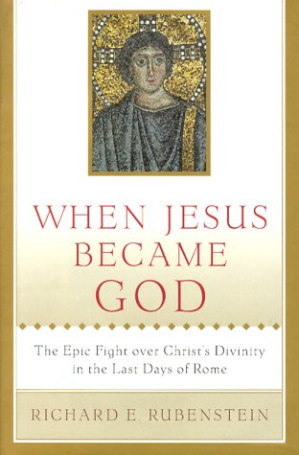
upload/wll/ENTER/Myths & History/1 - Criticism of the Western Civilization - Col. 1-58/42 (a Man Was Made God)/Rubenstein - When Jesus Became God; the Epic Fight over Christ’s Divinity in the Last Days of Rome (1999).pdf
When Jesus became God : the epic fight over Christ's divinity in the last days of Rome 🔍
Richard E. Rubenstein
Harcourt Brace & Co.; Harcourt, 1st Harvest ed., New York, New York State, August 26, 1999
英语 [en] · PDF · 6.7MB · 1999 · 📘 非小说类图书 · 🚀/lgli/lgrs/nexusstc/upload/zlib · Save
描述
We all know the story of Jesus' life, his death, his resurrection, and the persecution of his early followers. Less well known is the struggle the early Christians had in deciding whether Jesus was God Himself or the holiest of men, adopted by God and raised to divine rank. This controversy was at the heart of the most fateful conflict in Christendom until the Reformation. It was characterized by fervent debate, riots, a series of ecumenical councils, and civil strife. The key players were two priests, Arius and Athanasius, brothers in Christ, ideological opponents, and mortal enemies. Arius, a firebrand bishop, intelligent and eloquent, preached that Jesus was less than God. Athanasius, a brilliant and violent deacon, ardently opposed Arius's subversive preaching. Between them stood Alexander, the powerful bishop of Alexandria, the man on whose shoulders lay the need for a speedy resolution, which was essential both to keeping the empire united and to the continuation of the Church. Richard Rubenstein presents a vibrant portrait of the thriving Roman Empire in the centuries after the birth of Jesus Christ, as he brings to life the ideas of the most influential leaders and shows us a major religion at the crossroads of its faith.
备用文件名
upload/motw_shc_2025_10/shc/When Jesus Became God_ The Struggle to Def - Richard E. Rubenstein.pdf
备用文件名
motw/When Jesus Became God_ The Struggle to Def - Richard E. Rubenstein.pdf
备用文件名
lgli/D:\!genesis\library.nu\ba\_25169.baada770e77ec4e4bf5f7286d06ece0c.pdf
备用文件名
lgrsnf/D:\!genesis\library.nu\ba\_25169.baada770e77ec4e4bf5f7286d06ece0c.pdf
备用文件名
nexusstc/When Jesus became God : the epic fight over Christ's divinity in the last days of Rome/baada770e77ec4e4bf5f7286d06ece0c.pdf
备用文件名
zlib/History/World History/Richard E. Rubenstein/When Jesus Became God: The Epic Fight over Christ's Divinity in the Last Days of Rome_921622.pdf
备选标题
When Jesus became God : the struggle to define Christianity during the last days of Rome
备选作者
Rubenstein, Richard E.
备用出版商
Harcourt Brace & Company
备用出版商
Mariner Books
备用出版商
Harvest Books
备用出版商
Dryden Press
备用出版商
Brooks/Cole
备用出版商
HarperOne
备用出版商
Wadsworth
备用版本
Open Road Integrated Media, Inc., [N.p.], 2013
备用版本
United States, United States of America
备用版本
1st Harvest ed, New York, 2000, ©1999
备用版本
1st Harvest ed, San Diego, 2000
备用版本
First, First Edition, PS, 2000
备用版本
First edition, New York, 1999
备用版本
July 10, 2000
元数据中的注释
до 2011-01
元数据中的注释
lg497009
元数据中的注释
producers:
ABBYY FineReader 8.0 Professional Edition
ABBYY FineReader 8.0 Professional Edition
元数据中的注释
{"edition":"1","isbns":["0151003688","9780151003686"],"last_page":267,"publisher":"Harcourt Brace & Co"}
元数据中的注释
Memory of the World Librarian: Quintus
元数据中的注释
Includes bibliographical references (p. [237]-240) and index.
备用描述
Amazon.com Review The Gospel narratives may suggest that Jesus was divine, but they do not insist upon it. Hundreds of years after Jesus' death, the Church councils made Jesus' divinity a central tenet of belief among many of his followers. When Jesus Became God: The Epic Fight over Christ's Divinity in the Last Days of Rome by Richard Rubenstein is a narrative history of Christians' early efforts to define Christianity by convening councils and writing creeds. Rubenstein is most interested in the battle between Arius, Presbyter of Alexandria, and Athanasius, Bishop of Alexandria. Arius said that Christ did not share God's nature but was the first creature God created. Athanasius said that Christ was fully God. At the Council of Nicea in 325, the Church Fathers came down on Athanasius's side and made Arius's belief a heresy.
Rubenstein's brisk, incisive prose brings the councils' 4th-century Roman setting fully alive, with riots, civil strife, and spectacular public debates. Rubenstein is also personally invested in the meaning of these councils for religious life today: he wrote this book, in part, because he grew up in a mixed Jewish Catholic neighborhood and was bewildered by animosity between the religious groups on his block. Digging back in history, Rubenstein learns that before the Arian controversy, "Jews and Christians could talk to each other and argue among themselves about crucial issues like the divinity of Jesus.... They disagreed strongly about many things, but there was still a closeness between them." But when the controversy was settled, Rubenstein notes, "that closeness faded. To Christians, God became a Trinity and heresy became a crime. Judaism became a form of infidelity. And Jews living in Christian countries learned not to think very much about Jesus and his message." --Michael Joseph Gross
From Publishers Weekly The Gospel stories of Jesus' life, death and resurrection are familiar tales in Western literature. Yet, the Gospel narratives do not themselves pose or answer the theological question of Jesus' divinity. None of the disciples become engaged in disputations about whether Jesus is fully God or fully human. It took almost 300 years for these questions to be raised in such a serious way that Christianity was changed forever. Rubenstein, a Jew who proclaimed in a now famous book (After Auschwitz, Johns Hopkins University Press, 1992) that God died "after Auschwitz," examines the details of the fractious period in early Christian history when Christianity was defining itself against other religious sects through a number of councils and creeds. Although he focuses on several of the controversies surrounding the divinity of Jesus, Rubenstein zeroes in on the fiery battle between Arius, a presbyter of Alexandria, and Athanasius, who was Bishop of Alexandria. Arius contended that Christ did not share God's nature but was simply the first creature created by God the Father. Athanasius, on the other hand, argued that Christ was fully God, asserting that the incarnation of God in Jesus restored the image of God to fallen humanity. With a storyteller's verve, Rubenstein brings to life the times and deeds of these two leaders as well as the way that the Council of Nicea in A.D. 325 established the Christian orthodoxy that was later used to judge and exile Arius as a heretic. As a result of Nicea, the author says, "To Christians God became a Trinity. Heresy became a crime. Judaism became a form of infidelity." Rubenstein's lively historical drama offers a panoramic view of early Christianity as it developed against the backdrop of the Roman Empire of the fourth century. (Aug.)
Copyright 1999 Reed Business Information, Inc.
Rubenstein's brisk, incisive prose brings the councils' 4th-century Roman setting fully alive, with riots, civil strife, and spectacular public debates. Rubenstein is also personally invested in the meaning of these councils for religious life today: he wrote this book, in part, because he grew up in a mixed Jewish Catholic neighborhood and was bewildered by animosity between the religious groups on his block. Digging back in history, Rubenstein learns that before the Arian controversy, "Jews and Christians could talk to each other and argue among themselves about crucial issues like the divinity of Jesus.... They disagreed strongly about many things, but there was still a closeness between them." But when the controversy was settled, Rubenstein notes, "that closeness faded. To Christians, God became a Trinity and heresy became a crime. Judaism became a form of infidelity. And Jews living in Christian countries learned not to think very much about Jesus and his message." --Michael Joseph Gross
From Publishers Weekly The Gospel stories of Jesus' life, death and resurrection are familiar tales in Western literature. Yet, the Gospel narratives do not themselves pose or answer the theological question of Jesus' divinity. None of the disciples become engaged in disputations about whether Jesus is fully God or fully human. It took almost 300 years for these questions to be raised in such a serious way that Christianity was changed forever. Rubenstein, a Jew who proclaimed in a now famous book (After Auschwitz, Johns Hopkins University Press, 1992) that God died "after Auschwitz," examines the details of the fractious period in early Christian history when Christianity was defining itself against other religious sects through a number of councils and creeds. Although he focuses on several of the controversies surrounding the divinity of Jesus, Rubenstein zeroes in on the fiery battle between Arius, a presbyter of Alexandria, and Athanasius, who was Bishop of Alexandria. Arius contended that Christ did not share God's nature but was simply the first creature created by God the Father. Athanasius, on the other hand, argued that Christ was fully God, asserting that the incarnation of God in Jesus restored the image of God to fallen humanity. With a storyteller's verve, Rubenstein brings to life the times and deeds of these two leaders as well as the way that the Council of Nicea in A.D. 325 established the Christian orthodoxy that was later used to judge and exile Arius as a heretic. As a result of Nicea, the author says, "To Christians God became a Trinity. Heresy became a crime. Judaism became a form of infidelity." Rubenstein's lively historical drama offers a panoramic view of early Christianity as it developed against the backdrop of the Roman Empire of the fourth century. (Aug.)
Copyright 1999 Reed Business Information, Inc.
备用描述
“[A] panoramic view of early Christianity as it developed against the backdrop of the Roman Empire of the fourth century” (Publishers Weekly). The story of Jesus is well known, as is the story of Christian persecutions during the Roman Empire. The history of fervent debate, civil strife, and bloody riots within the Christian community as it was coming into being, however, is a side of ancient history rarely described. Richard E. Rubenstein takes the reader to the streets of the Roman Empire during the fourth century, when a fateful debate over the divinity of Jesus Christ is being fought. Ruled by a Christian emperor, followers of Jesus no longer fear for the survival of their monotheistic faith. But soon, they break into two camps regarding the direction of their worship: Is Jesus the son of God and therefore not the same as God? Or is Jesus precisely God on earth and therefore equal to Him? The vicious debate is led by two charismatic priests. Arius, an Alexandrian priest and poet, preaches that Jesus, though holy, is less than God. Athanasius, a brilliant and violent bishop, sees any diminution of Jesus's godhead as the work of the devil. Between them stands Alexander, the powerful Bishop of Alexandria, who must find a resolution that will keep the empire united and the Christian faith alive. With thorough historical, religious, and social research, Rubenstein vividly recreates one of the most critical moments in the history of religion. “A splendidly dramatic story... Rubenstein has turned one of the great fights of history into an engrossing story.” —Jack Miles, The Boston Globe; author of God: A Biography
备用描述
Three Hundred Years After Jesus' Crucifixion, The Roman Empire Witnessed The First Major Turning Point In The History Of Christianity. The Violent Debate, Now Known As The Arian Controversy, Lasted More Than Sixty Years, Dividing The Roman Empire And Forever Changing The Face Of The Christian Church. Was Jesus Of Nazareth God Himself, Walking The Earth In Human Form? Or Was He A Uniquely Holy Man Adopted By God As His Son And Raised To Divine Rank? Richard E. Rubenstein, An Expert On Religious Conflict, Transports Us To An Empire Fraught With Contradiction And Turmoil. The Protagonists Were Arius, A Learned And Eloquent Priest, And Athanasius, A Brilliant And Dedicated, Yet Violent, Bishop. Arius Argued That Jesus Was Less Than God And That His True Role Was To Serve As A Model Of Virtue For All Humanity. Athanasius Thought This Was Heresy And An Assault On Jesus Himself. Between These Formidable Adversaries Stood Constantine The Great, Rome's First Christian Emperor. Rubenstein Brings Us Into The Debates Of Religious Leaders And Politicians And The Struggles Of Commoners As We Witness The Battle Over The True Identity Of Jesus Christ And The Meaning Of His Mission On Earth.--jacket. An Incident In Alexandria -- The Silence Of Apollo -- A Quarrel In God's House -- The Great And Holy Council -- Sins Of The Body, Passions Of The Mind -- The Broken Chalice -- Death In Constantinople -- East Against West -- The Arian Empire -- Old Gods And New -- When Jesus Became God. Richard E. Rubenstein. Map On Lining Papers. Includes Bibliographical References (p. [237]-240) And Index.
备用描述
"Three hundred years after Jesus' crucifixion, the Roman Empire witnessed the first major turning point in the history of Christianity. The violent debate, now known as the Arian Controversy, lasted more than sixty years, dividing the Roman Empire and forever changing the face of the Christian Church. Was Jesus of Nazareth God Himself, walking the earth in human form? Or was he a uniquely holy man adopted by God as His Son and raised to divine rank?"--BOOK JACKET.
"Richard E. Rubenstein, an expert on religious conflict, transports us to an empire fraught with contradiction and turmoil."--BOOK JACKET.
"The protagonists were Arius, a learned and eloquent priest, and Athanasius, a brilliant and dedicated, yet violent, bishop. Arius argued that Jesus was less than God and that his true role was to serve as a model of virtue for all humanity. Athanasius thought this was heresy and an assault on Jesus himself. Between these formidable adversaries stood Constantine the Great, Rome's first Christian emperor."--BOOK JACKET.
"Rubenstein brings us into the debates of religious leaders and politicians and the struggles of commoners as we witness the battle over the true identity of Jesus Christ and the meaning of his mission on earth."--BOOK JACKET.
"Richard E. Rubenstein, an expert on religious conflict, transports us to an empire fraught with contradiction and turmoil."--BOOK JACKET.
"The protagonists were Arius, a learned and eloquent priest, and Athanasius, a brilliant and dedicated, yet violent, bishop. Arius argued that Jesus was less than God and that his true role was to serve as a model of virtue for all humanity. Athanasius thought this was heresy and an assault on Jesus himself. Between these formidable adversaries stood Constantine the Great, Rome's first Christian emperor."--BOOK JACKET.
"Rubenstein brings us into the debates of religious leaders and politicians and the struggles of commoners as we witness the battle over the true identity of Jesus Christ and the meaning of his mission on earth."--BOOK JACKET.
备用描述
"Three hundred years after Jesus' crucifixion, the Roman Empire witnessed the first major turning point in the history of Christianity. The violent debate, now known as the Arian Controversy, lasted more than sixty years, dividing the Roman Empire and forever changing the face of the Christian Church. Was Jesus of Nazareth God Himself, walking the earth in human form? Or was he a uniquely holy man adopted by God as His Son and raised to divine rank?" "Richard E. Rubenstein, an expert on religious conflict, transports us to an empire fraught with contradiction and turmoil." "The protagonists were Arius, a learned and eloquent priest, and Athanasius, a brilliant and dedicated, yet violent, bishop. Arius argued that Jesus was less than God and that his true role was to serve as a model of virtue for all humanity. Athanasius thought this was heresy and an assault on Jesus himself. Between these formidable adversaries stood Constantine the Great, Rome's first Christian emperor." "Rubenstein brings us into the debates of religious leaders and politicians and the struggles of commoners as we witness the battle over the true identity of Jesus Christ and the meaning of his mission on earth."-- Suministrado por el Editor
备用描述
<p>This paper version of the 1999 cloth edition concentrates on the time after 324 AD when Christianity became the official religion of the emperor, Constantine. Accepted by Rome, Christians turned to fighting each other, specifically over the precise degree of Christ's divinity. On one side was Arius, a Greek ecclesiastic maintaining that Christ was the holiest of mortals but not the Eternal God of Israel. On the other was Bishop Athanasius and his followers arguing that Christ was precisely God on earth and equal to God. Intrigues and deaths ensued over the attempt to form a unified Church, a conflict lasting 60 years and 20 ecumenical councils. Rubenstein (conflict resolution and public affairs, George Mason U.) describes the controversy, discusses the origins of the Nicene Creed, the nature of morality and sin, the consequences of fundamentalism, and the intertwining of religion and government. You-are-there reportage and an appendix of principal characters makes the book suitable for a wide audience. Annotation c. Book News, Inc., Portland, OR</p> <h3>The Boston Globe - Jack Miles</h3> <p>A splendidly dramatic story...Rubenstein has turned one of the great fights of history into an engrossing story.</p>
备用描述
Three hundred years after Jesus' crucifixion, the Roman Empire witnessed the first major turning point in the history of Christianity. The violent debate, now known as the Arian Controversy, lasted more than sixty years, dividing the Roman Empire and forever changing the face of the Christian Church. Was Jesus of Nazareth God Himself, walking the earth in human form? Or was he a uniquely holy man adopted by God as His Son and raised to divine rank? Richard E. Rubenstein, an expert on religious conflict, transports us to an empire fraught with contradiction and turmoil. The protagonists were Arius, a learned and eloquent priest, and Athanasius, a brilliant and dedicated, yet violent, bishop. Arius argued that Jesus was less than God and that his true role was to serve as a model of virtue for all humanity. Athanasius thought this was heresy and an assault on Jesus himself. Between these formidable adversaries stood Constantine the Great, Rome's first Christian emperor. Rubenstein brings us into the debates of religious leaders and politicians and the struggles of commoners as we witness the battle over the true identity of Jesus Christ and the meaning of his mission on earth. -- Provided by publisher
备用描述
"A splendidly dramatic story Rubenstein has turned one of the great fights of history into an engrossing story." Jack Miles, Boston Globe; author of A Biography.
The life of Jesus, and the subsequent persecution of Christians during the Roman Empire, have come to define what many of us know about early Christianity. The fervent debate, civil strife, and bloody riots as Christianity was coming into being, however, is a side of ancient history rarely described.
Richard E. Rubenstein takes the reader to the streets of fourth-century Rome, when a fateful debate over the divinity of Jesus Christ is being fought. Ruled by a Christian emperor, followers of Jesus no longer fear for the survival of their monotheistic faith. But soon they break into two camps regarding the direction of their Is Jesus the son of God and therefore not the same as God? Or is Jesus precisely God on Earth and therefore equal to Him?
With thorough historical, religious, and social research, Rubenstein vividly recreates one of the most critical moments in the history of religion.
The life of Jesus, and the subsequent persecution of Christians during the Roman Empire, have come to define what many of us know about early Christianity. The fervent debate, civil strife, and bloody riots as Christianity was coming into being, however, is a side of ancient history rarely described.
Richard E. Rubenstein takes the reader to the streets of fourth-century Rome, when a fateful debate over the divinity of Jesus Christ is being fought. Ruled by a Christian emperor, followers of Jesus no longer fear for the survival of their monotheistic faith. But soon they break into two camps regarding the direction of their Is Jesus the son of God and therefore not the same as God? Or is Jesus precisely God on Earth and therefore equal to Him?
With thorough historical, religious, and social research, Rubenstein vividly recreates one of the most critical moments in the history of religion.
备用描述
Contents......Page 7
Preface......Page 9
Acknowledgments......Page 15
An Incident in Alexandria......Page 19
The Silence of Apollo......Page 40
A Quarrel in God's House......Page 66
The Great and Holy Council......Page 86
Sins of the Body, Passions of the Mind......Page 107
The Broken Chalice......Page 126
Death in Constantinople......Page 144
East against West......Page 166
The Arian Empire......Page 187
Old Gods and New......Page 210
When Jesus Became God......Page 229
Principal Characters......Page 251
Selective Bibliography......Page 255
Notes......Page 259
Index......Page 275
Preface......Page 9
Acknowledgments......Page 15
An Incident in Alexandria......Page 19
The Silence of Apollo......Page 40
A Quarrel in God's House......Page 66
The Great and Holy Council......Page 86
Sins of the Body, Passions of the Mind......Page 107
The Broken Chalice......Page 126
Death in Constantinople......Page 144
East against West......Page 166
The Arian Empire......Page 187
Old Gods and New......Page 210
When Jesus Became God......Page 229
Principal Characters......Page 251
Selective Bibliography......Page 255
Notes......Page 259
Index......Page 275
备用描述
BY THE TIME the men at the front of the mob smashed through the prison gates, the crowd had grown until it over-flowed the square like water pouring over the sides of a full jar.
开源日期
2011-06-04
🚀 快速下载
成为会员以支持书籍、论文等的长期保存。为了感谢您对我们的支持,您将获得高速下载权益。❤️
如果您在本月捐款,您将获得双倍的快速下载次数。
🐢 低速下载
由可信的合作方提供。 更多信息请参见常见问题解答。 (可能需要验证浏览器——无限次下载!)
- 低速服务器(合作方提供) #1 (稍快但需要排队)
- 低速服务器(合作方提供) #2 (稍快但需要排队)
- 低速服务器(合作方提供) #3 (稍快但需要排队)
- 低速服务器(合作方提供) #4 (稍快但需要排队)
- 低速服务器(合作方提供) #5 (无需排队,但可能非常慢)
- 低速服务器(合作方提供) #6 (无需排队,但可能非常慢)
- 低速服务器(合作方提供) #7 (无需排队,但可能非常慢)
- 低速服务器(合作方提供) #8 (无需排队,但可能非常慢)
- 低速服务器(合作方提供) #9 (无需排队,但可能非常慢)
- 下载后: 在我们的查看器中打开
所有选项下载的文件都相同,应该可以安全使用。即使这样,从互联网下载文件时始终要小心。例如,确保您的设备更新及时。
外部下载
-
对于大文件,我们建议使用下载管理器以防止中断。
推荐的下载管理器:JDownloader -
您将需要一个电子书或 PDF 阅读器来打开文件,具体取决于文件格式。
推荐的电子书阅读器:Anna的档案在线查看器、ReadEra和Calibre -
使用在线工具进行格式转换。
推荐的转换工具:CloudConvert和PrintFriendly -
您可以将 PDF 和 EPUB 文件发送到您的 Kindle 或 Kobo 电子阅读器。
推荐的工具:亚马逊的“发送到 Kindle”和djazz 的“发送到 Kobo/Kindle” -
支持作者和图书馆
✍️ 如果您喜欢这个并且能够负担得起,请考虑购买原版,或直接支持作者。
📚 如果您当地的图书馆有这本书,请考虑在那里免费借阅。
下面的文字仅以英文继续。
总下载量:
“文件的MD5”是根据文件内容计算出的哈希值,并且基于该内容具有相当的唯一性。我们这里索引的所有影子图书馆都主要使用MD5来标识文件。
一个文件可能会出现在多个影子图书馆中。有关我们编译的各种数据集的信息,请参见数据集页面。
有关此文件的详细信息,请查看其JSON 文件。 Live/debug JSON version. Live/debug page.