nexusstc/Conversational Rhetoric : The Rise and Fall of a Women's Tradition, 1600-1900/b9a1aaa2ededfd8e2ca9c6d18dfb98f2.pdf
Conversational Rhetoric: The Rise and Fall of a Women's Tradition, 1600-1900 (Studies in Rhetorics and Feminisms) 🔍
Jane Donawerth; ProQuest (Firm)
Southern Illinois University Press, Studies in Rhetorics and Feminisms Ser., 1, 2011
英语 [en] · PDF · 1.7MB · 2011 · 📘 非小说类图书 · 🚀/lgli/lgrs/nexusstc/zlib · Save
描述
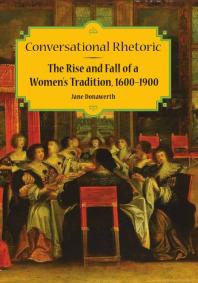
Much of the scholarly exchange regarding the history of women in rhetoric has emphasized womenOCOs rhetorical practices. In "Conversational Rhetoric: The Rise and Fall of a WomenOCOs Tradition, 1600OCo1900," Jane Donawerth traces the historical development of rhetorical theory by women for women, studying the moments when women produced theory about the arts of communication in alternative genresOCohumanist treatises and dialogues, defenses of womenOCOs preaching, conduct books, and elocution handbooks. She examines the relationship between communication and gender and between theory and pedagogy and argues that women constructed a theory of rhetoric based on conversation, not public speaking, as a model for all discourse.a Donawerth traces the development of womenOCOs rhetorical theory through the voices of English and American women (and one much-translated French woman) over three centuries. She demonstrates how they cultivated theories of rhetoric centered on conversation that faded once women began writing composition textbooks for mixed-gender audiences in the latter part of the nineteenth century. She recovers and elucidates the importance of the theories in dialogues and defenses of womenOCOs education by Bathsua Makin, Mary Astell, and Madeleine de Scud(r)ry; in conduct books by Hannah More, Lydia Sigourney, and Eliza Farrar; in defenses of womenOCOs preaching by Ellen Stewart, Lucretia Mott, Catherine Booth, and Frances Willard; and in elocution handbooks by Anna Morgan, Hallie Quinn Brown, Genevieve Stebbins, and Emily Bishop. In each genre, Donawerth explores facets of womenOCOs rhetorical theory, such as the recognition of the gendered nature of communication in conduct books, the incorporation of the language of womenOCOs rights in the defenses of womenOCOs preaching, and the adaptation of sentimental culture to the cultivation of womenOCOs bodies as tools of communication in elocution books.a Rather than a linear history, "Conversational Rhetoric" follows the starts, stops, and starting over in womenOCOs rhetorical theory. It covers a broad range of womenOCOs rhetorical theory in the Anglo-American world and places them in their social, rhetorical, and gendered historical contexts. This study adds womenOCOs rhetorical theory to the rhetorical tradition, advances our understanding of womenOCOs theories and their use of rhetoric, and offers a paradigm for analyzing the differences between menOCOs and womenOCOs rhetoric from 1600 to 1900."
备用文件名
lgli/Conversational Rhetoric_ The Rise and Fall of a Wo - Jane Donawerth.pdf
备用文件名
lgrsnf/Conversational Rhetoric_ The Rise and Fall of a Wo - Jane Donawerth.pdf
备用文件名
zlib/no-category/Jane Donawerth/Conversational Rhetoric : The Rise and Fall of a Women's Tradition, 1600-1900_25637217.pdf
备选作者
Jane L. Donawerth
备选作者
Donawerth, Jane
备用版本
Studies in rhetorics and feminisms, Carbondale, Illinois, 2012
备用版本
Studies in rhetorics and feminisms, Carbondale, Ill, cop. 2012
备用版本
Southern Illinois University Press, Carbondale, 2012
备用版本
Studies in rhetorics and feminisms, Carbondale, 2011
备用版本
United States, United States of America
元数据中的注释
{"edition":"1","isbns":["080933027X","0809386305","9780809330270","9780809386307"],"last_page":234,"publisher":"Southern Illinois University Press","series":"Studies in Rhetorics and Feminisms Ser."}
元数据中的注释
Includes bibliographical references (p. 175-193) and index.
备用描述
Much of the scholarly exchange regarding the history of women in rhetoric has emphasized women's rhetorical practices. In Conversational Rhetoric: The Rise and Fall of a Women's Tradition, 1600–1900, Jane Donawerth traces the historical development of rhetorical theory by women for women, studying the moments when women produced theory about the arts of communication in alternative genres—humanist treatises and dialogues, defenses of women's preaching, conduct books, and elocution handbooks. She examines the relationship between communication and gender and between theory and pedagogy and argues that women constructed a theory of rhetoric based on conversation, not public speaking, as a model for all discourse. Donawerth traces the development of women's rhetorical theory through the voices of English and American women (and one much-translated French woman) over three centuries. She demonstrates how they cultivated theories of rhetoric centered on conversation that faded once women began writing composition textbooks for mixed-gender audiences in the latter part of the nineteenth century. She recovers and elucidates the importance of the theories in dialogues and defenses of women's education by Bathsua Makin, Mary Astell, and Madeleine de Scudéry; in conduct books by Hannah More, Lydia Sigourney, and Eliza Farrar; in defenses of women's preaching by Ellen Stewart, Lucretia Mott, Catherine Booth, and Frances Willard; and in elocution handbooks by Anna Morgan, Hallie Quinn Brown, Genevieve Stebbins, and Emily Bishop. In each genre, Donawerth explores facets of women's rhetorical theory, such as the recognition of the gendered nature of communication in conduct books, the incorporation of the language of women's rights in the defenses of women's preaching, and the adaptation of sentimental culture to the cultivation of women's bodies as tools of communication in elocution books. Rather than a linear history, Conversational Rhetoric follows the starts, stops, and starting over in women's rhetorical theory. It covers a broad range of women's rhetorical theory in the Anglo-American world and places them in their social, rhetorical, and gendered historical contexts. This study adds women's rhetorical theory to the rhetorical tradition, advances our understanding of women's theories and their use of rhetoric, and offers a paradigm for analyzing the differences between men's and women's rhetoric from 1600 to 1900.
备用描述
"Much of the scholarly exchange regarding the history of women in rhetoric has emphasized women's rhetorical practices rather than women's rhetorical theory. In Conversational Rhetoric: The Rise and Fall of a Women's Tradition, 1600-1900, Jane Donawerth traces the historical development of rhetorical theory by women for women and argues that women constructed a theory of rhetoric based on conversation, not public speaking, as a model for all discourse. Using the works of English and American women (and one much-translated French woman) in alternative genres such as humanist treatises and dialogues, conduct books, defenses of women's preaching, and elocution handbooks, Donawerth demonstrates how these women cultivated theories of rhetoric centered on conversation that faded once women began writing composition textbooks for mixed-gender audiences in the latter part of the nineteenth century. Conversational Rhetoric recovers and elucidates the importance of the theories in dialogues and defenses of women's education by Bathsua Makin, Mary Astell, and Madeleine de Scudéry; in conduct books by Hannah More, Lydia Sigourney, and Eliza Farrar; in defenses of women's preaching by Ellen Stewart, Lucretia Mott, Catherine Booth, and Frances Willard; and in elocution handbooks by Anna Morgan, Hallie Quinn Brown, Genevieve Stebbins, and Emily Bishop. In each genre, Donawerth explores facets of women's rhetorical theory, such as the recognition of the gendered nature of communication in conduct books, the incorporation of the language of women's rights in the defenses of women's preaching, and the adaptation of sentimental culture to the cultivation of women's bodies as tools of communication in elocution books. Rather than taking a strictly linear historical approach, Conversational Rhetoric follows women's rhetorical theory as it starts, stops, and starts over again. It covers a broad range of women's rhetorical theory in the Anglo-American world and places those theories in their social, rhetorical, and gendered historical contexts. This study adds women's rhetorical theory to the rhetorical tradition, advances our understanding of women's theories and their use of rhetoric, and offers a paradigm for analyzing the differences between men's and women's rhetoric from 1600 to 1900."--Rabat de la jacquette
备用描述
"Much of the scholarly exchange regarding the history of women in rhetoric has emphasized women's rhetorical practices rather than women's rhetorical theory. In Conversational Rhetoric: The Rise and Fall of a Women's Tradition, 1600-1900, Jane Donawerth traces the historical development of rhetorical theory by women for women and argues that women constructed a theory of rhetoric based on conversation, not public speaking, as a model for all discourse. Using the works of English and American women (and one much-translated French woman) in alternative genres such as humanist treatises and dialogues, conduct books, defenses of women's preaching, and elocution handbooks, Donawerth demonstrates how these women cultivated theories of rhetoric centered on conversation that faded once women began writing composition textbooks for mixed-gender audiences in the latter part of the nineteenth century. Conversational Rhetoric recovers and elucidates the importance of the theories in dialogues and defenses of women's education by Bathsua Makin, Mary Astell, and Madeleine de Scudéry; in conduct books by Hannah More, Lydia Sigourney, and Eliza Farrar; in defenses of women's preaching by Ellen Stewart, Lucretia Mott, Catherine Booth, and Frances Willard; and in elocution handbooks by Anna Morgan, Hallie Quinn Brown, Genevieve Stebbins, and Emily Bishop. In each genre, Donawerth explores facets of women's rhetorical theory, such as the recognition of the gendered nature of communication in conduct books, the incorporation of the language of women's rights in the defenses of women's preaching, and the adaptation of sentimental culture to the cultivation of women's bodies as tools of communication in elocution books. Rather than taking a strictly linear historical approach, Conversational Rhetoric follows women's rhetorical theory as it starts, stops, and starts over again. It covers a broad range of women's rhetorical theory in the Anglo-American world and places those theories in their social, rhetorical, and gendered historical contexts. This study adds women's rhetorical theory to the rhetorical tradition, advances our understanding of women's theories and their use of rhetoric, and offers a paradigm for analyzing the differences between men's and women's rhetoric from 1600 to 1900"--Jacket
备用描述
Introduction
Humanist Dialogues and Defenses of Women's Education: Conversation as a Model for All Discourse
Conduct Book Rhetoric: Constructing a Theory of Feminine Discourse
Defenses of Women's Preaching: Dissenting Rhetoric and the Language of Women's Rights
Elocution: Sentimental Culture and Performing Femininity
Conclusion: Composition Textbooks by Women and the Decline of a Women's Tradition.
Humanist Dialogues and Defenses of Women's Education: Conversation as a Model for All Discourse
Conduct Book Rhetoric: Constructing a Theory of Feminine Discourse
Defenses of Women's Preaching: Dissenting Rhetoric and the Language of Women's Rights
Elocution: Sentimental Culture and Performing Femininity
Conclusion: Composition Textbooks by Women and the Decline of a Women's Tradition.
开源日期
2023-08-05
🚀 快速下载
成为会员以支持书籍、论文等的长期保存。为了感谢您对我们的支持,您将获得高速下载权益。❤️
如果您在本月捐款,您将获得双倍的快速下载次数。
🐢 低速下载
由可信的合作方提供。 更多信息请参见常见问题解答。 (可能需要验证浏览器——无限次下载!)
- 低速服务器(合作方提供) #1 (稍快但需要排队)
- 低速服务器(合作方提供) #2 (稍快但需要排队)
- 低速服务器(合作方提供) #3 (稍快但需要排队)
- 低速服务器(合作方提供) #4 (稍快但需要排队)
- 低速服务器(合作方提供) #5 (无需排队,但可能非常慢)
- 低速服务器(合作方提供) #6 (无需排队,但可能非常慢)
- 低速服务器(合作方提供) #7 (无需排队,但可能非常慢)
- 低速服务器(合作方提供) #8 (无需排队,但可能非常慢)
- 低速服务器(合作方提供) #9 (无需排队,但可能非常慢)
- 下载后: 在我们的查看器中打开
所有选项下载的文件都相同,应该可以安全使用。即使这样,从互联网下载文件时始终要小心。例如,确保您的设备更新及时。
外部下载
-
对于大文件,我们建议使用下载管理器以防止中断。
推荐的下载管理器:JDownloader -
您将需要一个电子书或 PDF 阅读器来打开文件,具体取决于文件格式。
推荐的电子书阅读器:Anna的档案在线查看器、ReadEra和Calibre -
使用在线工具进行格式转换。
推荐的转换工具:CloudConvert和PrintFriendly -
您可以将 PDF 和 EPUB 文件发送到您的 Kindle 或 Kobo 电子阅读器。
推荐的工具:亚马逊的“发送到 Kindle”和djazz 的“发送到 Kobo/Kindle” -
支持作者和图书馆
✍️ 如果您喜欢这个并且能够负担得起,请考虑购买原版,或直接支持作者。
📚 如果您当地的图书馆有这本书,请考虑在那里免费借阅。
下面的文字仅以英文继续。
总下载量:
“文件的MD5”是根据文件内容计算出的哈希值,并且基于该内容具有相当的唯一性。我们这里索引的所有影子图书馆都主要使用MD5来标识文件。
一个文件可能会出现在多个影子图书馆中。有关我们编译的各种数据集的信息,请参见数据集页面。
有关此文件的详细信息,请查看其JSON 文件。 Live/debug JSON version. Live/debug page.