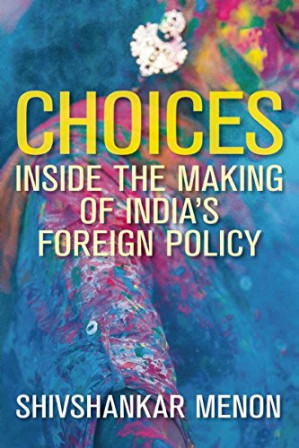
Choices: Inside the Making of Indias Foreign Policy (Geopolitics in the 21st Century) 🔍
Shivshankar Menon
Brookings Institution Press, Geopolitics in the 21st century, Washington, D.C, 2016
英语 [en] · PDF · 13.3MB · 2016 · 📘 非小说类图书 · 🚀/lgli/lgrs/nexusstc/upload/zlib · Save
描述
__A look behind the scenes of some of India’s most critical foreign policy decisions by the country’s former foreign secretary and national security adviser.__Every country must make choices about foreign policy and national security. Sometimes those choices turn out to have been correct, other times not. In this insider's account, Shivshankar Menon describes some of the most crucial decisions India has faced during his long career in governmentand how key personalities often had to make choices based on incomplete information under the pressure of fast-moving events.Menon either participated directly in or was associated with all the major Indian foreign policy decisions he describes in Choices. These include the 200508 U.S.India nuclear agreement; the first-ever boundary-related agreement between India and China; India's decision not to use overt force against Pakistan in response to the 2008 terrorist attacks in Mumbai; the 2009 defeat of the Tamil rebellion in Sri Lanka; and India's disavowal of the first-use of nuclear weapons. Menon examines what these choices reveal about India's strategic culture and decisionmaking, its policies toward the use of force, its long-term goals and priorities, and its future behavior.__Choices__ will be of interest to anyone searching for answers to questions about how one of the world's great, rising powers makes its decisions on the world stage, and the difficult choices that sometimes had to be made.
备用文件名
nexusstc/Choices: Inside the Making of India’s Foreign Policy/a2649f2809129c72aa06f598634ff264.pdf
备用文件名
lgli/Choices.pdf
备用文件名
lgrsnf/Choices.pdf
备用文件名
zlib/Society, Politics & Philosophy/Shivshankar Menon/Choices: Inside the Making of India’s Foreign Policy_2830602.pdf
备选标题
pdfimage.png
备选作者
Menon, Shivshankar
备选作者
Preview
备用版本
Rowman & Littlefield Publishing, Washington, D.C., 2016
备用版本
United States, United States of America
备用版本
2016-10-18
元数据中的注释
0
元数据中的注释
lg1587243
元数据中的注释
producers:
Mac OS X 10.12.1 Quartz PDFContext
Mac OS X 10.12.1 Quartz PDFContext
元数据中的注释
{"content":{"parsed_at":1713719678,"parser":{"name":"textparser","version":"0.1.125"},"source":{"name":"grobid","version":"0.8.0"}},"isbns":["0815729103","9780815729105"],"last_page":176,"publisher":"Brookings Institution Press","series":"Geopolitics in the 21st Century"}
备用描述
A look behind the scenes of some of India’s most critical foreign policy decisions by the country’s former foreign secretary and national security adviser.
Every country must make choices about foreign policy and national security. Sometimes those choices turn out to have been correct, other times not. In this insider's account, Shivshankar Menon describes some of the most crucial decisions India has faced during his long career in governmentand how key personalities often had to make choices based on incomplete information under the pressure of fast-moving events.
Menon either participated directly in or was associated with all the major Indian foreign policy decisions he describes in Choices. These include the 200508 U.S.India nuclear agreement; the first-ever boundary-related agreement between India and China; India's decision not to use overt force against Pakistan in response to the 2008 terrorist attacks in Mumbai; the 2009 defeat of the Tamil rebellion in Sri Lanka; and India's disavowal of the first-use of nuclear weapons. Menon examines what these choices reveal about India's strategic culture and decisionmaking, its policies toward the use of force, its long-term goals and priorities, and its future behavior.
Choices will be of interest to anyone searching for answers to questions about how one of the world's great, rising powers makes its decisions on the world stage, and the difficult choices that sometimes had to be made.
Every country must make choices about foreign policy and national security. Sometimes those choices turn out to have been correct, other times not. In this insider's account, Shivshankar Menon describes some of the most crucial decisions India has faced during his long career in governmentand how key personalities often had to make choices based on incomplete information under the pressure of fast-moving events.
Menon either participated directly in or was associated with all the major Indian foreign policy decisions he describes in Choices. These include the 200508 U.S.India nuclear agreement; the first-ever boundary-related agreement between India and China; India's decision not to use overt force against Pakistan in response to the 2008 terrorist attacks in Mumbai; the 2009 defeat of the Tamil rebellion in Sri Lanka; and India's disavowal of the first-use of nuclear weapons. Menon examines what these choices reveal about India's strategic culture and decisionmaking, its policies toward the use of force, its long-term goals and priorities, and its future behavior.
Choices will be of interest to anyone searching for answers to questions about how one of the world's great, rising powers makes its decisions on the world stage, and the difficult choices that sometimes had to be made.
备用描述
Every country must make choices about foreign policy and national security. Sometimes those choices turn out to have been correct, other times not. In this insider's account, Shivshankar Menon describes some of the most crucial decisions India has faced during his long career in government--and how key personalities often had to make choices based on incomplete information under the pressure of fast-moving events. Menon either participated directly in or was associated with all the major Indian foreign policy decisions he describes in Choices. These include the 2005-08 U.S.-India nuclear agreement; the first-ever boundary-related agreement between India and China; India's decision not to use overt force against Pakistan in response to the 2008 terrorist attacks in Mumbai; the 2009 defeat of the Tamil rebellion in Sri Lanka; and India's disavowal of the first-use of nuclear weapons. Menon examines what these choices reveal about India's strategic culture and decision making, its policies toward the use of force, its long-term goals and priorities, and its future behavior. Choices will be of interest to anyone searching for answers to questions about how one of the world's great, rising powers makes its decisions on the world stage, and the difficult choices that sometimes had to be made
备用描述
A look behind the scenes of some of India's most critical foreign policy decisions by the country's former foreign secretary and national security adviser. Every country must make choices about foreign policy and national security. Sometimes those choices turn out to have been correct, other times not. In this insider's account, Shivshankar Menon describes some of the most crucial decisions India has faced during his long career in government#x97;and how key personalities often had to make choices based on incomplete information under the pressure of fast-moving events. Menon either participated d
备用描述
A look behind the scenes of some of India's most critical foreign policy decisions by the country's former foreign secretary and national security adviser. Every country must make choices about foreign policy and national security. Sometimes those choices turn out to have been correct, other times not. In this insider's account, Shivshankar Menon describes some of the most crucial decisions India has faced during his long career in government#x97; and how key personalities often had to make choices based on incomplete information under the pressure of fast-moving events. Menon eitherparticipated d
开源日期
2016-11-27
🚀 快速下载
成为会员以支持书籍、论文等的长期保存。为了感谢您对我们的支持,您将获得高速下载权益。❤️
如果您在本月捐款,您将获得双倍的快速下载次数。
🐢 低速下载
由可信的合作方提供。 更多信息请参见常见问题解答。 (可能需要验证浏览器——无限次下载!)
- 低速服务器(合作方提供) #1 (稍快但需要排队)
- 低速服务器(合作方提供) #2 (稍快但需要排队)
- 低速服务器(合作方提供) #3 (稍快但需要排队)
- 低速服务器(合作方提供) #4 (稍快但需要排队)
- 低速服务器(合作方提供) #5 (无需排队,但可能非常慢)
- 低速服务器(合作方提供) #6 (无需排队,但可能非常慢)
- 低速服务器(合作方提供) #7 (无需排队,但可能非常慢)
- 低速服务器(合作方提供) #8 (无需排队,但可能非常慢)
- 低速服务器(合作方提供) #9 (无需排队,但可能非常慢)
- 下载后: 在我们的查看器中打开
所有选项下载的文件都相同,应该可以安全使用。即使这样,从互联网下载文件时始终要小心。例如,确保您的设备更新及时。
外部下载
-
对于大文件,我们建议使用下载管理器以防止中断。
推荐的下载管理器:JDownloader -
您将需要一个电子书或 PDF 阅读器来打开文件,具体取决于文件格式。
推荐的电子书阅读器:Anna的档案在线查看器、ReadEra和Calibre -
使用在线工具进行格式转换。
推荐的转换工具:CloudConvert和PrintFriendly -
您可以将 PDF 和 EPUB 文件发送到您的 Kindle 或 Kobo 电子阅读器。
推荐的工具:亚马逊的“发送到 Kindle”和djazz 的“发送到 Kobo/Kindle” -
支持作者和图书馆
✍️ 如果您喜欢这个并且能够负担得起,请考虑购买原版,或直接支持作者。
📚 如果您当地的图书馆有这本书,请考虑在那里免费借阅。
下面的文字仅以英文继续。
总下载量:
“文件的MD5”是根据文件内容计算出的哈希值,并且基于该内容具有相当的唯一性。我们这里索引的所有影子图书馆都主要使用MD5来标识文件。
一个文件可能会出现在多个影子图书馆中。有关我们编译的各种数据集的信息,请参见数据集页面。
有关此文件的详细信息,请查看其JSON 文件。 Live/debug JSON version. Live/debug page.