upload/wll/ENTER/Gov & Secrets/MONEY, Federal Reserve & Taxes/1 - More Books on Bus, Management & Econ/Human systems management integrating knowledge, management and systems.pdf
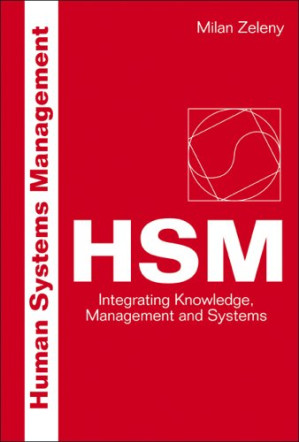
Human Systems Management: Integrating Knowledge, Management And Systems Integrating Knowledge, Management and Systems 🔍
Milan Zelený; World Scientific (Firm)
World Scientific Publishing Company, World Scientific Publishing Company, Hackensack, NJ, 2005
英语 [en] · PDF · 23.0MB · 2005 · 📘 非小说类图书 · 🚀/lgli/lgrs/nexusstc/upload/zlib · Save
描述
Human Systems Management Is An Important Work That Integrates Knowledge, Management And Systems Into A Unified World Of Thinking And Action In Business, Decision-making And Economics. It Presents A Modern Synthesis Of The Fields Of Knowledge Management, Systems Science And Human Organization. A Biological Rather Than Mechanistic Perspective Pervades The Text. New And Original Ideas And Approaches Are Presented With The Simplicity And Clarity Typical Of The Well-known Author. Contents:production Of Knowledge: Moving From Data And Information To Knowledge And Wisdommanagement Of Systems: Global Management Paradigmproducing Networks: Management And Self-production In Networksproducing Decisions: Multiple Criteria, Tradeoffs And Conflictsattaining Wisdom: Wisdom Of Management Systems Readership: Business Managers, Management Scientists, Business & Management Students, And Business & Management Consultants. Keywords:reviews:“only An Accomplished Author Like Dr Zeleny Would Dare Reconcile Business With Art That Is An Art Which Recognizes The Momentous Changes Which The Organization Has Suffered In Modern Times … Professor Zeleny Must Be Congratulated For His Effort Which Extends Common Efforts To Make The Subjects Of His Text More Meaningful And Understandable.”john P Van Gigch Professor Emeritus Of Management And Systems California State University “milan Zeleny Is Now The Most Cited Czech Economist. Zeleny's Long Awaited Book, 'hsm', Is A Vital Leading Indicator For 21st Century Management Action, Just As His Work Over 40 Years Ago Still Remains An Inspiration To Researchers In Multi-criteria Decision Making.”associate Professor Alan E Singer University Of Canterbury “professor Zeleny's Emphasis On The Importance Of Human Coordination Is Highly Illuminative, Especially When It Comes To The Re-integration Of Knowledge, Experiences And Morality Into Wisdom, Implying Cultural Enrichment And Comprehensive Human Development, Both Of Which Are Essential For Sustainable Development.”professor Kensei Hiwaki Tokyo International University “it Is Well Written And Structured, With A Minimum Of Mathematics, Thus Making It Appealing To A Broad Audience. It Provides Numerous Examples And Anecdotes Throughout … Overall, The Book Is Easy To Read, Gives A Good Overview Of The Topic Treated And Encourages The Reader To Think Outside The Box.”zentralblatt Math
备用文件名
lgli/D:\!genesis\library.nu\94\_194551.9417aec4ffebf045f8498aded27eea5c.pdf
备用文件名
lgrsnf/D:\!genesis\library.nu\94\_194551.9417aec4ffebf045f8498aded27eea5c.pdf
备用文件名
nexusstc/Human Systems Management: Integrating Knowledge, Management and Systems/9417aec4ffebf045f8498aded27eea5c.pdf
备用文件名
zlib/Engineering/Milan Zeleny/Human Systems Management: Integrating Knowledge, Management and Systems_952975.pdf
备选标题
Human Systems Management: Integrating Knowledge, Management and Systems (483 pages)
备选作者
Milan Zelený; World Scientific (Firm)
备选作者
by Milan Zeleny
备选作者
Zeleny, Milan
备用出版商
World Scientific Publishing Co Pte Ltd
备用版本
Hackensack, NJ, New Jersey, 2005
备用版本
Singapore Hackensack N.J, 2005
备用版本
Singapore, Singapore
备用版本
2, 20050901
备用版本
1, 2005
元数据中的注释
до 2011-01
元数据中的注释
lg528500
元数据中的注释
producers:
Acrobat Distiller 5.0.5 (Windows)
Acrobat Distiller 5.0.5 (Windows)
元数据中的注释
{"isbns":["9789810249137","9789812703538","9789814488846","9810249136","9812703535","9814488844"],"last_page":484,"publisher":"WORLD SCIENTIFIC"}
元数据中的注释
Includes bibliographical references and index.
备用描述
Contents......Page 18
Dedication......Page 6
Foreword......Page 8
Acknowledgments......Page 12
Introduction......Page 14
1.1 Information is Not Knowledge......Page 26
1.1.1 Knowledge Era......Page 27
1.1.2 Knowledge versus Information......Page 28
1.2 Knowledge as Capital......Page 30
1.2.1 Knowledge and the Prosperity of Nations......Page 32
1.3 Definition and Taxonomy of Knowledge......Page 37
1.3.1 Forms of Knowledge......Page 39
1.3.2 DIKW Chain......Page 40
1.3.3 Tacit and Explicit Knowledge?......Page 41
1.3.4 Measuring Knowledge......Page 42
1.3.5 Value of Knowledge: An Example......Page 44
1.3.6 Knowledge-Information Cycle: ECIS......Page 46
1.3.7 Theory of knowledge......Page 50
1.3.8 Language......Page 51
1.3.10 Knowledge as a Process......Page 52
1.3.11 Uses and Users of Knowledge......Page 53
1.4 Division and Reintegration of Knowledge......Page 55
1.4.1 Process of Reintegration......Page 62
1.5 Knowledge Management......Page 64
1.6 Wisdom and Strategy......Page 66
1.6.1 Definition......Page 67
1.6.2 On the Art of Asking Why......Page 68
1.6.3 Wisdom and Ethics......Page 69
1.6.4 Wisdom Based Strategy......Page 70
1.7.1 The Notion of Change......Page 73
1.7.2 The Impact of Communication......Page 76
1.7.3 The Nature of Love and Respect......Page 77
1.7.4 The Role of Conversation......Page 78
1.7.5 Purpose and Identity......Page 79
1.7.6 Human Systems......Page 80
1.8 Fuzzines, Ambiguity and Imprecision......Page 81
1.8.1 Language and Fuzzy Labels......Page 83
1.8.2 Fuzziness and Interpretation......Page 86
1.8.3 Negotiated Meaning......Page 87
1.8.4 Meaning from Imprecision: Fuzzy Sets......Page 90
1.8.5 Production of Knowledge......Page 92
1.8.5.1 Knowledge of the Constructed......Page 93
1.8.5.2 Construction of the Fuzzy......Page 94
1.8.6 Cognitive Equilibrium......Page 97
CHAPTER 2 MANAGEMENT OF SYSTEMS: Global Management Paradigm......Page 104
2.1 Managing in the Global Era: GMP......Page 105
2.1.1 Business Process Reengineering (BPR)......Page 108
2.1.1.1 What is BPR?......Page 109
2.1.1.2 Reengineering as Reintegration......Page 111
2.1.1.3 Continuous Improvement......Page 112
2.1.1.4 The “10-90 Rule”......Page 113
2.1.1.5 The Process of BPR......Page 114
2.1.1.6 Reengineering and Strategy......Page 116
2.1.2 Customer Integration (IPM)......Page 117
2.1.2.1 Roots of IPM......Page 118
2.1.2.2 Role of Feedback......Page 120
2.1.2.3 The Role of Knowledge......Page 121
2.1.2.4 Prosumer......Page 122
2.1.2.5 Summary of IPM......Page 123
2.1.2.6 Process Ownership......Page 124
2.1.2.7 Planning and Strategy Formation......Page 125
2.1.3 Mass Customization......Page 127
2.1.3.1 Customizing Value Chain......Page 129
2.1.3.2 New Realities......Page 130
2.1.3.3 Customer-Triggered Production......Page 131
2.1.3.4 Examples of MC......Page 132
2.1.3.5 Discarding the Old, Learning the New......Page 134
2.1.3.6 Knowledge Beyond Information......Page 135
2.1.4 Elimination of Tradeoffs......Page 136
2.1.4.1 Multiple Objectives and Tradeoffs......Page 137
2.1.4.2 Tradeoffs Graphics......Page 138
2.1.4.3 Numerical Tradeoffs......Page 140
2.1.4.4 Optimal Portfolio of Resources......Page 143
2.1.5 Intracompany Markets and Amoeba Systems......Page 145
2.1.5.1 Biotic Amoeba Analogy......Page 146
2.1.6 Business Lnetics......Page 147
2.2 Forecasting and Foresight......Page 151
2.2.1 Decline of Forecasting......Page 152
2.2.2 Reframing Strategy and Knowledge......Page 156
2.3 Self-service and Do-It-Yourself......Page 158
2.3.1 Key Concepts......Page 159
2.3.2 Evolution of Sectors of Employment......Page 161
2.3.3 Towards Self-service......Page 162
2.3.4 Work and Leisure......Page 163
2.3.5 Telepresence and Telework......Page 166
2.3.6 What is Telework?......Page 167
2.3.7 Applications of Telework......Page 168
2.3.8 Technical Challenges......Page 170
2.3.9 The Next Best Thing to Being There......Page 171
2.4 MBA Global Education......Page 174
2.4.1 MBA and the Schools of Business......Page 175
2.4.2 Need for Integration......Page 176
2.4.3 What is the Global E-MBA?......Page 178
2.4.4 Mass-Customized MBA......Page 179
2.4.4.2 Online Course Exchange......Page 181
2.4.4.5 Support Net......Page 182
3.1 New Economy of Networks......Page 184
3.1.1 Evolution of Management Systems......Page 185
3.1.1.1 Summary ofthe Four Stages......Page 187
3.1.1.2 Stakeholding in Networks......Page 188
3.1.1.3 New Rules......Page 189
3.1.1.4 Biologcal Imperative......Page 193
3.1.1.5 Evolutionary Approach......Page 195
3.1.1.6 Strategy Paradigm Reversal......Page 196
3.1.2 The New Economy and the Cluetrain Manifesto......Page 201
3.2 High Technology Management......Page 205
3.2.1 Components of Technology......Page 207
3.2.2 Technology Support Net......Page 208
3.2.3 High Technology......Page 210
3.2.4 High-Technology Environment......Page 213
3.2.5 An Example of High Technology......Page 215
3.3.1 Machine/Organism Dichotomy......Page 217
3.3.2 Autopoiesis (Self-Production) of Networks......Page 219
3.3.2.2 Concepts and Definitions......Page 220
3.3.2.3 Organizational Embedding......Page 223
3.3.2.4 The Role of Feedback......Page 224
3.3.2.5 Summary of Autopoiesis......Page 225
3.3.2.6 Autopoiesis and Knowledge......Page 227
3.3.3 The Model of Autopoiesis......Page 228
3.3.3.1 Sustainability and Self-sustainability......Page 230
3.3.4 Regonal Enterprise Networks......Page 231
3.3.5 TCG Triangulation Networks......Page 233
3.3.6 Eco-Societies and Social Autopoiesis......Page 234
3.3.6.1 Individuals in Networks......Page 235
3.3.6.2 Social Self-Organization......Page 236
3.3.6.3 Detection of Autopoiesis......Page 239
3.3.6.4 Boundaries of Social Systems......Page 241
3.3.6.5 All Autopoietic Systems are Social Systems......Page 242
3.3.6.6 Biological Organisms are Social Systems . .......Page 243
3.3.6.8 Social Neighborhoods......Page 244
3.3.6.9 Birth-Death Processes......Page 245
3.3.6.10 Evolution......Page 246
3.3.6.11 Closure......Page 247
3.3.7 Tectology and its Basic Concepts......Page 248
3.3.7.1 Complexes: Formative Mechanisms......Page 249
3.3.7.3 Tectological Implications......Page 250
3.3.7.5 Crises......Page 251
3.3.7.6 Language......Page 252
4.1 Multiple Criteria Decision Making......Page 254
4.1.2 Attributes......Page 256
4.1.3 Objectives......Page 258
4.1.4 Goals......Page 259
4.1.5 Vector Optimization......Page 262
4.1.6 Scalar Maximization and Weights of Importance......Page 263
4.1.7 Interactive Support......Page 265
4.1.8 Multiple Decision Makers......Page 268
4.2.1 Beauty......Page 269
4.2.2 Quality......Page 271
4.2.3 Harmony......Page 272
4.3 Tradeoffs-Free Decision Making......Page 273
4.3.1 On the Nature of Tradeoffs......Page 274
4.3.2 Examples of Tradeoffs......Page 275
4.3.3 New Thoughts on Tradeoffs......Page 277
4.4 Conflict and its Dissolution......Page 278
4.4.1 Definition of Conflict......Page 279
4.4.2 Conflict Dissolution......Page 284
4.4.3 Significance of Conflict......Page 287
4.4.4 Prominent Alternative......Page 288
4.5.1 Means and Ends......Page 289
4.5.2 Utility Maximization......Page 290
4.5.3 Ideal Point......Page 293
4.5.4 Displacement of Preferences......Page 294
4.5.5 Conclusion......Page 298
CHAPTER 5 ATTAINING WISDOM: Wisdom of Management Systems......Page 300
5.1.1 Henry Ford......Page 301
5.1.2 Ross Perot......Page 304
5.1.3 George F. Johnson......Page 305
5.1.4 James F. Lincoln......Page 307
5.1.5 Sir Fletcher Jones......Page 309
5.1.6 Tomas Bata......Page 312
5.1.7 Homer M. Sarasohn......Page 313
5.2 Bata System of Management......Page 314
5.2.1 The System of “Eight Principles”......Page 315
5.2.2 Evolution of Bata Co.......Page 316
5.2.3 The Aim of an Enterprise......Page 322
5.3 Bata Management Wisdom......Page 323
5.4 Wisdom and Culture......Page 343
APPENDIX (Selected Formal Models)......Page 348
A1. Simulation Model of Autopoiesis......Page 350
A2. Eight Concepts of Optimality......Page 366
A3. De Novo Programming......Page 378
A4. The External Reconstruction Approach (ERA)......Page 388
A5. Human Judgment and Regression Analysis......Page 396
A6. Consumer Attitudes Modeling (ADAM)......Page 404
A7. Risk Measures and Portfolio Analysis......Page 418
A8. Formalism of Fuzziness......Page 438
Author's Biography......Page 444
Human Systems Management. the Journal......Page 445
Selected Publications of the Author......Page 447
Bibliography......Page 466
Index......Page 480
Dedication......Page 6
Foreword......Page 8
Acknowledgments......Page 12
Introduction......Page 14
1.1 Information is Not Knowledge......Page 26
1.1.1 Knowledge Era......Page 27
1.1.2 Knowledge versus Information......Page 28
1.2 Knowledge as Capital......Page 30
1.2.1 Knowledge and the Prosperity of Nations......Page 32
1.3 Definition and Taxonomy of Knowledge......Page 37
1.3.1 Forms of Knowledge......Page 39
1.3.2 DIKW Chain......Page 40
1.3.3 Tacit and Explicit Knowledge?......Page 41
1.3.4 Measuring Knowledge......Page 42
1.3.5 Value of Knowledge: An Example......Page 44
1.3.6 Knowledge-Information Cycle: ECIS......Page 46
1.3.7 Theory of knowledge......Page 50
1.3.8 Language......Page 51
1.3.10 Knowledge as a Process......Page 52
1.3.11 Uses and Users of Knowledge......Page 53
1.4 Division and Reintegration of Knowledge......Page 55
1.4.1 Process of Reintegration......Page 62
1.5 Knowledge Management......Page 64
1.6 Wisdom and Strategy......Page 66
1.6.1 Definition......Page 67
1.6.2 On the Art of Asking Why......Page 68
1.6.3 Wisdom and Ethics......Page 69
1.6.4 Wisdom Based Strategy......Page 70
1.7.1 The Notion of Change......Page 73
1.7.2 The Impact of Communication......Page 76
1.7.3 The Nature of Love and Respect......Page 77
1.7.4 The Role of Conversation......Page 78
1.7.5 Purpose and Identity......Page 79
1.7.6 Human Systems......Page 80
1.8 Fuzzines, Ambiguity and Imprecision......Page 81
1.8.1 Language and Fuzzy Labels......Page 83
1.8.2 Fuzziness and Interpretation......Page 86
1.8.3 Negotiated Meaning......Page 87
1.8.4 Meaning from Imprecision: Fuzzy Sets......Page 90
1.8.5 Production of Knowledge......Page 92
1.8.5.1 Knowledge of the Constructed......Page 93
1.8.5.2 Construction of the Fuzzy......Page 94
1.8.6 Cognitive Equilibrium......Page 97
CHAPTER 2 MANAGEMENT OF SYSTEMS: Global Management Paradigm......Page 104
2.1 Managing in the Global Era: GMP......Page 105
2.1.1 Business Process Reengineering (BPR)......Page 108
2.1.1.1 What is BPR?......Page 109
2.1.1.2 Reengineering as Reintegration......Page 111
2.1.1.3 Continuous Improvement......Page 112
2.1.1.4 The “10-90 Rule”......Page 113
2.1.1.5 The Process of BPR......Page 114
2.1.1.6 Reengineering and Strategy......Page 116
2.1.2 Customer Integration (IPM)......Page 117
2.1.2.1 Roots of IPM......Page 118
2.1.2.2 Role of Feedback......Page 120
2.1.2.3 The Role of Knowledge......Page 121
2.1.2.4 Prosumer......Page 122
2.1.2.5 Summary of IPM......Page 123
2.1.2.6 Process Ownership......Page 124
2.1.2.7 Planning and Strategy Formation......Page 125
2.1.3 Mass Customization......Page 127
2.1.3.1 Customizing Value Chain......Page 129
2.1.3.2 New Realities......Page 130
2.1.3.3 Customer-Triggered Production......Page 131
2.1.3.4 Examples of MC......Page 132
2.1.3.5 Discarding the Old, Learning the New......Page 134
2.1.3.6 Knowledge Beyond Information......Page 135
2.1.4 Elimination of Tradeoffs......Page 136
2.1.4.1 Multiple Objectives and Tradeoffs......Page 137
2.1.4.2 Tradeoffs Graphics......Page 138
2.1.4.3 Numerical Tradeoffs......Page 140
2.1.4.4 Optimal Portfolio of Resources......Page 143
2.1.5 Intracompany Markets and Amoeba Systems......Page 145
2.1.5.1 Biotic Amoeba Analogy......Page 146
2.1.6 Business Lnetics......Page 147
2.2 Forecasting and Foresight......Page 151
2.2.1 Decline of Forecasting......Page 152
2.2.2 Reframing Strategy and Knowledge......Page 156
2.3 Self-service and Do-It-Yourself......Page 158
2.3.1 Key Concepts......Page 159
2.3.2 Evolution of Sectors of Employment......Page 161
2.3.3 Towards Self-service......Page 162
2.3.4 Work and Leisure......Page 163
2.3.5 Telepresence and Telework......Page 166
2.3.6 What is Telework?......Page 167
2.3.7 Applications of Telework......Page 168
2.3.8 Technical Challenges......Page 170
2.3.9 The Next Best Thing to Being There......Page 171
2.4 MBA Global Education......Page 174
2.4.1 MBA and the Schools of Business......Page 175
2.4.2 Need for Integration......Page 176
2.4.3 What is the Global E-MBA?......Page 178
2.4.4 Mass-Customized MBA......Page 179
2.4.4.2 Online Course Exchange......Page 181
2.4.4.5 Support Net......Page 182
3.1 New Economy of Networks......Page 184
3.1.1 Evolution of Management Systems......Page 185
3.1.1.1 Summary ofthe Four Stages......Page 187
3.1.1.2 Stakeholding in Networks......Page 188
3.1.1.3 New Rules......Page 189
3.1.1.4 Biologcal Imperative......Page 193
3.1.1.5 Evolutionary Approach......Page 195
3.1.1.6 Strategy Paradigm Reversal......Page 196
3.1.2 The New Economy and the Cluetrain Manifesto......Page 201
3.2 High Technology Management......Page 205
3.2.1 Components of Technology......Page 207
3.2.2 Technology Support Net......Page 208
3.2.3 High Technology......Page 210
3.2.4 High-Technology Environment......Page 213
3.2.5 An Example of High Technology......Page 215
3.3.1 Machine/Organism Dichotomy......Page 217
3.3.2 Autopoiesis (Self-Production) of Networks......Page 219
3.3.2.2 Concepts and Definitions......Page 220
3.3.2.3 Organizational Embedding......Page 223
3.3.2.4 The Role of Feedback......Page 224
3.3.2.5 Summary of Autopoiesis......Page 225
3.3.2.6 Autopoiesis and Knowledge......Page 227
3.3.3 The Model of Autopoiesis......Page 228
3.3.3.1 Sustainability and Self-sustainability......Page 230
3.3.4 Regonal Enterprise Networks......Page 231
3.3.5 TCG Triangulation Networks......Page 233
3.3.6 Eco-Societies and Social Autopoiesis......Page 234
3.3.6.1 Individuals in Networks......Page 235
3.3.6.2 Social Self-Organization......Page 236
3.3.6.3 Detection of Autopoiesis......Page 239
3.3.6.4 Boundaries of Social Systems......Page 241
3.3.6.5 All Autopoietic Systems are Social Systems......Page 242
3.3.6.6 Biological Organisms are Social Systems . .......Page 243
3.3.6.8 Social Neighborhoods......Page 244
3.3.6.9 Birth-Death Processes......Page 245
3.3.6.10 Evolution......Page 246
3.3.6.11 Closure......Page 247
3.3.7 Tectology and its Basic Concepts......Page 248
3.3.7.1 Complexes: Formative Mechanisms......Page 249
3.3.7.3 Tectological Implications......Page 250
3.3.7.5 Crises......Page 251
3.3.7.6 Language......Page 252
4.1 Multiple Criteria Decision Making......Page 254
4.1.2 Attributes......Page 256
4.1.3 Objectives......Page 258
4.1.4 Goals......Page 259
4.1.5 Vector Optimization......Page 262
4.1.6 Scalar Maximization and Weights of Importance......Page 263
4.1.7 Interactive Support......Page 265
4.1.8 Multiple Decision Makers......Page 268
4.2.1 Beauty......Page 269
4.2.2 Quality......Page 271
4.2.3 Harmony......Page 272
4.3 Tradeoffs-Free Decision Making......Page 273
4.3.1 On the Nature of Tradeoffs......Page 274
4.3.2 Examples of Tradeoffs......Page 275
4.3.3 New Thoughts on Tradeoffs......Page 277
4.4 Conflict and its Dissolution......Page 278
4.4.1 Definition of Conflict......Page 279
4.4.2 Conflict Dissolution......Page 284
4.4.3 Significance of Conflict......Page 287
4.4.4 Prominent Alternative......Page 288
4.5.1 Means and Ends......Page 289
4.5.2 Utility Maximization......Page 290
4.5.3 Ideal Point......Page 293
4.5.4 Displacement of Preferences......Page 294
4.5.5 Conclusion......Page 298
CHAPTER 5 ATTAINING WISDOM: Wisdom of Management Systems......Page 300
5.1.1 Henry Ford......Page 301
5.1.2 Ross Perot......Page 304
5.1.3 George F. Johnson......Page 305
5.1.4 James F. Lincoln......Page 307
5.1.5 Sir Fletcher Jones......Page 309
5.1.6 Tomas Bata......Page 312
5.1.7 Homer M. Sarasohn......Page 313
5.2 Bata System of Management......Page 314
5.2.1 The System of “Eight Principles”......Page 315
5.2.2 Evolution of Bata Co.......Page 316
5.2.3 The Aim of an Enterprise......Page 322
5.3 Bata Management Wisdom......Page 323
5.4 Wisdom and Culture......Page 343
APPENDIX (Selected Formal Models)......Page 348
A1. Simulation Model of Autopoiesis......Page 350
A2. Eight Concepts of Optimality......Page 366
A3. De Novo Programming......Page 378
A4. The External Reconstruction Approach (ERA)......Page 388
A5. Human Judgment and Regression Analysis......Page 396
A6. Consumer Attitudes Modeling (ADAM)......Page 404
A7. Risk Measures and Portfolio Analysis......Page 418
A8. Formalism of Fuzziness......Page 438
Author's Biography......Page 444
Human Systems Management. the Journal......Page 445
Selected Publications of the Author......Page 447
Bibliography......Page 466
Index......Page 480
备用描述
Contents 18
Dedication 6
Foreword 8
Acknowledgments 12
Introduction 14
CHAPTER 1 PRODUCTION OF KNOWLEDGE: Moving from Data and Information to Knowledge and Wisdom 26
1.1 Information is Not Knowledge 26
1.1.1 Knowledge Era 27
1.1.2 Knowledge versus Information 28
1.2 Knowledge as Capital 30
1.2.1 Knowledge and the Prosperity of Nations 32
1.3 Definition and Taxonomy of Knowledge 37
1.3.1 Forms of Knowledge 39
1.3.2 DIKW Chain 40
1.3.3 Tacit and Explicit Knowledge? 41
1.3.4 Measuring Knowledge 42
1.3.5 Value of Knowledge: An Example 44
1.3.6 Knowledge-Information Cycle: ECIS 46
1.3.7 Theory of knowledge 50
1.3.8 Language 51
1.3.9 Community of Action 52
1.3.10 Knowledge as a Process 52
1.3.11 Uses and Users of Knowledge 53
1.4 Division and Reintegration of Knowledge 55
1.4.1 Process of Reintegration 62
1.5 Knowledge Management 64
1.6 Wisdom and Strategy 66
1.6.1 Definition 67
1.6.2 On the Art of Asking Why 68
1.6.3 Wisdom and Ethics 69
1.6.4 Wisdom Based Strategy 70
1.7 Human Systems Management 73
1.7.1 The Notion of Change 73
1.7.2 The Impact of Communication 76
1.7.3 The Nature of Love and Respect 77
1.7.4 The Role of Conversation 78
1.7.5 Purpose and Identity 79
1.7.6 Human Systems 80
1.8 Fuzzines, Ambiguity and Imprecision 81
1.8.1 Language and Fuzzy Labels 83
1.8.2 Fuzziness and Interpretation 86
1.8.3 Negotiated Meaning 87
1.8.4 Meaning from Imprecision: Fuzzy Sets 90
1.8.5 Production of Knowledge 92
1.8.5.1 Knowledge of the Constructed 93
1.8.5.2 Construction of the Fuzzy 94
1.8.6 Cognitive Equilibrium 97
CHAPTER 2 MANAGEMENT OF SYSTEMS: Global Management Paradigm 104
2.1 Managing in the Global Era: GMP 105
2.1.1 Business Process Reengineering (BPR) 108
2.1.1.1 What is BPR? 109
2.1.1.2 Reengineering as Reintegration 111
2.1.1.3 Continuous Improvement 112
2.1.1.4 The “10-90 Rule” 113
2.1.1.5 The Process of BPR 114
2.1.1.6 Reengineering and Strategy 116
2.1.2 Customer Integration (IPM) 117
2.1.2.1 Roots of IPM 118
2.1.2.2 Role of Feedback 120
2.1.2.3 The Role of Knowledge 121
2.1.2.4 Prosumer 122
2.1.2.5 Summary of IPM 123
2.1.2.6 Process Ownership 124
2.1.2.7 Planning and Strategy Formation 125
2.1.3 Mass Customization 127
2.1.3.1 Customizing Value Chain 129
2.1.3.2 New Realities 130
2.1.3.3 Customer-Triggered Production 131
2.1.3.4 Examples of MC 132
2.1.3.5 Discarding the Old, Learning the New 134
2.1.3.6 Knowledge Beyond Information 135
2.1.4 Elimination of Tradeoffs 136
2.1.4.1 Multiple Objectives and Tradeoffs 137
2.1.4.2 Tradeoffs Graphics 138
2.1.4.3 Numerical Tradeoffs 140
2.1.4.4 Optimal Portfolio of Resources 143
2.1.5 Intracompany Markets and Amoeba Systems 145
2.1.5.1 Biotic Amoeba Analogy 146
2.1.6 Business Lnetics 147
2.2 Forecasting and Foresight 151
2.2.1 Decline of Forecasting 152
2.2.2 Reframing Strategy and Knowledge 156
2.3 Self-service and Do-It-Yourself 158
2.3.1 Key Concepts 159
2.3.2 Evolution of Sectors of Employment 161
2.3.3 Towards Self-service 162
2.3.4 Work and Leisure 163
2.3.5 Telepresence and Telework 166
2.3.6 What is Telework? 167
2.3.7 Applications of Telework 168
2.3.8 Technical Challenges 170
2.3.9 The Next Best Thing to Being There 171
2.4 MBA Global Education 174
2.4.1 MBA and the Schools of Business 175
2.4.2 Need for Integration 176
2.4.3 What is the Global E-MBA? 178
2.4.4 Mass-Customized MBA 179
2.4.4.1 Faculty 181
2.4.4.2 Online Course Exchange 181
2.4.4.3 Suppliers 182
2.4.4.4 Students 182
2.4.4.5 Support Net 182
CHAPTER 3 PRODUCING NETWORKS: Management and Self-Production in Networks 184
3.1 New Economy of Networks 184
3.1.1 Evolution of Management Systems 185
3.1.1.1 Summary ofthe Four Stages 187
3.1.1.2 Stakeholding in Networks 188
3.1.1.3 New Rules 189
3.1.1.4 Biologcal Imperative 193
3.1.1.5 Evolutionary Approach 195
3.1.1.6 Strategy Paradigm Reversal 196
3.1.2 The New Economy and the Cluetrain Manifesto 201
3.2 High Technology Management 205
3.2.1 Components of Technology 207
3.2.2 Technology Support Net 208
3.2.3 High Technology 210
3.2.4 High-Technology Environment 213
3.2.5 An Example of High Technology 215
3.3 Autopoiesis 217
3.3.1 Machine/Organism Dichotomy 217
3.3.2 Autopoiesis (Self-Production) of Networks 219
3.3.2.1 Organization and Structure 220
3.3.2.2 Concepts and Definitions 220
3.3.2.3 Organizational Embedding 223
3.3.2.4 The Role of Feedback 224
3.3.2.5 Summary of Autopoiesis 225
3.3.2.6 Autopoiesis and Knowledge 227
3.3.3 The Model of Autopoiesis 228
3.3.3.1 Sustainability and Self-sustainability 230
3.3.4 Regonal Enterprise Networks 231
3.3.5 TCG Triangulation Networks 233
3.3.6 Eco-Societies and Social Autopoiesis 234
3.3.6.1 Individuals in Networks 235
3.3.6.2 Social Self-Organization 236
3.3.6.3 Detection of Autopoiesis 239
3.3.6.4 Boundaries of Social Systems 241
3.3.6.5 All Autopoietic Systems are Social Systems 242
3.3.6.6 Biological Organisms are Social Systems . . 243
3.3.6.7 Communicatlon 244
3.3.6.8 Social Neighborhoods 244
3.3.6.9 Birth-Death Processes 245
3.3.6.10 Evolution 246
3.3.6.11 Closure 247
3.3.7 Tectology and its Basic Concepts 248
3.3.7.1 Complexes: Formative Mechanisms 249
3.3.7.2 Complexes: Regulatory Mechanisms 250
3.3.7.3 Tectological Implications 250
3.3.7.4 Transformation 251
3.3.7.5 Crises 251
3.3.7.6 Language 252
CHAPTER 4 PRODUCING DECISIONS: Multiple Criteria. Tradeoffs and Conflicts 254
4.1 Multiple Criteria Decision Making 254
4.1.1 Types of Criteria 256
4.1.2 Attributes 256
4.1.3 Objectives 258
4.1.4 Goals 259
4.1.5 Vector Optimization 262
4.1.6 Scalar Maximization and Weights of Importance 263
4.1.7 Interactive Support 265
4.1.8 Multiple Decision Makers 268
4.2 Concepts of Beauty, Quality and Harmony 269
4.2.1 Beauty 269
4.2.2 Quality 271
4.2.3 Harmony 272
4.3 Tradeoffs-Free Decision Making 273
4.3.1 On the Nature of Tradeoffs 274
4.3.2 Examples of Tradeoffs 275
4.3.3 New Thoughts on Tradeoffs 277
4.4 Conflict and its Dissolution 278
4.4.1 Definition of Conflict 279
4.4.2 Conflict Dissolution 284
4.4.3 Significance of Conflict 287
4.4.4 Prominent Alternative 288
4.5 Theory of the Displaced Ideal 289
4.5.1 Means and Ends 289
4.5.2 Utility Maximization 290
4.5.3 Ideal Point 293
4.5.4 Displacement of Preferences 294
4.5.5 Conclusion 298
CHAPTER 5 ATTAINING WISDOM: Wisdom of Management Systems 300
5.1 Management Wisdom of the West 301
5.1.1 Henry Ford 301
5.1.2 Ross Perot 304
5.1.3 George F. Johnson 305
5.1.4 James F. Lincoln 307
5.1.5 Sir Fletcher Jones 309
5.1.6 Tomas Bata 312
5.1.7 Homer M. Sarasohn 313
5.2 Bata System of Management 314
5.2.1 The System of “Eight Principles” 315
5.2.2 Evolution of Bata Co. 316
5.2.3 The Aim of an Enterprise 322
5.3 Bata Management Wisdom 323
5.4 Wisdom and Culture 343
APPENDIX (Selected Formal Models) 348
A1. Simulation Model of Autopoiesis 350
A2. Eight Concepts of Optimality 366
A3. De Novo Programming 378
A4. The External Reconstruction Approach (ERA) 388
A5. Human Judgment and Regression Analysis 396
A6. Consumer Attitudes Modeling (ADAM) 404
A7. Risk Measures and Portfolio Analysis 418
A8. Formalism of Fuzziness 438
Author's Biography 444
Human Systems Management. the Journal 445
Selected Publications of the Author 447
Bibliography 466
Index 480
Dedication 6
Foreword 8
Acknowledgments 12
Introduction 14
CHAPTER 1 PRODUCTION OF KNOWLEDGE: Moving from Data and Information to Knowledge and Wisdom 26
1.1 Information is Not Knowledge 26
1.1.1 Knowledge Era 27
1.1.2 Knowledge versus Information 28
1.2 Knowledge as Capital 30
1.2.1 Knowledge and the Prosperity of Nations 32
1.3 Definition and Taxonomy of Knowledge 37
1.3.1 Forms of Knowledge 39
1.3.2 DIKW Chain 40
1.3.3 Tacit and Explicit Knowledge? 41
1.3.4 Measuring Knowledge 42
1.3.5 Value of Knowledge: An Example 44
1.3.6 Knowledge-Information Cycle: ECIS 46
1.3.7 Theory of knowledge 50
1.3.8 Language 51
1.3.9 Community of Action 52
1.3.10 Knowledge as a Process 52
1.3.11 Uses and Users of Knowledge 53
1.4 Division and Reintegration of Knowledge 55
1.4.1 Process of Reintegration 62
1.5 Knowledge Management 64
1.6 Wisdom and Strategy 66
1.6.1 Definition 67
1.6.2 On the Art of Asking Why 68
1.6.3 Wisdom and Ethics 69
1.6.4 Wisdom Based Strategy 70
1.7 Human Systems Management 73
1.7.1 The Notion of Change 73
1.7.2 The Impact of Communication 76
1.7.3 The Nature of Love and Respect 77
1.7.4 The Role of Conversation 78
1.7.5 Purpose and Identity 79
1.7.6 Human Systems 80
1.8 Fuzzines, Ambiguity and Imprecision 81
1.8.1 Language and Fuzzy Labels 83
1.8.2 Fuzziness and Interpretation 86
1.8.3 Negotiated Meaning 87
1.8.4 Meaning from Imprecision: Fuzzy Sets 90
1.8.5 Production of Knowledge 92
1.8.5.1 Knowledge of the Constructed 93
1.8.5.2 Construction of the Fuzzy 94
1.8.6 Cognitive Equilibrium 97
CHAPTER 2 MANAGEMENT OF SYSTEMS: Global Management Paradigm 104
2.1 Managing in the Global Era: GMP 105
2.1.1 Business Process Reengineering (BPR) 108
2.1.1.1 What is BPR? 109
2.1.1.2 Reengineering as Reintegration 111
2.1.1.3 Continuous Improvement 112
2.1.1.4 The “10-90 Rule” 113
2.1.1.5 The Process of BPR 114
2.1.1.6 Reengineering and Strategy 116
2.1.2 Customer Integration (IPM) 117
2.1.2.1 Roots of IPM 118
2.1.2.2 Role of Feedback 120
2.1.2.3 The Role of Knowledge 121
2.1.2.4 Prosumer 122
2.1.2.5 Summary of IPM 123
2.1.2.6 Process Ownership 124
2.1.2.7 Planning and Strategy Formation 125
2.1.3 Mass Customization 127
2.1.3.1 Customizing Value Chain 129
2.1.3.2 New Realities 130
2.1.3.3 Customer-Triggered Production 131
2.1.3.4 Examples of MC 132
2.1.3.5 Discarding the Old, Learning the New 134
2.1.3.6 Knowledge Beyond Information 135
2.1.4 Elimination of Tradeoffs 136
2.1.4.1 Multiple Objectives and Tradeoffs 137
2.1.4.2 Tradeoffs Graphics 138
2.1.4.3 Numerical Tradeoffs 140
2.1.4.4 Optimal Portfolio of Resources 143
2.1.5 Intracompany Markets and Amoeba Systems 145
2.1.5.1 Biotic Amoeba Analogy 146
2.1.6 Business Lnetics 147
2.2 Forecasting and Foresight 151
2.2.1 Decline of Forecasting 152
2.2.2 Reframing Strategy and Knowledge 156
2.3 Self-service and Do-It-Yourself 158
2.3.1 Key Concepts 159
2.3.2 Evolution of Sectors of Employment 161
2.3.3 Towards Self-service 162
2.3.4 Work and Leisure 163
2.3.5 Telepresence and Telework 166
2.3.6 What is Telework? 167
2.3.7 Applications of Telework 168
2.3.8 Technical Challenges 170
2.3.9 The Next Best Thing to Being There 171
2.4 MBA Global Education 174
2.4.1 MBA and the Schools of Business 175
2.4.2 Need for Integration 176
2.4.3 What is the Global E-MBA? 178
2.4.4 Mass-Customized MBA 179
2.4.4.1 Faculty 181
2.4.4.2 Online Course Exchange 181
2.4.4.3 Suppliers 182
2.4.4.4 Students 182
2.4.4.5 Support Net 182
CHAPTER 3 PRODUCING NETWORKS: Management and Self-Production in Networks 184
3.1 New Economy of Networks 184
3.1.1 Evolution of Management Systems 185
3.1.1.1 Summary ofthe Four Stages 187
3.1.1.2 Stakeholding in Networks 188
3.1.1.3 New Rules 189
3.1.1.4 Biologcal Imperative 193
3.1.1.5 Evolutionary Approach 195
3.1.1.6 Strategy Paradigm Reversal 196
3.1.2 The New Economy and the Cluetrain Manifesto 201
3.2 High Technology Management 205
3.2.1 Components of Technology 207
3.2.2 Technology Support Net 208
3.2.3 High Technology 210
3.2.4 High-Technology Environment 213
3.2.5 An Example of High Technology 215
3.3 Autopoiesis 217
3.3.1 Machine/Organism Dichotomy 217
3.3.2 Autopoiesis (Self-Production) of Networks 219
3.3.2.1 Organization and Structure 220
3.3.2.2 Concepts and Definitions 220
3.3.2.3 Organizational Embedding 223
3.3.2.4 The Role of Feedback 224
3.3.2.5 Summary of Autopoiesis 225
3.3.2.6 Autopoiesis and Knowledge 227
3.3.3 The Model of Autopoiesis 228
3.3.3.1 Sustainability and Self-sustainability 230
3.3.4 Regonal Enterprise Networks 231
3.3.5 TCG Triangulation Networks 233
3.3.6 Eco-Societies and Social Autopoiesis 234
3.3.6.1 Individuals in Networks 235
3.3.6.2 Social Self-Organization 236
3.3.6.3 Detection of Autopoiesis 239
3.3.6.4 Boundaries of Social Systems 241
3.3.6.5 All Autopoietic Systems are Social Systems 242
3.3.6.6 Biological Organisms are Social Systems . . 243
3.3.6.7 Communicatlon 244
3.3.6.8 Social Neighborhoods 244
3.3.6.9 Birth-Death Processes 245
3.3.6.10 Evolution 246
3.3.6.11 Closure 247
3.3.7 Tectology and its Basic Concepts 248
3.3.7.1 Complexes: Formative Mechanisms 249
3.3.7.2 Complexes: Regulatory Mechanisms 250
3.3.7.3 Tectological Implications 250
3.3.7.4 Transformation 251
3.3.7.5 Crises 251
3.3.7.6 Language 252
CHAPTER 4 PRODUCING DECISIONS: Multiple Criteria. Tradeoffs and Conflicts 254
4.1 Multiple Criteria Decision Making 254
4.1.1 Types of Criteria 256
4.1.2 Attributes 256
4.1.3 Objectives 258
4.1.4 Goals 259
4.1.5 Vector Optimization 262
4.1.6 Scalar Maximization and Weights of Importance 263
4.1.7 Interactive Support 265
4.1.8 Multiple Decision Makers 268
4.2 Concepts of Beauty, Quality and Harmony 269
4.2.1 Beauty 269
4.2.2 Quality 271
4.2.3 Harmony 272
4.3 Tradeoffs-Free Decision Making 273
4.3.1 On the Nature of Tradeoffs 274
4.3.2 Examples of Tradeoffs 275
4.3.3 New Thoughts on Tradeoffs 277
4.4 Conflict and its Dissolution 278
4.4.1 Definition of Conflict 279
4.4.2 Conflict Dissolution 284
4.4.3 Significance of Conflict 287
4.4.4 Prominent Alternative 288
4.5 Theory of the Displaced Ideal 289
4.5.1 Means and Ends 289
4.5.2 Utility Maximization 290
4.5.3 Ideal Point 293
4.5.4 Displacement of Preferences 294
4.5.5 Conclusion 298
CHAPTER 5 ATTAINING WISDOM: Wisdom of Management Systems 300
5.1 Management Wisdom of the West 301
5.1.1 Henry Ford 301
5.1.2 Ross Perot 304
5.1.3 George F. Johnson 305
5.1.4 James F. Lincoln 307
5.1.5 Sir Fletcher Jones 309
5.1.6 Tomas Bata 312
5.1.7 Homer M. Sarasohn 313
5.2 Bata System of Management 314
5.2.1 The System of “Eight Principles” 315
5.2.2 Evolution of Bata Co. 316
5.2.3 The Aim of an Enterprise 322
5.3 Bata Management Wisdom 323
5.4 Wisdom and Culture 343
APPENDIX (Selected Formal Models) 348
A1. Simulation Model of Autopoiesis 350
A2. Eight Concepts of Optimality 366
A3. De Novo Programming 378
A4. The External Reconstruction Approach (ERA) 388
A5. Human Judgment and Regression Analysis 396
A6. Consumer Attitudes Modeling (ADAM) 404
A7. Risk Measures and Portfolio Analysis 418
A8. Formalism of Fuzziness 438
Author's Biography 444
Human Systems Management. the Journal 445
Selected Publications of the Author 447
Bibliography 466
Index 480
开源日期
2011-06-04
🚀 快速下载
成为会员以支持书籍、论文等的长期保存。为了感谢您对我们的支持,您将获得高速下载权益。❤️
如果您在本月捐款,您将获得双倍的快速下载次数。
🐢 低速下载
由可信的合作方提供。 更多信息请参见常见问题解答。 (可能需要验证浏览器——无限次下载!)
- 低速服务器(合作方提供) #1 (稍快但需要排队)
- 低速服务器(合作方提供) #2 (稍快但需要排队)
- 低速服务器(合作方提供) #3 (稍快但需要排队)
- 低速服务器(合作方提供) #4 (稍快但需要排队)
- 低速服务器(合作方提供) #5 (无需排队,但可能非常慢)
- 低速服务器(合作方提供) #6 (无需排队,但可能非常慢)
- 低速服务器(合作方提供) #7 (无需排队,但可能非常慢)
- 低速服务器(合作方提供) #8 (无需排队,但可能非常慢)
- 低速服务器(合作方提供) #9 (无需排队,但可能非常慢)
- 下载后: 在我们的查看器中打开
所有选项下载的文件都相同,应该可以安全使用。即使这样,从互联网下载文件时始终要小心。例如,确保您的设备更新及时。
外部下载
-
对于大文件,我们建议使用下载管理器以防止中断。
推荐的下载管理器:JDownloader -
您将需要一个电子书或 PDF 阅读器来打开文件,具体取决于文件格式。
推荐的电子书阅读器:Anna的档案在线查看器、ReadEra和Calibre -
使用在线工具进行格式转换。
推荐的转换工具:CloudConvert和PrintFriendly -
您可以将 PDF 和 EPUB 文件发送到您的 Kindle 或 Kobo 电子阅读器。
推荐的工具:亚马逊的“发送到 Kindle”和djazz 的“发送到 Kobo/Kindle” -
支持作者和图书馆
✍️ 如果您喜欢这个并且能够负担得起,请考虑购买原版,或直接支持作者。
📚 如果您当地的图书馆有这本书,请考虑在那里免费借阅。
下面的文字仅以英文继续。
总下载量:
“文件的MD5”是根据文件内容计算出的哈希值,并且基于该内容具有相当的唯一性。我们这里索引的所有影子图书馆都主要使用MD5来标识文件。
一个文件可能会出现在多个影子图书馆中。有关我们编译的各种数据集的信息,请参见数据集页面。
有关此文件的详细信息,请查看其JSON 文件。 Live/debug JSON version. Live/debug page.