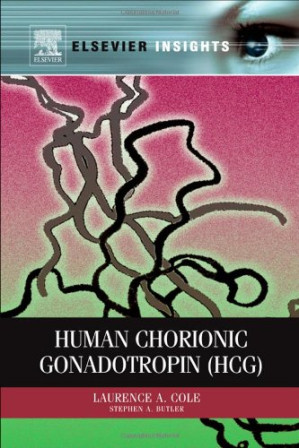
Human Chorionic Gonadotropin (hGC) 🔍
Larry Cole
Elsevier, hGC Elsevier Isights, 1, 2010
英语 [en] · 中文 [zh] · PDF · 5.3MB · 2010 · 📘 非小说类图书 · 🚀/lgli/lgrs/nexusstc/zlib · Save
描述
Human chorionic gonadotropin (hCG) is produced during pregnancy by the embyro. It promotes progesterone production by corpus luteal cells. It also functions in pregnancy to promote angiogenesis in uterine vasculature, it immuno-blands the invading placental tissue so it is not rejected by the maternal uterine tissues, promotes the growth of the uterus in line with the growth of the fetus, promotes the differentiation of growing cytotrophoblast cells, promotes the quiescence of contractions in the uterine myometrium during the course of pregnancy, and also has function in growth and development of fetal organs.
The book describes the detailed biology, clinical chemistry, and clinical perspectives of hCG and associated molecules and examines hCG, hyperglycosylated hCG and hCG free ß-subunit, 3 separate and independent molecules with totally sovereign physiological functions.
* It provides comprehensive information on hCG from basic science to clinical medicine
* Written by specialists in the field
The book describes the detailed biology, clinical chemistry, and clinical perspectives of hCG and associated molecules and examines hCG, hyperglycosylated hCG and hCG free ß-subunit, 3 separate and independent molecules with totally sovereign physiological functions.
* It provides comprehensive information on hCG from basic science to clinical medicine
* Written by specialists in the field
备用文件名
zlib/Science (General)/Larry Cole/Human Chorionic Gonadotropin (hGC)_735712.pdf
备选标题
Human Chorionic Gonadotropin (hCG) (Elsevier Isights)
备选作者
Laurence A. Cole; Stephen Andrew Butler
备选作者
by Lawrence A. Cole
备选作者
Cole, Laurence A.
备用出版商
Academic Press, Incorporated
备用出版商
Morgan Kaufmann Publishers
备用出版商
Brooks/Cole
备用版本
Elsevier insights, Oxford, England, 2010
备用版本
Elsevier insights, 1st ed, London, 2010
备用版本
United States, United States of America
元数据中的注释
0
元数据中的注释
lg309622
元数据中的注释
{"edition":"1","isbns":["0123849071","9780123849076"],"last_page":400,"publisher":"Elsevier","series":"hGC Elsevier Isights"}
元数据中的注释
Electronic reproduction. Amsterdam : Elsevier Science & Technology, 2010. Mode of access: World Wide Web. System requirements: Web browser. Title from title screen (viewed on Sep. 27, 2010). Access may be restricted to users at subscribing institutions.
元数据中的注释
MiU
备用描述
Cover Page
......Page 1
Front matter......Page 3
Copyright......Page 4
Acknowledgments......Page 5
About the Author......Page 7
Abbreviations......Page 9
Contributors......Page 12
The Expanding World of hCG......Page 13
References......Page 20
History and Introduction to Human Chorionic Gonadotropin (hCG): One Name for at least Three Independent Molecules......Page 23
References......Page 30
Introduction to Pregnancy Implantation, Villous Formation, and Hemochorial Placentation......Page 33
References......Page 42
The LH/hCG Gene Cluster......Page 44
Control of hCG Gene Expression: hCGα......Page 45
Control of hCG Gene Expression: hCGβ......Page 48
References......Page 52
Structure, Synthesis, Secretion, and Function of hCG......Page 56
Carbohydrate Structure of hCG......Page 57
hCG Primary Structure......Page 59
hCG Tertiary Structure......Page 61
hCG Quaternary Structure......Page 62
Synthesis and Secretion of hCG......Page 64
Functions of hCG......Page 66
References......Page 67
Peptide Structure of hCG-H......Page 70
N- and O-Linked Oligosaccharide Structures of hCG-H......Page 75
References......Page 79
Free α-Subunit......Page 81
Free β-Subunit......Page 84
References......Page 86
Characteristic Features of the Sugar Chains of Glycoproteins......Page 89
Biosynthetic Pathways of the Sugar Chains of Glycoproteins to Form Their Characteristic Features......Page 90
The hCG Sugar Chains from Urine of Pregnant Women and Placenta......Page 92
Characteristic Features of the Sugar Chains of Free α-Subunit......Page 96
Comparative Studies of the N-Linked Sugar Chains of hCG Samples Purified from the Urine of Patients with Various Trophoblastic Diseases......Page 98
Alteration Induced in the O-Linked Sugar Chains of hCG by Malignant Transformation of Trophoblasts......Page 100
Altered Expression of GnT-IV in Choriocarcinoma Cells......Page 101
Glycosylated hCG as a Diagnostic Marker of Trophoblastic Diseases......Page 102
Functional Role of the hCG Sialic Acid Residues......Page 104
Future Prospects......Page 106
References......Page 109
Degradation Products of hCG, Hyperglycosylated hCG, and Free β-Subunit......Page 114
Pure hCG Preparations......Page 115
Nicking and Enzyme Cleavage......Page 117
Liver Clearance......Page 118
Degradation with Pregnancy Advancement......Page 119
References......Page 122
Three-Dimensional Structure of hCG......Page 124
hCG......Page 125
Free β-Subunit......Page 127
References......Page 128
Paradigm Shift on the Targets of hCG Actions......Page 129
References......Page 133
The hCG Receptor......Page 136
References......Page 139
Biological Function of Hyperglycosylated hCG......Page 141
References......Page 146
Biological Function of the Free β-Subunit: Expression and Treatment Target in Cancer......Page 149
hCGβ Expression in Epithelial Cancer......Page 151
The Biological Action of hCGβ on Epithelial Tumors......Page 154
hCG Cancer Vaccines......Page 157
References......Page 160
Use of hCG in Reproductive Dysfunction......Page 168
Historical Overview and Perspective......Page 169
OI—Parenteral Agents, with hCG......Page 172
OI Protocols and FSH Preparations......Page 173
Timing Administration of hCG—Ultrasound Monitoring, Progesterone Patterns, and Endogenous LH Surge Patterns......Page 176
Risks of Ovulation Management with hCG......Page 177
Efficacy of LUF Syndrome......Page 179
Considerations of hCG Administration for Timing IUI......Page 181
High-Order Multiple Pregnancies......Page 185
References......Page 187
hCG in Assisted Reproduction......Page 194
The Follicular Phase: The Role of LH......Page 195
The Periovulatory Phase and the Mid-Cycle LH Surge......Page 196
The Follicular–Luteal Transition......Page 197
The Potential Role of hCG in Implantation......Page 198
hCG in the Management of Normal Pregnancy......Page 200
Hyperstimulation Syndrome......Page 201
hCG in the Management of Ectopic Pregnancy......Page 202
References......Page 203
Dietary Programs......Page 206
hCG and Anabolism Promotion......Page 207
References......Page 208
Intact hCG and Total hCG Assay......Page 211
Free Subunit, Glycosylation Variant, and Fragment Assay......Page 214
References......Page 215
Manual Immunometric Assays......Page 217
Automated Immunometric Assays......Page 219
Competitive Radioimmunoassays......Page 221
References......Page 222
False Positive hCG Test......Page 223
References......Page 229
Specificity of Different hCG Assays......Page 231
Clinical Laboratory Tests......Page 232
Point-of-Care Tests......Page 237
References......Page 238
Point-of-Care Pregnancy Tests......Page 240
Point-of-Care Tests......Page 241
References......Page 243
How OTC Tests Work......Page 244
Accuracy of OTC Tests......Page 245
References......Page 250
hCG Standards......Page 251
Third IS......Page 252
IRR for hCG and Related Substances......Page 253
Future Prospects......Page 256
References......Page 257
Background hCG......Page 260
Serum hCG......Page 261
Urine hCG......Page 262
The Menopausal hCG Quandary......Page 266
References......Page 267
Pregnancy Testing......Page 269
References......Page 274
Predicting Spontaneously Aborted (SAB) Pregnancies......Page 275
Pregnancy Outcome Markers......Page 276
Early Pregnancy hCG......Page 277
Testing for hCG-H......Page 278
References......Page 280
Down Syndrome Screening......Page 283
Preeclampsia Screening......Page 285
References......Page 286
hCG in Monitoring Gestational Trophoblastic Diseases......Page 288
References......Page 293
Use of Hyperglycosylated hCG as a Unique Marker of Gestational Trophoblastic Neoplasms......Page 294
Quiescent Gestational Trophoblastic Disease......Page 295
Minimally Aggressive Gestational Trophoblastic Neoplasm......Page 297
References......Page 310
Pituitary hCG and Familial hCG......Page 312
Biological Function of Pituitary hCG......Page 313
Occurrence of Pituitary hCG......Page 315
Familial hCG Syndrome......Page 319
References......Page 321
hCG and Tumor Markers......Page 325
References......Page 329
Urine hCG and hCG-H......Page 331
Culture Fluid hCG and hCG-H......Page 332
References......Page 333
Desialylation......Page 335
References......Page 336
hCG and Free β-Subunit Producing Cell Lines......Page 337
References......Page 340
Evolution of hCG, Evolution of Humans, and Evolution of Human Pregnancy Disorders and Cancer......Page 341
CG Evolution......Page 342
CG, CG-H, and the Evolution of Humans......Page 344
CG Evolution and the Development of Pregnancy Disorders......Page 349
hCG and Cancer......Page 350
References......Page 352
Biological Functions......Page 355
Administration of hCG......Page 356
Synthesis and Degradation of hCG......Page 357
hCG and the Future......Page 358
Front matter......Page 3
Copyright......Page 4
Acknowledgments......Page 5
About the Author......Page 7
Abbreviations......Page 9
Contributors......Page 12
The Expanding World of hCG......Page 13
References......Page 20
History and Introduction to Human Chorionic Gonadotropin (hCG): One Name for at least Three Independent Molecules......Page 23
References......Page 30
Introduction to Pregnancy Implantation, Villous Formation, and Hemochorial Placentation......Page 33
References......Page 42
The LH/hCG Gene Cluster......Page 44
Control of hCG Gene Expression: hCGα......Page 45
Control of hCG Gene Expression: hCGβ......Page 48
References......Page 52
Structure, Synthesis, Secretion, and Function of hCG......Page 56
Carbohydrate Structure of hCG......Page 57
hCG Primary Structure......Page 59
hCG Tertiary Structure......Page 61
hCG Quaternary Structure......Page 62
Synthesis and Secretion of hCG......Page 64
Functions of hCG......Page 66
References......Page 67
Peptide Structure of hCG-H......Page 70
N- and O-Linked Oligosaccharide Structures of hCG-H......Page 75
References......Page 79
Free α-Subunit......Page 81
Free β-Subunit......Page 84
References......Page 86
Characteristic Features of the Sugar Chains of Glycoproteins......Page 89
Biosynthetic Pathways of the Sugar Chains of Glycoproteins to Form Their Characteristic Features......Page 90
The hCG Sugar Chains from Urine of Pregnant Women and Placenta......Page 92
Characteristic Features of the Sugar Chains of Free α-Subunit......Page 96
Comparative Studies of the N-Linked Sugar Chains of hCG Samples Purified from the Urine of Patients with Various Trophoblastic Diseases......Page 98
Alteration Induced in the O-Linked Sugar Chains of hCG by Malignant Transformation of Trophoblasts......Page 100
Altered Expression of GnT-IV in Choriocarcinoma Cells......Page 101
Glycosylated hCG as a Diagnostic Marker of Trophoblastic Diseases......Page 102
Functional Role of the hCG Sialic Acid Residues......Page 104
Future Prospects......Page 106
References......Page 109
Degradation Products of hCG, Hyperglycosylated hCG, and Free β-Subunit......Page 114
Pure hCG Preparations......Page 115
Nicking and Enzyme Cleavage......Page 117
Liver Clearance......Page 118
Degradation with Pregnancy Advancement......Page 119
References......Page 122
Three-Dimensional Structure of hCG......Page 124
hCG......Page 125
Free β-Subunit......Page 127
References......Page 128
Paradigm Shift on the Targets of hCG Actions......Page 129
References......Page 133
The hCG Receptor......Page 136
References......Page 139
Biological Function of Hyperglycosylated hCG......Page 141
References......Page 146
Biological Function of the Free β-Subunit: Expression and Treatment Target in Cancer......Page 149
hCGβ Expression in Epithelial Cancer......Page 151
The Biological Action of hCGβ on Epithelial Tumors......Page 154
hCG Cancer Vaccines......Page 157
References......Page 160
Use of hCG in Reproductive Dysfunction......Page 168
Historical Overview and Perspective......Page 169
OI—Parenteral Agents, with hCG......Page 172
OI Protocols and FSH Preparations......Page 173
Timing Administration of hCG—Ultrasound Monitoring, Progesterone Patterns, and Endogenous LH Surge Patterns......Page 176
Risks of Ovulation Management with hCG......Page 177
Efficacy of LUF Syndrome......Page 179
Considerations of hCG Administration for Timing IUI......Page 181
High-Order Multiple Pregnancies......Page 185
References......Page 187
hCG in Assisted Reproduction......Page 194
The Follicular Phase: The Role of LH......Page 195
The Periovulatory Phase and the Mid-Cycle LH Surge......Page 196
The Follicular–Luteal Transition......Page 197
The Potential Role of hCG in Implantation......Page 198
hCG in the Management of Normal Pregnancy......Page 200
Hyperstimulation Syndrome......Page 201
hCG in the Management of Ectopic Pregnancy......Page 202
References......Page 203
Dietary Programs......Page 206
hCG and Anabolism Promotion......Page 207
References......Page 208
Intact hCG and Total hCG Assay......Page 211
Free Subunit, Glycosylation Variant, and Fragment Assay......Page 214
References......Page 215
Manual Immunometric Assays......Page 217
Automated Immunometric Assays......Page 219
Competitive Radioimmunoassays......Page 221
References......Page 222
False Positive hCG Test......Page 223
References......Page 229
Specificity of Different hCG Assays......Page 231
Clinical Laboratory Tests......Page 232
Point-of-Care Tests......Page 237
References......Page 238
Point-of-Care Pregnancy Tests......Page 240
Point-of-Care Tests......Page 241
References......Page 243
How OTC Tests Work......Page 244
Accuracy of OTC Tests......Page 245
References......Page 250
hCG Standards......Page 251
Third IS......Page 252
IRR for hCG and Related Substances......Page 253
Future Prospects......Page 256
References......Page 257
Background hCG......Page 260
Serum hCG......Page 261
Urine hCG......Page 262
The Menopausal hCG Quandary......Page 266
References......Page 267
Pregnancy Testing......Page 269
References......Page 274
Predicting Spontaneously Aborted (SAB) Pregnancies......Page 275
Pregnancy Outcome Markers......Page 276
Early Pregnancy hCG......Page 277
Testing for hCG-H......Page 278
References......Page 280
Down Syndrome Screening......Page 283
Preeclampsia Screening......Page 285
References......Page 286
hCG in Monitoring Gestational Trophoblastic Diseases......Page 288
References......Page 293
Use of Hyperglycosylated hCG as a Unique Marker of Gestational Trophoblastic Neoplasms......Page 294
Quiescent Gestational Trophoblastic Disease......Page 295
Minimally Aggressive Gestational Trophoblastic Neoplasm......Page 297
References......Page 310
Pituitary hCG and Familial hCG......Page 312
Biological Function of Pituitary hCG......Page 313
Occurrence of Pituitary hCG......Page 315
Familial hCG Syndrome......Page 319
References......Page 321
hCG and Tumor Markers......Page 325
References......Page 329
Urine hCG and hCG-H......Page 331
Culture Fluid hCG and hCG-H......Page 332
References......Page 333
Desialylation......Page 335
References......Page 336
hCG and Free β-Subunit Producing Cell Lines......Page 337
References......Page 340
Evolution of hCG, Evolution of Humans, and Evolution of Human Pregnancy Disorders and Cancer......Page 341
CG Evolution......Page 342
CG, CG-H, and the Evolution of Humans......Page 344
CG Evolution and the Development of Pregnancy Disorders......Page 349
hCG and Cancer......Page 350
References......Page 352
Biological Functions......Page 355
Administration of hCG......Page 356
Synthesis and Degradation of hCG......Page 357
hCG and the Future......Page 358
备用描述
<p>Human chorionic gonadotropin (hCG) is produced during pregnancy by the embryo. It promotes progesterone production by corpus luteal cells. It also functions in pregnancy to promote angiogenesis in uterine vasculature, it immuno-blands the invading placental tissue so it is not rejected by the maternal uterine tissues, promotes the growth of the uterus in line with the growth of the fetus, promotes the differentiation of growing cytotrophoblast cells, promotes the quiescence of contractions in the uterine myometrium during the course of pregnancy, and also has function in growth and development of fetal organs. </p> <p>The book describes the detailed biology, clinical chemistry, and clinical perspectives of hCG and associated molecules, and examines hCG, hyperglycosylated hCG and hCG free ß-subunit, 3 separate and independent molecules with totally sovereign physiological functions. </p><br><br><ul><li> <p>It provides comprehensive information on hCG from basic science to clinical medicine</p></li><li> <p>Written by specialists in the field</p></li></ul>
备用描述
Human chorionic gonadotropin (hCG) is produced during pregnancy by the embyro. It promotes progesterone production by corpus luteal cells. It also functions in pregnancy to promote angiogenesis in uterine vasculature, it immuno-blands the invading placental tissue so it is not rejected by the maternal uterine tissues, promotes the growth of the uterus in line with the growth of the fetus, promotes the differentiation of growing cytotrophoblast cells, promotes the quiescence of contractions in the uterine myometrium during the course of pregnancy, and also has function in growth and development of fetal organs. The book describes the detailed biology, clinical chemistry, and clinical perspectives of hCG and associated molecules and examines hCG, hyperglycosylated hCG and hCG free [beta]-subunit, 3 separate and independent molecules with totally sovereign physiological functions. It provides comprehensive information on hCG from basic science to clinical medicine Written by specialists in the field.
开源日期
2010-08-30
🚀 快速下载
成为会员以支持书籍、论文等的长期保存。为了感谢您对我们的支持,您将获得高速下载权益。❤️
如果您在本月捐款,您将获得双倍的快速下载次数。
🐢 低速下载
由可信的合作方提供。 更多信息请参见常见问题解答。 (可能需要验证浏览器——无限次下载!)
- 低速服务器(合作方提供) #1 (稍快但需要排队)
- 低速服务器(合作方提供) #2 (稍快但需要排队)
- 低速服务器(合作方提供) #3 (稍快但需要排队)
- 低速服务器(合作方提供) #4 (稍快但需要排队)
- 低速服务器(合作方提供) #5 (无需排队,但可能非常慢)
- 低速服务器(合作方提供) #6 (无需排队,但可能非常慢)
- 低速服务器(合作方提供) #7 (无需排队,但可能非常慢)
- 低速服务器(合作方提供) #8 (无需排队,但可能非常慢)
- 低速服务器(合作方提供) #9 (无需排队,但可能非常慢)
- 下载后: 在我们的查看器中打开
所有选项下载的文件都相同,应该可以安全使用。即使这样,从互联网下载文件时始终要小心。例如,确保您的设备更新及时。
外部下载
-
对于大文件,我们建议使用下载管理器以防止中断。
推荐的下载管理器:JDownloader -
您将需要一个电子书或 PDF 阅读器来打开文件,具体取决于文件格式。
推荐的电子书阅读器:Anna的档案在线查看器、ReadEra和Calibre -
使用在线工具进行格式转换。
推荐的转换工具:CloudConvert和PrintFriendly -
您可以将 PDF 和 EPUB 文件发送到您的 Kindle 或 Kobo 电子阅读器。
推荐的工具:亚马逊的“发送到 Kindle”和djazz 的“发送到 Kobo/Kindle” -
支持作者和图书馆
✍️ 如果您喜欢这个并且能够负担得起,请考虑购买原版,或直接支持作者。
📚 如果您当地的图书馆有这本书,请考虑在那里免费借阅。
下面的文字仅以英文继续。
总下载量:
“文件的MD5”是根据文件内容计算出的哈希值,并且基于该内容具有相当的唯一性。我们这里索引的所有影子图书馆都主要使用MD5来标识文件。
一个文件可能会出现在多个影子图书馆中。有关我们编译的各种数据集的信息,请参见数据集页面。
有关此文件的详细信息,请查看其JSON 文件。 Live/debug JSON version. Live/debug page.