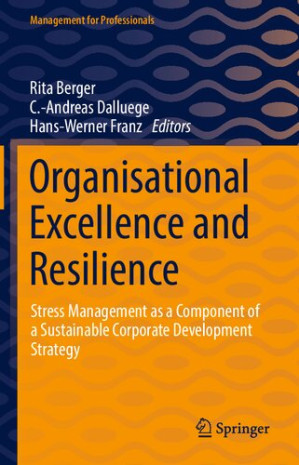
Organisational Excellence and Resilience: Stress Management as a Component of a Sustainable Corporate Development Strategy (Management for Professionals) 🔍
Rita Berger;C.-Andreas Dalluege;Hans-Werner Franz(eds.)
Springer International Publishing AG, Management for Professionals, Management for Professionals, 1, 2022
英语 [en] · PDF · 8.9MB · 2022 · 📘 非小说类图书 · 🚀/lgli/lgrs/nexusstc/upload/zlib · Save
描述
Personal stress has an enormous impact on organizational and employee performance. This book introduces the web-based diagnostic tool IMPRESS, which provides employees, managers and HR professionals with information about potential stress factors. The book describes the underlying methodology for this integrated approach and presents the tools and learning modules to support the methodology. A series of case studies from pilot implementations in companies and universities illustrate the application of the approach in a variety of work environments. The book is based on an international research project for a holistic approach to stress prevention by combining Human Systems Audit with the European Excellence approach as promoted by the Common Assessment Framework (CAF) and the EFQM Excellence Model. This approach is intended to contribute to organizational development that supports effective employee stress management.
备用文件名
nexusstc/Organisational Excellence and Resilience: Stress Management as a Component of a Sustainable Corporate Development Strategy/826129484660e68914ab090461c042e6.pdf
备用文件名
lgli/Organisational Excellence and Resilience.pdf
备用文件名
lgrsnf/Organisational Excellence and Resilience.pdf
备用文件名
zlib/Business & Economics/Management & Leadership/Rita Berger, C.-Andreas Dalluege, Hans-Werner Franz/Organisational Excellence and Resilience: Stress Management as a Component of a Sustainable Corporate Development Strategy_18644946.pdf
备选作者
Ludger Kolhoff; Julia Hartung-Ziehlke; Karen Frankenstein
备选作者
Berger, Rita; Dalluege, C.-Andreas; Franz, Hans-Werner
备选作者
Rita Berger, C.-Andreas Dalluege, Hans-Werner Franz
备选作者
Rita Berger, C. Andreas Dalluege, Hans-Werner Franz
备用出版商
Springer Nature Switzerland AG
备用版本
Management for professionals, Cham, Switzerland, 2022
备用版本
Management for Professionals Ser, Cham, 2021
备用版本
Springer Nature, Cham, Switzerland, 2022
备用版本
Switzerland, Switzerland
备用版本
1st ed. 2022, 2021
备用版本
1st ed, S.l, 2022
备用版本
3, 2021
元数据中的注释
producers:
Adobe PDF Library 10.0.1
Adobe PDF Library 10.0.1
元数据中的注释
{"container_title":"Management for Professionals","edition":"1","isbns":["3030851192","3030851206","9783030851194","9783030851200"],"issns":["2192-8096","2192-810X"],"last_page":197,"publisher":"Springer","series":"Management for Professionals"}
备用描述
Foreword 6
Downloads and Links for Tools and Trainings Described in the Book 8
Contents 9
Editors and Contributors 10
Part I: Theoretical Basis 16
The Concept of a Comprehensive Management Approach 17
1 The Concept: Excellence as a Management and Leadership Culture 17
2 A Fundamental Management Decision: Quality Management or Management Quality? 19
Excursion into a Short History of the Quality Idea 20
Craft Occupations, Craft and Commercial Guilds 20
Tested Quality 21
Produced Quality 22
Quality of Leadership and Organisation 23
3 Quality and Excellence 27
Quality as Such and for Me 27
Quality of Work 31
Quality in Services Like Learning and Caring 32
Stakeholder Orientation 33
4 The EFQM Excellence Model 34
The Excellence Model Till 2019 35
Periodical Self-Assessment as a Learning and Improvement Driver 37
The EFQM Excellence Model Release 4.0 38
5 Learning Organisation 38
Can Organisations Learn? 39
What Is (Organisational) Learning? 41
Knowledge or Competence? 43
From Communities of Practice to Communities of Performance 46
Learning Organisation and Continuous Improvement Process 48
Stakeholder Orientation as a Permanent Process 50
Improvement Process 51
Learning Process 52
Participation Process 57
Decision-Making Process 59
Appropriation Process 60
6 The Introductory and Advisory Process 61
Advice and Advisor 61
Pitfall Patterns 63
Learning Time Versus Working Time 63
Team Work Versus Circle Work 64
Comprehensive Versus Tailor-Made Participation 64
Standardisation Versus Adapted Solutions 64
Process Orientation Versus Result Orientation 64
Keeping the Minutes 65
How to Start 66
7 Stakeholder Analysis 68
Customer-Supplier Analysis 71
8 Final Remarks 72
References 74
Stress Management and Resilience Building 76
1 Sustainable Business Development and Decent Work 76
2 Stressful Working Conditions 79
3 Resources at Work 82
4 Resource Development and Resilience Among Employees, Teams and as a Human Resource Management Task 86
5 Stress Management and Excellence 89
Purpose, Vision, and Strategy 92
6 Organisational Culture and Organisational Leadership 93
7 Involve Stakeholders 95
Creating Sustainable Benefits 96
Driving Performance and Transformation 97
References 98
Part II: The Software Solution 102
The Concept of Excellence-Driven Self-Assessment 103
1 Introduction 103
2 Using a Web-Based Support Application 106
THE GOA-Workbench 107
3 Adaptations to the EFQM 4.0 Modell 109
Introduction to the Web-Based Self-Assessment Modules 111
Individual Stress Factor Assessment 111
Corporate Stress Factor Assessment 118
Improvement Planning with the CSFA 123
GOA Easy Assessment-A Web-Based Self-Assessment Approach Based on EFQM 126
4 Integration of Results and Improvement Ideas from Both Types of Self-Assessment 132
References 135
IMPRESS Training Modules 136
1 Introduction 136
2 E-Learning Modules 138
Stress Management Basics 138
Background Knowledge on Stressors 139
Background Knowledge on Resources 140
Introduction to Excellence 141
3 Facilitated Coaching 142
Control and Clarity 142
Leadership and Social Support 142
Organisational Climate and Communication 142
Attitudes and Behaviours 144
Roles and Responsibilities 144
Team Climate and Cooperation 145
Working Conditions and Workflow 145
Task 145
4 Combining Additional Training Modules to a Customised Follow-up Training 147
References 148
Part III: Case Studies on the Introduction of Excellence-Based Stress Management and the Use of the Self-Assessment Software 149
Pilot Projects Conducted Within IMPRESS 150
1 Introduction 150
2 Analysis of Stress Factors in the Participating Regions 151
Initial IMPRESS Survey in the Participating Regions 151
IMPRESS Stress Factor Assessment Results Summary 152
3 Pilots in Various Organisations Across Europe 156
Deppisch and Tylla Tax and Accounting Consultants Ltd. (Germany) 157
Introduction 157
Description of the Company 157
Motivation for Participation in the Assessment 158
Requirements for Carrying Out an Assessment 158
Methodological Structure of the Assessment on the Basis of EFQM 158
Results and Their Classification 159
Transparency Through Workshops to Explain and Discuss the Results 160
The Most Important Suggestions for Improvement of the Employees 160
Implementation of Activities 160
The Customer Benefit 160
Increased Requirements Regarding Stress Management as a Result of the Corona Pandemic 161
The Impact of the Pandemic on the Service Provider 161
Phoenix STS Safety Management Systems (Ireland) 161
Introduction 161
Description of the Company 162
Parameters for Carrying Out an Assessment 162
Methodological Structure of the Assessment on the Basis of EFQM 163
Results and Their Classification 163
Transparency Through Workshops to Explain and Discuss the Results 164
The Most Important Suggestions for Improvement of the Employees 164
The Customer Benefit 164
Increased Requirements Regarding Stress Management as a Result of the Corona Pandemic 164
The Impact of the Pandemic on the Service Provider 165
Riga East University Hospital Ltd. (Latvia) 165
Description of the Company 165
Strategic Objectives 165
Motivation to Participate in the Assessment 166
Requirements for Performing the Assessment 166
Methodological Structure of the Assessment Based on EFQM 166
Results and Their Classification 167
Transparency Through Workshops to Explain and Discuss the Results 168
The Most Important Suggestions for Improvement from the Employees 168
Implementation of the Measures 169
The Customer Benefit 169
Increased Stress Management Requirements as a Result of the Corona Pandemic 169
The Impact of the Pandemic Situation on the Organisation 169
PKF Attest (Spain) 169
The Case Company 169
Objectives and Implementation 170
Results 171
Action Plan 172
Benefits 174
House of Culture, Gernika-Lumo (Spain) 175
The Implementation 175
Objectives 176
Results 177
Benefits 178
Harmony Academy (Slovakia) 179
Description of the Company 179
Motivation to Participate in the Assessment 180
Requirements for Performing the Assessment 181
Results and Their Classification 181
The Results 184
The Most Important Suggestions for Improvement from the Employees 184
Implementation of the Measures 185
The Customer Benefit 186
Impact of the COVID-19 Pandemic on the Organisation 186
4 Pilots in Higher Education Institutions (HEI) 186
Ludwig-Maximilians Universität, Munich (Germany) 186
Aims 187
Content of Classes 187
Teaching Research Project (1 and 2)-Work and Organisational Psychology 187
Experiences with IMPRESS Tools in Formal Classes 193
Nuertingen-Geislingen University (HfWU), Faculty of Business and Law (Germany) 193
Introduction 193
Description of the Organisation 194
Motivation for Participation in the Assessment 194
Requirements for Carrying Out an Assessment 194
Methodological Structure of the Corporate Stress Factor Assessment 194
Results and Their Classification 195
Transparency Through Lectures to Explain and Discuss the Results 195
The Impact of the Covid-19 Pandemic 195
Riga Technical University (Latvia) 196
Description of the Company 196
Motivation for Participation in the Assessment 197
Requirements for Carrying Out an Assessment 197
Results and Their Classification 198
The Impact of the Covid-19 Pandemic 198
University of Barcelona (Spain) 200
Aims 200
Bachelor of Psychology Course Organisational Psychology 203
Research Internships 205
Experiences with IMPRESS Tools and Content in Formal Classes 206
Reference 206
Downloads and Links for Tools and Trainings Described in the Book 8
Contents 9
Editors and Contributors 10
Part I: Theoretical Basis 16
The Concept of a Comprehensive Management Approach 17
1 The Concept: Excellence as a Management and Leadership Culture 17
2 A Fundamental Management Decision: Quality Management or Management Quality? 19
Excursion into a Short History of the Quality Idea 20
Craft Occupations, Craft and Commercial Guilds 20
Tested Quality 21
Produced Quality 22
Quality of Leadership and Organisation 23
3 Quality and Excellence 27
Quality as Such and for Me 27
Quality of Work 31
Quality in Services Like Learning and Caring 32
Stakeholder Orientation 33
4 The EFQM Excellence Model 34
The Excellence Model Till 2019 35
Periodical Self-Assessment as a Learning and Improvement Driver 37
The EFQM Excellence Model Release 4.0 38
5 Learning Organisation 38
Can Organisations Learn? 39
What Is (Organisational) Learning? 41
Knowledge or Competence? 43
From Communities of Practice to Communities of Performance 46
Learning Organisation and Continuous Improvement Process 48
Stakeholder Orientation as a Permanent Process 50
Improvement Process 51
Learning Process 52
Participation Process 57
Decision-Making Process 59
Appropriation Process 60
6 The Introductory and Advisory Process 61
Advice and Advisor 61
Pitfall Patterns 63
Learning Time Versus Working Time 63
Team Work Versus Circle Work 64
Comprehensive Versus Tailor-Made Participation 64
Standardisation Versus Adapted Solutions 64
Process Orientation Versus Result Orientation 64
Keeping the Minutes 65
How to Start 66
7 Stakeholder Analysis 68
Customer-Supplier Analysis 71
8 Final Remarks 72
References 74
Stress Management and Resilience Building 76
1 Sustainable Business Development and Decent Work 76
2 Stressful Working Conditions 79
3 Resources at Work 82
4 Resource Development and Resilience Among Employees, Teams and as a Human Resource Management Task 86
5 Stress Management and Excellence 89
Purpose, Vision, and Strategy 92
6 Organisational Culture and Organisational Leadership 93
7 Involve Stakeholders 95
Creating Sustainable Benefits 96
Driving Performance and Transformation 97
References 98
Part II: The Software Solution 102
The Concept of Excellence-Driven Self-Assessment 103
1 Introduction 103
2 Using a Web-Based Support Application 106
THE GOA-Workbench 107
3 Adaptations to the EFQM 4.0 Modell 109
Introduction to the Web-Based Self-Assessment Modules 111
Individual Stress Factor Assessment 111
Corporate Stress Factor Assessment 118
Improvement Planning with the CSFA 123
GOA Easy Assessment-A Web-Based Self-Assessment Approach Based on EFQM 126
4 Integration of Results and Improvement Ideas from Both Types of Self-Assessment 132
References 135
IMPRESS Training Modules 136
1 Introduction 136
2 E-Learning Modules 138
Stress Management Basics 138
Background Knowledge on Stressors 139
Background Knowledge on Resources 140
Introduction to Excellence 141
3 Facilitated Coaching 142
Control and Clarity 142
Leadership and Social Support 142
Organisational Climate and Communication 142
Attitudes and Behaviours 144
Roles and Responsibilities 144
Team Climate and Cooperation 145
Working Conditions and Workflow 145
Task 145
4 Combining Additional Training Modules to a Customised Follow-up Training 147
References 148
Part III: Case Studies on the Introduction of Excellence-Based Stress Management and the Use of the Self-Assessment Software 149
Pilot Projects Conducted Within IMPRESS 150
1 Introduction 150
2 Analysis of Stress Factors in the Participating Regions 151
Initial IMPRESS Survey in the Participating Regions 151
IMPRESS Stress Factor Assessment Results Summary 152
3 Pilots in Various Organisations Across Europe 156
Deppisch and Tylla Tax and Accounting Consultants Ltd. (Germany) 157
Introduction 157
Description of the Company 157
Motivation for Participation in the Assessment 158
Requirements for Carrying Out an Assessment 158
Methodological Structure of the Assessment on the Basis of EFQM 158
Results and Their Classification 159
Transparency Through Workshops to Explain and Discuss the Results 160
The Most Important Suggestions for Improvement of the Employees 160
Implementation of Activities 160
The Customer Benefit 160
Increased Requirements Regarding Stress Management as a Result of the Corona Pandemic 161
The Impact of the Pandemic on the Service Provider 161
Phoenix STS Safety Management Systems (Ireland) 161
Introduction 161
Description of the Company 162
Parameters for Carrying Out an Assessment 162
Methodological Structure of the Assessment on the Basis of EFQM 163
Results and Their Classification 163
Transparency Through Workshops to Explain and Discuss the Results 164
The Most Important Suggestions for Improvement of the Employees 164
The Customer Benefit 164
Increased Requirements Regarding Stress Management as a Result of the Corona Pandemic 164
The Impact of the Pandemic on the Service Provider 165
Riga East University Hospital Ltd. (Latvia) 165
Description of the Company 165
Strategic Objectives 165
Motivation to Participate in the Assessment 166
Requirements for Performing the Assessment 166
Methodological Structure of the Assessment Based on EFQM 166
Results and Their Classification 167
Transparency Through Workshops to Explain and Discuss the Results 168
The Most Important Suggestions for Improvement from the Employees 168
Implementation of the Measures 169
The Customer Benefit 169
Increased Stress Management Requirements as a Result of the Corona Pandemic 169
The Impact of the Pandemic Situation on the Organisation 169
PKF Attest (Spain) 169
The Case Company 169
Objectives and Implementation 170
Results 171
Action Plan 172
Benefits 174
House of Culture, Gernika-Lumo (Spain) 175
The Implementation 175
Objectives 176
Results 177
Benefits 178
Harmony Academy (Slovakia) 179
Description of the Company 179
Motivation to Participate in the Assessment 180
Requirements for Performing the Assessment 181
Results and Their Classification 181
The Results 184
The Most Important Suggestions for Improvement from the Employees 184
Implementation of the Measures 185
The Customer Benefit 186
Impact of the COVID-19 Pandemic on the Organisation 186
4 Pilots in Higher Education Institutions (HEI) 186
Ludwig-Maximilians Universität, Munich (Germany) 186
Aims 187
Content of Classes 187
Teaching Research Project (1 and 2)-Work and Organisational Psychology 187
Experiences with IMPRESS Tools in Formal Classes 193
Nuertingen-Geislingen University (HfWU), Faculty of Business and Law (Germany) 193
Introduction 193
Description of the Organisation 194
Motivation for Participation in the Assessment 194
Requirements for Carrying Out an Assessment 194
Methodological Structure of the Corporate Stress Factor Assessment 194
Results and Their Classification 195
Transparency Through Lectures to Explain and Discuss the Results 195
The Impact of the Covid-19 Pandemic 195
Riga Technical University (Latvia) 196
Description of the Company 196
Motivation for Participation in the Assessment 197
Requirements for Carrying Out an Assessment 197
Results and Their Classification 198
The Impact of the Covid-19 Pandemic 198
University of Barcelona (Spain) 200
Aims 200
Bachelor of Psychology Course Organisational Psychology 203
Research Internships 205
Experiences with IMPRESS Tools and Content in Formal Classes 206
Reference 206
开源日期
2022-01-05
We strongly recommend that you support the author by buying or donating on their personal website, or borrowing in your local library.
🚀 快速下载
成为会员以支持书籍、论文等的长期保存。为了感谢您对我们的支持,您将获得高速下载权益。❤️
如果您在本月捐款,您将获得双倍的快速下载次数。
🐢 低速下载
由可信的合作方提供。 更多信息请参见常见问题解答。 (可能需要验证浏览器——无限次下载!)
- 低速服务器(合作方提供) #1 (稍快但需要排队)
- 低速服务器(合作方提供) #2 (稍快但需要排队)
- 低速服务器(合作方提供) #3 (稍快但需要排队)
- 低速服务器(合作方提供) #4 (稍快但需要排队)
- 低速服务器(合作方提供) #5 (无需排队,但可能非常慢)
- 低速服务器(合作方提供) #6 (无需排队,但可能非常慢)
- 低速服务器(合作方提供) #7 (无需排队,但可能非常慢)
- 低速服务器(合作方提供) #8 (无需排队,但可能非常慢)
- 低速服务器(合作方提供) #9 (无需排队,但可能非常慢)
- 下载后: 在我们的查看器中打开
所有选项下载的文件都相同,应该可以安全使用。即使这样,从互联网下载文件时始终要小心。例如,确保您的设备更新及时。
外部下载
-
对于大文件,我们建议使用下载管理器以防止中断。
推荐的下载管理器:JDownloader -
您将需要一个电子书或 PDF 阅读器来打开文件,具体取决于文件格式。
推荐的电子书阅读器:Anna的档案在线查看器、ReadEra和Calibre -
使用在线工具进行格式转换。
推荐的转换工具:CloudConvert和PrintFriendly -
您可以将 PDF 和 EPUB 文件发送到您的 Kindle 或 Kobo 电子阅读器。
推荐的工具:亚马逊的“发送到 Kindle”和djazz 的“发送到 Kobo/Kindle” -
支持作者和图书馆
✍️ 如果您喜欢这个并且能够负担得起,请考虑购买原版,或直接支持作者。
📚 如果您当地的图书馆有这本书,请考虑在那里免费借阅。
下面的文字仅以英文继续。
总下载量:
“文件的MD5”是根据文件内容计算出的哈希值,并且基于该内容具有相当的唯一性。我们这里索引的所有影子图书馆都主要使用MD5来标识文件。
一个文件可能会出现在多个影子图书馆中。有关我们编译的各种数据集的信息,请参见数据集页面。
有关此文件的详细信息,请查看其JSON 文件。 Live/debug JSON version. Live/debug page.