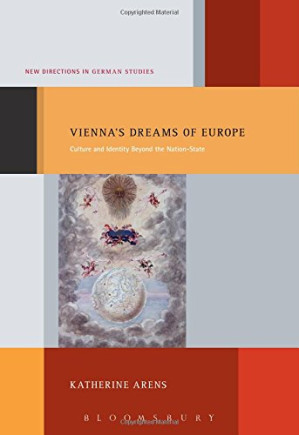
Vienna's Dreams of Europe: Culture and Identity beyond the Nation-State (New Directions in German Studies, 13) 🔍
Arens, Katherine;
Bloomsbury Academic an imprint of Bloomsbury Publishing Inc, New directions in German studies, Volume 13, 0, 2015
英语 [en] · PDF · 2.5MB · 2015 · 📘 非小说类图书 · 🚀/lgli/lgrs/nexusstc/upload/zlib · Save
描述
At least since the Enlightenment, Austrian intellectuals have used Europe’s hegemonic cultures as their political and cultural reference points. The Holy Roman Empire, the Austrian Empire, and Austria Hungary all conditioned regional understanding of a European cultural space outside today’s dominant paradigm of nationalist colonialism. Today’s scholars in Anglo-American, German, and Central European studies, however, may forget that Austria’s imperial-colonial era ended in 1918 rather than 1945; its status as a nation-state integrated into contemporary European politics was consolidated only after 1989, when its forced neutrality was lifted.
The case studies presented here trace an Austrian tradition of thinking about Europe between the eighteenth and the twentieth centuries. The cultural project of many intellectuals in Vienna lies outside of the norm-referenced logicisms of the Enlightenment project, stressing a more embodied, communitarian, and humane image of the state and its citizens. Belying the dominant image of the public sphere, they used the theater and the essay as mass media to foster public discussions about contemporaneous social and political issues, and referenced their performance to Europe, not just to an imagined nation-state (and its supposed hegemonies based on ethnic nationalism, genre, or class).
From Joseph von Sonnenfels through Grillparzer, Nestroy, Schnitzler, Hofmannsthal, Handke and their contemporaries, this volume documents a persistent cultural identity politics that has largely disappeared from view. These authors provide visions of how imperial cultures might modernize and capitalize on their cultural positions and traditions, without falling prey to all the perils of global capital and global rationalization.
The case studies presented here trace an Austrian tradition of thinking about Europe between the eighteenth and the twentieth centuries. The cultural project of many intellectuals in Vienna lies outside of the norm-referenced logicisms of the Enlightenment project, stressing a more embodied, communitarian, and humane image of the state and its citizens. Belying the dominant image of the public sphere, they used the theater and the essay as mass media to foster public discussions about contemporaneous social and political issues, and referenced their performance to Europe, not just to an imagined nation-state (and its supposed hegemonies based on ethnic nationalism, genre, or class).
From Joseph von Sonnenfels through Grillparzer, Nestroy, Schnitzler, Hofmannsthal, Handke and their contemporaries, this volume documents a persistent cultural identity politics that has largely disappeared from view. These authors provide visions of how imperial cultures might modernize and capitalize on their cultural positions and traditions, without falling prey to all the perils of global capital and global rationalization.
备用文件名
upload/motw_shc_2025_10/shc/Vienna's Dreams of Europe_ Cult - Katherine Arens.pdf
备用文件名
motw/Vienna's Dreams of Europe_ Cult - Katherine Arens.epub
备用文件名
motw/Vienna's Dreams of Europe_ Cult - Katherine Arens.pdf
备用文件名
lgli/K:\_add\!woodhead\!\!!\slow\(Bloomsbury Academic) (New Directions in German Studies) Vienna's Dreams of Europe_ Culture and Identity Beyond the Nation-State - Katherine Arens.pdf
备用文件名
lgrsnf/K:\_add\!woodhead\!\!!\slow\(Bloomsbury Academic) (New Directions in German Studies) Vienna's Dreams of Europe_ Culture and Identity Beyond the Nation-State - Katherine Arens.pdf
备用文件名
nexusstc/Vienna’s Dreams of Europe: Culture and Identity beyond the Nation-State/7cc0121515fc4c01aa42d8111c4ec224.pdf
备用文件名
zlib/Society, Politics & Philosophy/European & American Philosophy/Katherine Arens/Vienna's Dreams of Europe : Culture and Identity Beyond the Nation-State_2644210.pdf
备选作者
Adobe InDesign CS6 (Windows)
备选作者
Katherine Arens
备用出版商
Continuum International Publishing Group, Incorporated
备用出版商
Continuum International Publishing Group, Limited
备用出版商
Bloomsbury Academic & Professional
备用出版商
Continuum; Bloomsbury Academic
备用出版商
Bloomsbury Publishing USA
备用版本
New directions in German studies, 1. publ, New York [u.a, 2015
备用版本
New Directions in German Studies, New York [New York, 2015
备用版本
New directions in German studies, London, 2015
备用版本
New directions in German studies, London, 2012
备用版本
United States, United States of America
备用版本
0, 2015-10-22
备用版本
1, 20151022
备用版本
0, PS, 2015
备用版本
2013-01-24
元数据中的注释
lg1434490
元数据中的注释
producers:
Adobe PDF Library 10.0.1
Adobe PDF Library 10.0.1
元数据中的注释
{"isbns":["1441118233","1441142495","1441170219","1441175601","1628926813","7620159436","9781441118233","9781441142498","9781441170217","9781441175601","9781628926811","9787620159431"],"last_page":344,"publisher":"Bloomsbury Academic","series":"New directions in German studies","volume":"13"}
元数据中的注释
Memory of the World Librarian: Slowrotation
备用描述
FC
1
New Directions in German Studies 2
Volumes in the series 3
Title 4
Copyright 5
Contents 6
Acknowledgments 8
Introduction: Austria as a Challenge to Europe 12
The persistence of Mitteleuropa in memory (but not in Austria) 19
Austria’s Europe of the imagination: A public space en procès 29
Part 1: An Austrian Imperial Europe 34
1 Letters to the Ruling Class: The Public Spaces of Enlightenment 38
The sources and their publics 41
Translations and “German national culture” 50
National theaters and the creation of new public spaces 57
The Enlightenments of Europe 68
2 Extending Europe’s Enlightenment: Why Grillparzer Resists Weimar 72
The poet, the critic, the scholar: Redefining public enlightenment 74
Drama as public deliberation 84
The drama of politics: Stories in public spaces 91
Culture beyond the nation-state 95
3 Revolution from the Prompter’s Box: Rewriting Public Dreams of Political Morality 100
An eighteenth-century comedy tradition 104
Grillparzer: Changing the body politic 115
Nestroy: The legitimacy of class structures 127
Public change, historical continuity 136
4 Eclipses, Floods, and Biedermeier Catastrophes: Public Spaces in extremis 140
Genre painting and critical reading 143
The eclipse and the butterflies: Dies irae? 151
Revolution in Vienna 163
Speaking politically in an era of fragmentation 170
Part 2: At the Margins of Europe, In the Heart of Europe 174
5 Hofmannsthal’s European Revolution: Recapturing a Space for Common Culture 178
Lord Chandos and Bacon 181
The cosmopolitanism of the lost nation 186
Toward a revolutionary conservatism: The modern European 199
6 Schnitzler and the Space of Public Discourse: The Politics of Decadence in fin de siècle Vienna 208
The legacy of liberalism: Life in fin de siècle Vienna 213
Puppets and pantomimes: Beyond the traditions 225
Traditions as radical modernism 239
7 Kasperl and the Wiener Gruppe: artmann, Bayer, and Handke 244
From the Wiener Gruppe to Forum Stadtpark: The avant-garde in Austria 246
Kasperl’s new politics 252
Electric Kasperl: Self-immolating literature succumbs to the public 258
The late blooming Kasperl: Handke performs tradition 264
Kasperl in the disorder of Europe 271
8 A New Balkan Challenge: The Reemergence of Austria’s Europe 274
Habsburg redux: Where cultural politics and politics converge 276
Handke: Cosmopolitan flâneur of Europe 284
The rejoinder: Milo Dor 292
Europe as a state (of mind) 298
Afterword: Austria as Europe? The Art and Science of the Post-National Culture 302
Bibliography 310
Index of Names 332
1
New Directions in German Studies 2
Volumes in the series 3
Title 4
Copyright 5
Contents 6
Acknowledgments 8
Introduction: Austria as a Challenge to Europe 12
The persistence of Mitteleuropa in memory (but not in Austria) 19
Austria’s Europe of the imagination: A public space en procès 29
Part 1: An Austrian Imperial Europe 34
1 Letters to the Ruling Class: The Public Spaces of Enlightenment 38
The sources and their publics 41
Translations and “German national culture” 50
National theaters and the creation of new public spaces 57
The Enlightenments of Europe 68
2 Extending Europe’s Enlightenment: Why Grillparzer Resists Weimar 72
The poet, the critic, the scholar: Redefining public enlightenment 74
Drama as public deliberation 84
The drama of politics: Stories in public spaces 91
Culture beyond the nation-state 95
3 Revolution from the Prompter’s Box: Rewriting Public Dreams of Political Morality 100
An eighteenth-century comedy tradition 104
Grillparzer: Changing the body politic 115
Nestroy: The legitimacy of class structures 127
Public change, historical continuity 136
4 Eclipses, Floods, and Biedermeier Catastrophes: Public Spaces in extremis 140
Genre painting and critical reading 143
The eclipse and the butterflies: Dies irae? 151
Revolution in Vienna 163
Speaking politically in an era of fragmentation 170
Part 2: At the Margins of Europe, In the Heart of Europe 174
5 Hofmannsthal’s European Revolution: Recapturing a Space for Common Culture 178
Lord Chandos and Bacon 181
The cosmopolitanism of the lost nation 186
Toward a revolutionary conservatism: The modern European 199
6 Schnitzler and the Space of Public Discourse: The Politics of Decadence in fin de siècle Vienna 208
The legacy of liberalism: Life in fin de siècle Vienna 213
Puppets and pantomimes: Beyond the traditions 225
Traditions as radical modernism 239
7 Kasperl and the Wiener Gruppe: artmann, Bayer, and Handke 244
From the Wiener Gruppe to Forum Stadtpark: The avant-garde in Austria 246
Kasperl’s new politics 252
Electric Kasperl: Self-immolating literature succumbs to the public 258
The late blooming Kasperl: Handke performs tradition 264
Kasperl in the disorder of Europe 271
8 A New Balkan Challenge: The Reemergence of Austria’s Europe 274
Habsburg redux: Where cultural politics and politics converge 276
Handke: Cosmopolitan flâneur of Europe 284
The rejoinder: Milo Dor 292
Europe as a state (of mind) 298
Afterword: Austria as Europe? The Art and Science of the Post-National Culture 302
Bibliography 310
Index of Names 332
备用描述
A sweeping account and re-evaluation of Austrian identity, via literature, culture and history, from the Enlightenment to the present. Vienna's Dreams of Europe puts forward a convincing counter-narrative to the prevailing story of Austria's place in Europe since the Enlightenment. For a millennium, Austrian writers have used images of Europe and its hegemonic culture as their political and cultural reference points. Yet in discussions of Europe's nation-states, Austria appears only as an afterthought, no matter that its precursor states-the Holy Roman Empire, the Austrian Empire, and Austria Hungary-represented a globalized European cultural space outside the dominant paradigm of nationalist colonialism. Austrian writers today confront reunited Europe in full acknowledgment of Austro-Hungary's multicultural heritage, which mixes various nationalities, ethnicities, and cultural forms, including ancestors from the Balkans and beyond. Challenging standard accounts of 18th- through 20th-century European imperial identity construction, Vienna's Dreams of Europe introduces a group of Austrian public intellectuals and authors who have since the 18th century construed their own public as European. Working in different terms than today's theorist-critics of the hegemonic West, Katherine Arens posits a political identity resisting two hundred years of European nationalism
备用描述
"Vienna's Dreams of Europe argues for a convincing counter-narrative to the prevailing story of Austria's place in Europe since the Enlightenment. For a millennium, Austrian writers have used images of Europe and its hegemonic culture as their political and cultural reference points. Yet in discussions of Europe's nation-states, Austria appears only as an afterthought, no matter that its precursor states-the Holy Roman Empire, the Austrian Empire, and Austria Hungary-represent a globalized European cultural space outside the dominant paradigm of nationalist colonialism. Austrian writers today confront reunited Europe in full acknowledgment of Austro-Hungary's multicultural heritage, a culture mixing various nationalities, ethnicities and cultural forms, including ancestors from the Balkans and beyond. To challenge standard accounts of 18th- through 20th-century European imperial identity construction, Vienna's Dreams of Europe introduces a group of Austrian public intellectuals and authors who have since the 18th century construed their own publics as European. Katherine Arens posits a political identity resisting two hundred years of European nationalism, and working in different terms than today's theorist-critics of the hegemonic West"-- Provided by publisher
备用描述
Content: Machine generated contents note: --
Introduction --
Chapter 1: Letters to the Ruling Class: Enlightening Two National Cultures --
Chapter 2: Classicism and the Tyranny of the Moderns: How Grillparzer Resists Weimar --
Chapter 3: Revolution from the Prompter's Box: Grillparzer and Nestroy in Vienna --
Chapter 4: Eclipses, Floods, and Other Biedermeier Catastrophes: The theatrum mundi of Revolution --
Chapter 5: Hofmannsthal's European Revolution: The Space of Common Culture --
Chapter 6: Schnitzer and the Space of Public Discourse in Fin de siècle Vienna --
Chapter 7: The Persistence of Kasperl in Memory: Artmann, Bayer and Handke --
Chapter 8: Lost Maps, Lost Europe?: "The Balkans Begin at the Gürtel" --
Chapter 9: Austria's Millennial Europe: The Vanishing of Mitteleuropa --
Afterword: Austria as Europe?: Post-National Cultural Studies --
Bibliography --
Index.
Introduction --
Chapter 1: Letters to the Ruling Class: Enlightening Two National Cultures --
Chapter 2: Classicism and the Tyranny of the Moderns: How Grillparzer Resists Weimar --
Chapter 3: Revolution from the Prompter's Box: Grillparzer and Nestroy in Vienna --
Chapter 4: Eclipses, Floods, and Other Biedermeier Catastrophes: The theatrum mundi of Revolution --
Chapter 5: Hofmannsthal's European Revolution: The Space of Common Culture --
Chapter 6: Schnitzer and the Space of Public Discourse in Fin de siècle Vienna --
Chapter 7: The Persistence of Kasperl in Memory: Artmann, Bayer and Handke --
Chapter 8: Lost Maps, Lost Europe?: "The Balkans Begin at the Gürtel" --
Chapter 9: Austria's Millennial Europe: The Vanishing of Mitteleuropa --
Afterword: Austria as Europe?: Post-National Cultural Studies --
Bibliography --
Index.
开源日期
2015-12-23
🚀 快速下载
成为会员以支持书籍、论文等的长期保存。为了感谢您对我们的支持,您将获得高速下载权益。❤️
如果您在本月捐款,您将获得双倍的快速下载次数。
🐢 低速下载
由可信的合作方提供。 更多信息请参见常见问题解答。 (可能需要验证浏览器——无限次下载!)
- 低速服务器(合作方提供) #1 (稍快但需要排队)
- 低速服务器(合作方提供) #2 (稍快但需要排队)
- 低速服务器(合作方提供) #3 (稍快但需要排队)
- 低速服务器(合作方提供) #4 (稍快但需要排队)
- 低速服务器(合作方提供) #5 (无需排队,但可能非常慢)
- 低速服务器(合作方提供) #6 (无需排队,但可能非常慢)
- 低速服务器(合作方提供) #7 (无需排队,但可能非常慢)
- 低速服务器(合作方提供) #8 (无需排队,但可能非常慢)
- 低速服务器(合作方提供) #9 (无需排队,但可能非常慢)
- 下载后: 在我们的查看器中打开
所有选项下载的文件都相同,应该可以安全使用。即使这样,从互联网下载文件时始终要小心。例如,确保您的设备更新及时。
外部下载
-
对于大文件,我们建议使用下载管理器以防止中断。
推荐的下载管理器:JDownloader -
您将需要一个电子书或 PDF 阅读器来打开文件,具体取决于文件格式。
推荐的电子书阅读器:Anna的档案在线查看器、ReadEra和Calibre -
使用在线工具进行格式转换。
推荐的转换工具:CloudConvert和PrintFriendly -
您可以将 PDF 和 EPUB 文件发送到您的 Kindle 或 Kobo 电子阅读器。
推荐的工具:亚马逊的“发送到 Kindle”和djazz 的“发送到 Kobo/Kindle” -
支持作者和图书馆
✍️ 如果您喜欢这个并且能够负担得起,请考虑购买原版,或直接支持作者。
📚 如果您当地的图书馆有这本书,请考虑在那里免费借阅。
下面的文字仅以英文继续。
总下载量:
“文件的MD5”是根据文件内容计算出的哈希值,并且基于该内容具有相当的唯一性。我们这里索引的所有影子图书馆都主要使用MD5来标识文件。
一个文件可能会出现在多个影子图书馆中。有关我们编译的各种数据集的信息,请参见数据集页面。
有关此文件的详细信息,请查看其JSON 文件。 Live/debug JSON version. Live/debug page.