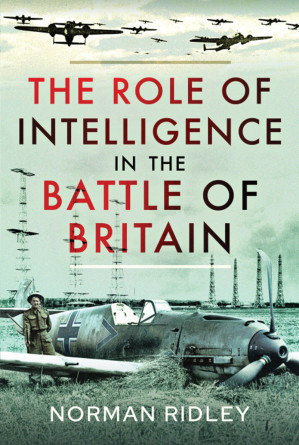
The Role of Intelligence in the Battle of Britain 🔍
Norman Ridley
Pen and Sword, 1, 2021
英语 [en] · EPUB · 13.0MB · 2021 · 📘 非小说类图书 · 🚀/lgli/zlib · Save
描述
The Battle of Britain was fought between two airborne military elites and was a classic example of pure attack against pure defence. Though it was essentially a ‘war of attrition’, it was an engagement in which the gathering, assessment and reaction to intelligence played a significant role on both sides. In some respects, both the RAF and the Luftwaffe were hamstrung in their endeavours during the Battle of Britain by poor intelligence. The most egregious Luftwaffe blunder was its failure to appreciate the true nature of Fighter Command’s operational systems and consequently it made fundamental strategic errors when evaluating its plans to degrade them. This was compounded by the Luftwaffe’s Intelligence chief, Major Josef ‘Beppo’ Schmid, whose consistent underestimation of Fighter Command’s capabilities had a huge negative impact upon Reichsmarschall Göring’s decision-making at all stages of the conflict. Both the Luftwaffe and the RAF lacked detailed information about each other’s war production capacity. While the Luftwaffe did have the benefit of pre-war aerial surveillance data it had been unable to update it significantly since the declaration of war in September 1939. Fighter Command did have an distinct advantage through its radar surveillance systems, but this was, in the early stages of the conflict at least, less than totally reliable and it was often difficult to interpret the data coming through due to the inexperience of many of its operators. Another promising source of intelligence was the interception of Luftwaffe communications. It is clear that the Luftwaffe was unable to use intelligence as a ‘force multiplier’, by concentrating resources effectively, and actually fell into a negative spiral where poor intelligence acted as a ‘force diluter’, thus wasting resources in strategically questionable areas. The British, despite being essentially unable to predict enemy intentions, did have the means, however imperfect, to respond quickly and effectively to each new strategic initiative rolled out by the Luftwaffe. The result of three years intensive research, in this book the author analyses the way in which both the British and German Intelligence services played a part in the Battle of Britain, thereby attempting to throw light on an aspect of the battle that has been hitherto underexposed to scrutiny.
备用文件名
zlib/History/Military History/Norman Ridley/The Role of Intelligence in the Battle of Britain_22336247.epub
备选作者
Ridley, Norman
备用出版商
Casemate Publishers and Book Distributors, LLC
备用出版商
Pen & Sword Books Limited
备用出版商
Pen et Sword Air World
备用出版商
Pen & Sword Aviation
备用出版商
Pen & Sword Military
备用版本
Open Road Integrated Media, Inc., [S.l.], 2021
备用版本
United Kingdom and Ireland, United Kingdom
备用版本
Barnsley, 2021
备用版本
6, 20211130
备用描述
The Battle of Britain was fought between two airborne military elites and was a classic example of pure attack against pure defense. Though it was essentially a war of attrition, it was an engagement in which the gathering, assessment and reaction to intelligence played a significant role on both sides.
In some respects, both the RAF and the Luftwaffe were hamstrung in their endeavors during the Battle of Britain by poor intelligence. The most egregious Luftwaffe blunder was its failure to appreciate the true nature of Fighter Commands operational systems and consequently it made fundamental strategic errors when evaluating its plans to degrade them. This was compounded by the Luftwaffes Intelligence chief, Major Josef Beppo Schmid, whose consistent underestimation of Fighter Commands capabilities had a huge negative impact upon Reichsmarschall Grings decision-making at all stages of the conflict.
Both the Luftwaffe and the RAF lacked detailed information about each others war production capacity. While the Luftwaffe did have the benefit of pre-war aerial surveillance data it had been unable to update it significantly since the declaration of war in September 1939. Fighter Command did have an distinct advantage through its radar surveillance systems, but this was, in the early stages of the conflict at least, less than totally reliable and it was often difficult to interpret the data coming through due to the inexperience of many of its operators. Another promising source of intelligence was the interception of Luftwaffe communications.
It is clear that the Luftwaffe was unable to use intelligence as a force multiplier, by concentrating resources effectively, and actually fell into a negative spiral where poor intelligence acted as a force diluter, thus wasting resources in strategically questionable areas. The British, despite being essentially unable to predict enemy intentions, did have the means, however imperfect, to respond quickly and effectively to each new strategic initiative rolled out by the Luftwaffe.
The result of three years intensive research, in this book the author analyses the way in which both the British and German Intelligence services played a part in the Battle of Britain, thereby attempting to throw light on an aspect of the battle that has been hitherto underexposed to scrutiny.
In some respects, both the RAF and the Luftwaffe were hamstrung in their endeavors during the Battle of Britain by poor intelligence. The most egregious Luftwaffe blunder was its failure to appreciate the true nature of Fighter Commands operational systems and consequently it made fundamental strategic errors when evaluating its plans to degrade them. This was compounded by the Luftwaffes Intelligence chief, Major Josef Beppo Schmid, whose consistent underestimation of Fighter Commands capabilities had a huge negative impact upon Reichsmarschall Grings decision-making at all stages of the conflict.
Both the Luftwaffe and the RAF lacked detailed information about each others war production capacity. While the Luftwaffe did have the benefit of pre-war aerial surveillance data it had been unable to update it significantly since the declaration of war in September 1939. Fighter Command did have an distinct advantage through its radar surveillance systems, but this was, in the early stages of the conflict at least, less than totally reliable and it was often difficult to interpret the data coming through due to the inexperience of many of its operators. Another promising source of intelligence was the interception of Luftwaffe communications.
It is clear that the Luftwaffe was unable to use intelligence as a force multiplier, by concentrating resources effectively, and actually fell into a negative spiral where poor intelligence acted as a force diluter, thus wasting resources in strategically questionable areas. The British, despite being essentially unable to predict enemy intentions, did have the means, however imperfect, to respond quickly and effectively to each new strategic initiative rolled out by the Luftwaffe.
The result of three years intensive research, in this book the author analyses the way in which both the British and German Intelligence services played a part in the Battle of Britain, thereby attempting to throw light on an aspect of the battle that has been hitherto underexposed to scrutiny.
备用描述
This in-depth WWII history examines how the Battle of Britain was shaped by military intelligence on both sides of the conflict.
In the summer and fall of 1940, the UK successfully fended off a relentless German attack from the air. While the Battle of Britain was essentially a war of attrition, it was critically influenced at every stage by the gathering, assessment, and reaction to intelligence. In this fascinating study, military historian Norman Ridley examines all aspects of German and British intelligence, from the accuracy of its data to the effectiveness of its deployment.
Both the Luftwaffe and the RAF lacked detailed information about each other's war production capacity. While the Luftwaffe did have pre-war aerial surveillance data, it was largely out of date by the time of the battle. Though RAF Fighter Command had a distinct advantage through its radar surveillance systems, the new technology wasn't totally reliable and often difficult to interpret. It also had the benefit of intercepting and decoding Luftwaffe communications.
Rather than acting as a "force multiplier", the Luftwaffe's poor intelligence actually acted as a "force diluter", wasting resources in strategically questionable areas. On the other hand, the British had the means, however imperfect, to respond quickly and effectively to each new strategic initiative they faced.
In the summer and fall of 1940, the UK successfully fended off a relentless German attack from the air. While the Battle of Britain was essentially a war of attrition, it was critically influenced at every stage by the gathering, assessment, and reaction to intelligence. In this fascinating study, military historian Norman Ridley examines all aspects of German and British intelligence, from the accuracy of its data to the effectiveness of its deployment.
Both the Luftwaffe and the RAF lacked detailed information about each other's war production capacity. While the Luftwaffe did have pre-war aerial surveillance data, it was largely out of date by the time of the battle. Though RAF Fighter Command had a distinct advantage through its radar surveillance systems, the new technology wasn't totally reliable and often difficult to interpret. It also had the benefit of intercepting and decoding Luftwaffe communications.
Rather than acting as a "force multiplier", the Luftwaffe's poor intelligence actually acted as a "force diluter", wasting resources in strategically questionable areas. On the other hand, the British had the means, however imperfect, to respond quickly and effectively to each new strategic initiative they faced.
开源日期
2022-08-16
🚀 快速下载
成为会员以支持书籍、论文等的长期保存。为了感谢您对我们的支持,您将获得高速下载权益。❤️
如果您在本月捐款,您将获得双倍的快速下载次数。
🐢 低速下载
由可信的合作方提供。 更多信息请参见常见问题解答。 (可能需要验证浏览器——无限次下载!)
- 低速服务器(合作方提供) #1 (稍快但需要排队)
- 低速服务器(合作方提供) #2 (稍快但需要排队)
- 低速服务器(合作方提供) #3 (稍快但需要排队)
- 低速服务器(合作方提供) #4 (稍快但需要排队)
- 低速服务器(合作方提供) #5 (无需排队,但可能非常慢)
- 低速服务器(合作方提供) #6 (无需排队,但可能非常慢)
- 低速服务器(合作方提供) #7 (无需排队,但可能非常慢)
- 低速服务器(合作方提供) #8 (无需排队,但可能非常慢)
- 低速服务器(合作方提供) #9 (无需排队,但可能非常慢)
- 下载后: 在我们的查看器中打开
所有选项下载的文件都相同,应该可以安全使用。即使这样,从互联网下载文件时始终要小心。例如,确保您的设备更新及时。
外部下载
-
对于大文件,我们建议使用下载管理器以防止中断。
推荐的下载管理器:JDownloader -
您将需要一个电子书或 PDF 阅读器来打开文件,具体取决于文件格式。
推荐的电子书阅读器:Anna的档案在线查看器、ReadEra和Calibre -
使用在线工具进行格式转换。
推荐的转换工具:CloudConvert和PrintFriendly -
您可以将 PDF 和 EPUB 文件发送到您的 Kindle 或 Kobo 电子阅读器。
推荐的工具:亚马逊的“发送到 Kindle”和djazz 的“发送到 Kobo/Kindle” -
支持作者和图书馆
✍️ 如果您喜欢这个并且能够负担得起,请考虑购买原版,或直接支持作者。
📚 如果您当地的图书馆有这本书,请考虑在那里免费借阅。
下面的文字仅以英文继续。
总下载量:
“文件的MD5”是根据文件内容计算出的哈希值,并且基于该内容具有相当的唯一性。我们这里索引的所有影子图书馆都主要使用MD5来标识文件。
一个文件可能会出现在多个影子图书馆中。有关我们编译的各种数据集的信息,请参见数据集页面。
有关此文件的详细信息,请查看其JSON 文件。 Live/debug JSON version. Live/debug page.