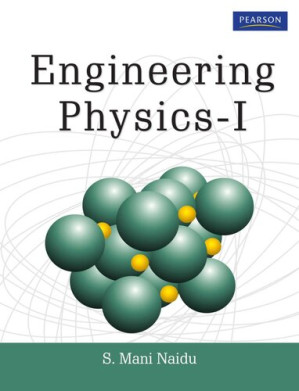
A Text Book of Engineering Physics - I 🔍
S. Mani Naidu
Pearson Education India, 2011
英语 [en] · PDF · 3.6MB · 2011 · 📘 非小说类图书 · 🚀/lgli/lgrs/nexusstc/zlib · Save
描述
Cover
Brief Contents
Contents
Preface
Acknowledgements
Roadmap to the Syllabus—JNTU Kakinada
Chapter 1: Interference
1.1 Introduction
1.2 Superposition of waves
1.3 Young’s double slit experiment
Explanation of interference
Analytical treatment of interference
Theory of interference fringes
1.4 Coherence
1.5 Interference in thin films by reflection
1.6 Newton’s rings
Theory: Newton’s rings by reflected light
Application: Determination of wave length of monochromatic light
Application: Determination of refractive index of a given liquid
Formulae
Solved Problems
Multiple-choice Questions
Answers
Review Questions
Chapter 2: Diffraction
2.1 Introduction
2.2 Fresnel and Fraunhofer diffraction
Comparison between Fresnel and Fraunhofer diffractions
2.3 Fraunhofer diffraction at a single slit
2.4 Fraunhofer diffraction at double slit
2.5 Fraunhofer diffraction at a circular aperture
2.6 Plane diffraction grating [Diffraction at n slits]
Theory of transmission grating:
2.7 Grating spectrum
Maximum number of orders available with a grating
Determination of wave length of light using grating:
2.8 Rayleigh’s criterion for resolving power
2.9 Resolving power of a plane transmission grating
Formulae
Solved Problems
Multiple-choice Questions
Answers
Review Questions
Chapter 3: Polarization
3.1 Introduction
3.2 Representation of polarized and unpolarized light
3.3 Types of polarization
3.4 Polarization by reflection
3.5 Malus law
3.6 Double refraction
3.7 Nicol prism
3.8 Quarter-wave plate
3.9 Half-wave plate
3.10 Theory of circular and elliptically polarized light
Formulae
Solved Problems
Multiple-choice Questions
Answers
Review Questions
Chapter 4: Crystal Structures
4.1 Introduction
Distinction between crystalline and amorphous solids
4.2 Space lattice (or) crystal lattice
4.3 The basis and crystal structure
4.4 Unit cell and lattice parameters
4.5 Crystal systems and Bravais lattices
4.6 Structure and packing fractions of simple cubic [SC] structure
4.7 Structure and packing fractions of body-centred cubic [BCC] structure
4.8 Structure and packing fractions of face-centred cubic [FCC] structure
4.9 Calculation of lattice constant
Formula
Solved Problems
Multiple-choice Questions
Answers
Review Questions
Chapter 5: X-Ray Diffraction
5.1 Crystal planes, directions and Miller indices
5.2 Distance of separation between successive hkl planes
5.3 Imperfections in crystals
5.4 Energy for the formation of a vacancy and number of vacancies—At equilibrium concentration
5.5 Diffraction of X-rays by crystal planes and Bragg’s law
5.6 Powder method
5.7 Laue method
Formulae
Solved Problems
Multiple-choice Questions
Answers
Review Questions
Chapter 6: Lasers
6.1 Introduction
6.2 Characteristics of laser radiation
6.3 Spontaneous and stimulated emission
6.4 Einstein’s coefficients
6.5 Population inversion
6.6 Helium–Neon gas [He–Ne] laser
6.7 Ruby laser
6.8 Semiconductor lasers
6.9 Carbon dioxide laser
6.10 Applications of lasers
Formula
Solved Problems
Multiple-choice Questions
Answers
Review Questions
Chapter 7: Fibre Optics
7.1 Introduction
7.2 Principle of optical fibre, acceptance angle and acceptance cone
7.3 Numerical aperture (NA)
7.4 Step index fibres and graded index fibres— Transmission of signals in them
7.5 Differences between step index fibres and graded index fibres
7.6 Differences between single mode fibres and multimode fibres
7.7 Attenuation in optical fibres
7.8 Optical fibres in communication
7.9 Advantages of optical fibres in communication
7.10 Fibre optic sensing applications
(a) Displacement sensors
(b) Liquid level sensor
(c) Temperature and pressure sensor
(d) Chemical sensors
7.11 Applications of optical fibres in medical field
Formulae
Solved Problems
Multiple-choice Questions
Answers
Review Questions
Chapter 8: Non-destructive Testing Using Ultrasonics
8.1 Introduction
8.2 Principle of ultrasonic testing
8.3 Ultrasonic flaw detector
8.4 Ultrasonic transducer
Transducer construction
8.5 Couplant
8.6 Inspection methods— Pulse echo testing technique
8.7 Different types of scans
8.8 Inspection standards [Reference standards or calibration blocks]
8.9 Applications of ultrasonics in NDT
Multiple-choice Questions
Answers
Review Questions
Index
Brief Contents
Contents
Preface
Acknowledgements
Roadmap to the Syllabus—JNTU Kakinada
Chapter 1: Interference
1.1 Introduction
1.2 Superposition of waves
1.3 Young’s double slit experiment
Explanation of interference
Analytical treatment of interference
Theory of interference fringes
1.4 Coherence
1.5 Interference in thin films by reflection
1.6 Newton’s rings
Theory: Newton’s rings by reflected light
Application: Determination of wave length of monochromatic light
Application: Determination of refractive index of a given liquid
Formulae
Solved Problems
Multiple-choice Questions
Answers
Review Questions
Chapter 2: Diffraction
2.1 Introduction
2.2 Fresnel and Fraunhofer diffraction
Comparison between Fresnel and Fraunhofer diffractions
2.3 Fraunhofer diffraction at a single slit
2.4 Fraunhofer diffraction at double slit
2.5 Fraunhofer diffraction at a circular aperture
2.6 Plane diffraction grating [Diffraction at n slits]
Theory of transmission grating:
2.7 Grating spectrum
Maximum number of orders available with a grating
Determination of wave length of light using grating:
2.8 Rayleigh’s criterion for resolving power
2.9 Resolving power of a plane transmission grating
Formulae
Solved Problems
Multiple-choice Questions
Answers
Review Questions
Chapter 3: Polarization
3.1 Introduction
3.2 Representation of polarized and unpolarized light
3.3 Types of polarization
3.4 Polarization by reflection
3.5 Malus law
3.6 Double refraction
3.7 Nicol prism
3.8 Quarter-wave plate
3.9 Half-wave plate
3.10 Theory of circular and elliptically polarized light
Formulae
Solved Problems
Multiple-choice Questions
Answers
Review Questions
Chapter 4: Crystal Structures
4.1 Introduction
Distinction between crystalline and amorphous solids
4.2 Space lattice (or) crystal lattice
4.3 The basis and crystal structure
4.4 Unit cell and lattice parameters
4.5 Crystal systems and Bravais lattices
4.6 Structure and packing fractions of simple cubic [SC] structure
4.7 Structure and packing fractions of body-centred cubic [BCC] structure
4.8 Structure and packing fractions of face-centred cubic [FCC] structure
4.9 Calculation of lattice constant
Formula
Solved Problems
Multiple-choice Questions
Answers
Review Questions
Chapter 5: X-Ray Diffraction
5.1 Crystal planes, directions and Miller indices
5.2 Distance of separation between successive hkl planes
5.3 Imperfections in crystals
5.4 Energy for the formation of a vacancy and number of vacancies—At equilibrium concentration
5.5 Diffraction of X-rays by crystal planes and Bragg’s law
5.6 Powder method
5.7 Laue method
Formulae
Solved Problems
Multiple-choice Questions
Answers
Review Questions
Chapter 6: Lasers
6.1 Introduction
6.2 Characteristics of laser radiation
6.3 Spontaneous and stimulated emission
6.4 Einstein’s coefficients
6.5 Population inversion
6.6 Helium–Neon gas [He–Ne] laser
6.7 Ruby laser
6.8 Semiconductor lasers
6.9 Carbon dioxide laser
6.10 Applications of lasers
Formula
Solved Problems
Multiple-choice Questions
Answers
Review Questions
Chapter 7: Fibre Optics
7.1 Introduction
7.2 Principle of optical fibre, acceptance angle and acceptance cone
7.3 Numerical aperture (NA)
7.4 Step index fibres and graded index fibres— Transmission of signals in them
7.5 Differences between step index fibres and graded index fibres
7.6 Differences between single mode fibres and multimode fibres
7.7 Attenuation in optical fibres
7.8 Optical fibres in communication
7.9 Advantages of optical fibres in communication
7.10 Fibre optic sensing applications
(a) Displacement sensors
(b) Liquid level sensor
(c) Temperature and pressure sensor
(d) Chemical sensors
7.11 Applications of optical fibres in medical field
Formulae
Solved Problems
Multiple-choice Questions
Answers
Review Questions
Chapter 8: Non-destructive Testing Using Ultrasonics
8.1 Introduction
8.2 Principle of ultrasonic testing
8.3 Ultrasonic flaw detector
8.4 Ultrasonic transducer
Transducer construction
8.5 Couplant
8.6 Inspection methods— Pulse echo testing technique
8.7 Different types of scans
8.8 Inspection standards [Reference standards or calibration blocks]
8.9 Applications of ultrasonics in NDT
Multiple-choice Questions
Answers
Review Questions
Index
备用文件名
lgli/A Text Book of Engineering Physics-I (Naidu).pdf
备用文件名
lgrsnf/A Text Book of Engineering Physics-I (Naidu).pdf
备用文件名
zlib/Physics/General Courses/S. Mani Naidu/A Text Book of Engineering Physics - I_5439373.pdf
元数据中的注释
lg2498646
元数据中的注释
{"isbns":["8131753999","9788131753996"],"last_page":224,"publisher":"Pearson Education India"}
开源日期
2020-04-07
🚀 快速下载
成为会员以支持书籍、论文等的长期保存。为了感谢您对我们的支持,您将获得高速下载权益。❤️
如果您在本月捐款,您将获得双倍的快速下载次数。
🐢 低速下载
由可信的合作方提供。 更多信息请参见常见问题解答。 (可能需要验证浏览器——无限次下载!)
- 低速服务器(合作方提供) #1 (稍快但需要排队)
- 低速服务器(合作方提供) #2 (稍快但需要排队)
- 低速服务器(合作方提供) #3 (稍快但需要排队)
- 低速服务器(合作方提供) #4 (稍快但需要排队)
- 低速服务器(合作方提供) #5 (无需排队,但可能非常慢)
- 低速服务器(合作方提供) #6 (无需排队,但可能非常慢)
- 低速服务器(合作方提供) #7 (无需排队,但可能非常慢)
- 低速服务器(合作方提供) #8 (无需排队,但可能非常慢)
- 低速服务器(合作方提供) #9 (无需排队,但可能非常慢)
- 下载后: 在我们的查看器中打开
所有选项下载的文件都相同,应该可以安全使用。即使这样,从互联网下载文件时始终要小心。例如,确保您的设备更新及时。
外部下载
-
对于大文件,我们建议使用下载管理器以防止中断。
推荐的下载管理器:JDownloader -
您将需要一个电子书或 PDF 阅读器来打开文件,具体取决于文件格式。
推荐的电子书阅读器:Anna的档案在线查看器、ReadEra和Calibre -
使用在线工具进行格式转换。
推荐的转换工具:CloudConvert和PrintFriendly -
您可以将 PDF 和 EPUB 文件发送到您的 Kindle 或 Kobo 电子阅读器。
推荐的工具:亚马逊的“发送到 Kindle”和djazz 的“发送到 Kobo/Kindle” -
支持作者和图书馆
✍️ 如果您喜欢这个并且能够负担得起,请考虑购买原版,或直接支持作者。
📚 如果您当地的图书馆有这本书,请考虑在那里免费借阅。
下面的文字仅以英文继续。
总下载量:
“文件的MD5”是根据文件内容计算出的哈希值,并且基于该内容具有相当的唯一性。我们这里索引的所有影子图书馆都主要使用MD5来标识文件。
一个文件可能会出现在多个影子图书馆中。有关我们编译的各种数据集的信息,请参见数据集页面。
有关此文件的详细信息,请查看其JSON 文件。 Live/debug JSON version. Live/debug page.