upload/alexandrina/Collections/Project-Muse/Johns Hopkins University Press/On the Other Hand- Left Hand, Right Brain, Mental Disorder, and History.pdf
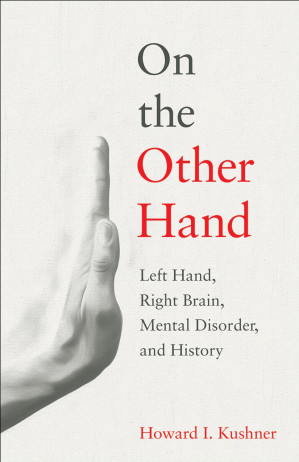
On The Other Hand: Left Hand, Right Brain, Mental Disorder, And History Project Muse Upcc Books 🔍
Kushner, Howard I.
Johns Hopkins University Press, Johns Hopkins University Press, Baltimore, Maryland, 2017
英语 [en] · PDF · 18.6MB · 2017 · 📘 非小说类图书 · 🚀/lgli/upload/zlib · Save
描述
Does being left-handed make a person different in any way that matters?
Since the late Stone Age, approximately 10 percent of humans have been left-handed, yet for most of human history left-handedness has been stigmatized. In On the Other Hand , Howard I. Kushner traces the impact of left-handedness on human cognition, behavior, culture, and health.
A left-hander himself, Kushner has long been interested in the meanings associated with left-handedness, and ultimately with whether hand preference can even be defined in a significant way. As he explores the medical and cultural history of left-handedness, Kushner describes the associated taboos, rituals, and stigma from around the globe. The words "left" and "left hand" have negative connotations in all languages, and left-handers have even historically been viewed as disabled.
In this comprehensive history of left-handedness, Kushner asks why left-handedness exists. He examines the relationship—if any—between handedness, linguistics, and learning disabilities, reveals how toleration of left-handedness serves as a barometer of wider cultural toleration and permissiveness, and wonders why the reported number of left-handers is significantly lower in Asia and Africa than in the West. Written in a lively style that mixes personal biography with scholarly research, On the Other Hand tells a comprehensive story about the science, traditions, and prejudices surrounding left-handedness.
Since the late Stone Age, approximately 10 percent of humans have been left-handed, yet for most of human history left-handedness has been stigmatized. In On the Other Hand , Howard I. Kushner traces the impact of left-handedness on human cognition, behavior, culture, and health.
A left-hander himself, Kushner has long been interested in the meanings associated with left-handedness, and ultimately with whether hand preference can even be defined in a significant way. As he explores the medical and cultural history of left-handedness, Kushner describes the associated taboos, rituals, and stigma from around the globe. The words "left" and "left hand" have negative connotations in all languages, and left-handers have even historically been viewed as disabled.
In this comprehensive history of left-handedness, Kushner asks why left-handedness exists. He examines the relationship—if any—between handedness, linguistics, and learning disabilities, reveals how toleration of left-handedness serves as a barometer of wider cultural toleration and permissiveness, and wonders why the reported number of left-handers is significantly lower in Asia and Africa than in the West. Written in a lively style that mixes personal biography with scholarly research, On the Other Hand tells a comprehensive story about the science, traditions, and prejudices surrounding left-handedness.
备用文件名
lgli/R:\Project-Muse\md5_rep\548770B8273EAC63375569CE8D2F8DBE.pdf
备用文件名
zlib/no-category/Howard I. Kushner/On the Other Hand: Left Hand, Right Brain, Mental Disorder, and History_29410720.pdf
备选标题
On the other hand : left hand, right brain, mental illness, and history
备选作者
Project MUSE (https://muse.jhu.edu/)
备选作者
Howard I. Kushner
备用版本
United States, United States of America
备用版本
1, 20170925
备用版本
1, FR, 2017
元数据中的注释
producers:
Muse-DL/1.0.0
Muse-DL/1.0.0
元数据中的注释
Includes bibliographical references (pages 159-192) and index.
备用描述
Cover 1
Half Title, Title Page, Copyright, Dedication 2
Contents 8
Preface 10
Chapter 1. Genes and Kangaroos 18
Chapter 2. Criminals or Victims?: Cesare Lombroso vs. Robert Hertz 33
Chapter 3. By the Numbers: Measuring Handedness 47
Chapter 4. Ambiguous Attitudes 62
Chapter 5. Changing Hands, Tying Tongues 75
Chapter 6. From Genes to Populations: The Search for a Cause 96
Chapter 7. The Geschwind Hypothesis 108
Chapter 8. Genetic Models and Selective Advantage 123
Chapter 9. Uniquely Human? 133
Chapter 10. A Gay Hand? 146
Chapter 11. Disability, Ability, and the Left Hand 155
Conclusion: Does Left-Handedness Matter? 165
Acknowledgments 172
Notes 176
Index 210
Publisher:Johns Hopkins University Press,Published:2017,ISBN:9781421423340,Related ISBN:9781421423333,DOI:10.1353/book.55896,Language:English,OCLC:1004661037
Since the late Stone Age, approximately 10 percent of humans have been left-handed, yet for most of human history left-handedness has been stigmatized. In On the Other Hand, Howard I. Kushner traces the impact of left-handedness on human cognition, behavior, culture, and health. A left-hander himself, Kushner has long been interested in the meanings associated with left-handedness, and ultimately with whether hand preference can even be defined in a significant way. As he explores the medical and cultural history of left-handedness, Kushner describes the associated taboos, rituals, and stigma from around the globe. The words "left" and "left hand" have negative connotations in all languages, and left-handers have even historically been viewed as disabled.In this comprehensive history of left-handedness, Kushner asks why left-handedness exists. He examines the relationship—if any—between handedness, linguistics, and learning disabilities, reveals how toleration of left-handedness serves as a barometer of wider cultural toleration and permissiveness, and wonders why the reported number of left-handers is significantly lower in Asia and Africa than in the West. Written in a lively style that mixes personal biography with scholarly research, On the Other Hand tells a comprehensive story about the science, traditions, and prejudices surrounding left-handedness.
Half Title, Title Page, Copyright, Dedication 2
Contents 8
Preface 10
Chapter 1. Genes and Kangaroos 18
Chapter 2. Criminals or Victims?: Cesare Lombroso vs. Robert Hertz 33
Chapter 3. By the Numbers: Measuring Handedness 47
Chapter 4. Ambiguous Attitudes 62
Chapter 5. Changing Hands, Tying Tongues 75
Chapter 6. From Genes to Populations: The Search for a Cause 96
Chapter 7. The Geschwind Hypothesis 108
Chapter 8. Genetic Models and Selective Advantage 123
Chapter 9. Uniquely Human? 133
Chapter 10. A Gay Hand? 146
Chapter 11. Disability, Ability, and the Left Hand 155
Conclusion: Does Left-Handedness Matter? 165
Acknowledgments 172
Notes 176
Index 210
Publisher:Johns Hopkins University Press,Published:2017,ISBN:9781421423340,Related ISBN:9781421423333,DOI:10.1353/book.55896,Language:English,OCLC:1004661037
Since the late Stone Age, approximately 10 percent of humans have been left-handed, yet for most of human history left-handedness has been stigmatized. In On the Other Hand, Howard I. Kushner traces the impact of left-handedness on human cognition, behavior, culture, and health. A left-hander himself, Kushner has long been interested in the meanings associated with left-handedness, and ultimately with whether hand preference can even be defined in a significant way. As he explores the medical and cultural history of left-handedness, Kushner describes the associated taboos, rituals, and stigma from around the globe. The words "left" and "left hand" have negative connotations in all languages, and left-handers have even historically been viewed as disabled.In this comprehensive history of left-handedness, Kushner asks why left-handedness exists. He examines the relationship—if any—between handedness, linguistics, and learning disabilities, reveals how toleration of left-handedness serves as a barometer of wider cultural toleration and permissiveness, and wonders why the reported number of left-handers is significantly lower in Asia and Africa than in the West. Written in a lively style that mixes personal biography with scholarly research, On the Other Hand tells a comprehensive story about the science, traditions, and prejudices surrounding left-handedness.
备用描述
<P>Since the late Stone Age, approximately 10 percent of humans have been left-handed, yet for most of human history left-handedness has been stigmatized. In <I>On the Other Hand</I>, Howard I. Kushner traces the impact of left-handedness on human cognition, behavior, culture, and health. </P><P>A left-hander himself, Kushner has long been interested in the meanings associated with left-handedness, and ultimately with whether hand preference can even be defined in a significant way. As he explores the medical and cultural history of left-handedness, Kushner describes the associated taboos, rituals, and stigma from around the globe. The words "left" and "left hand" have negative connotations in all languages, and left-handers have even historically been viewed as disabled.</P><P>In this comprehensive history of left-handedness, Kushner asks why left-handedness exists. He examines the relationship—if any—between handedness, linguistics, and learning disabilities, reveals how toleration of left-handedness serves as a barometer of wider cultural toleration and permissiveness, and wonders why the reported number of left-handers is significantly lower in Asia and Africa than in the West. Written in a lively style that mixes personal biography with scholarly research, <I>On the Other Hand</I> tells a comprehensive story about the science, traditions, and prejudices surrounding left-handedness.</P>
开源日期
2022-03-08
🚀 快速下载
成为会员以支持书籍、论文等的长期保存。为了感谢您对我们的支持,您将获得高速下载权益。❤️
如果您在本月捐款,您将获得双倍的快速下载次数。
🐢 低速下载
由可信的合作方提供。 更多信息请参见常见问题解答。 (可能需要验证浏览器——无限次下载!)
- 低速服务器(合作方提供) #1 (稍快但需要排队)
- 低速服务器(合作方提供) #2 (稍快但需要排队)
- 低速服务器(合作方提供) #3 (稍快但需要排队)
- 低速服务器(合作方提供) #4 (稍快但需要排队)
- 低速服务器(合作方提供) #5 (无需排队,但可能非常慢)
- 低速服务器(合作方提供) #6 (无需排队,但可能非常慢)
- 低速服务器(合作方提供) #7 (无需排队,但可能非常慢)
- 低速服务器(合作方提供) #8 (无需排队,但可能非常慢)
- 低速服务器(合作方提供) #9 (无需排队,但可能非常慢)
- 下载后: 在我们的查看器中打开
所有选项下载的文件都相同,应该可以安全使用。即使这样,从互联网下载文件时始终要小心。例如,确保您的设备更新及时。
外部下载
-
对于大文件,我们建议使用下载管理器以防止中断。
推荐的下载管理器:JDownloader -
您将需要一个电子书或 PDF 阅读器来打开文件,具体取决于文件格式。
推荐的电子书阅读器:Anna的档案在线查看器、ReadEra和Calibre -
使用在线工具进行格式转换。
推荐的转换工具:CloudConvert和PrintFriendly -
您可以将 PDF 和 EPUB 文件发送到您的 Kindle 或 Kobo 电子阅读器。
推荐的工具:亚马逊的“发送到 Kindle”和djazz 的“发送到 Kobo/Kindle” -
支持作者和图书馆
✍️ 如果您喜欢这个并且能够负担得起,请考虑购买原版,或直接支持作者。
📚 如果您当地的图书馆有这本书,请考虑在那里免费借阅。
下面的文字仅以英文继续。
总下载量:
“文件的MD5”是根据文件内容计算出的哈希值,并且基于该内容具有相当的唯一性。我们这里索引的所有影子图书馆都主要使用MD5来标识文件。
一个文件可能会出现在多个影子图书馆中。有关我们编译的各种数据集的信息,请参见数据集页面。
有关此文件的详细信息,请查看其JSON 文件。 Live/debug JSON version. Live/debug page.