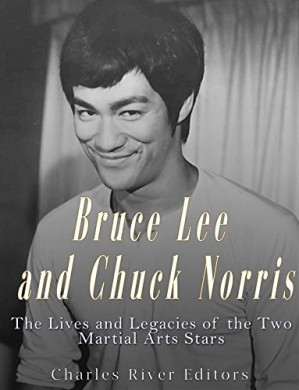
Bruce Lee and Chuck Norris: The Lives and Legacies of the Two Martial Arts Stars 🔍
Charles River Editors
Charles River Editors, 2016
英语 [en] · EPUB · 1.6MB · 2016 · 📘 非小说类图书 · 🚀/lgli/lgrs/nexusstc/upload/zlib · Save
描述
\*Includes pictures \*Includes their own quotes about their lives and work \*Includes online resources and a bibliography for further reading \*Includes a table of contents
It would be nearly impossible for someone to pack more action into 32 years than Bruce Lee, whose name remains practically synonymous with martial arts excellence and kung fu movies. He was undoubtedly the forerunner to martial arts stars who came in his wake, including Chuck Norris and Jackie Chan, a feat made all the more impressive by the fact that he grew up as a sickly child. His upbringing was simultaneously one of great privilege and hardship, which had a huge impact on his career down the road; even when he began to fill out his skinny frame, trouble on the streets created a whirlwind set of circumstances that all but required Lee to move to America before he was 20.
Despite being the most famous star of the genre and the man who almost singlehandedly popularized martial arts in the West, the films that helped make Lee a global icon were not even made in the United States but were instead shot and produced in Hong Kong, after which they received large-scale international distribution. Furthermore, for all of his fame, none of Bruce Lee’s movies are commonly regarded as masterpieces, and they have always been viewed more as popular entertainment than as significant artistic achievements. Some might be able to name the short list of movies in which he starred and may know that Enter the Dragon (1973) is his most iconic picture, but his movies were never among those considered for Academy Award nominations.
Bruce Lee was arguably the greatest martial artist who ever lived, but he’s also remembered today for being spiritual and philosophical. In addition to writing at length about those topics, Lee considered those elements essential to his physical fitness and training. In reference to a form of martial arts that came to bear his name, he explained, “Too much time is given to the development of skill and too little to the development of the individual for participation...[Jeet Kune Do] ultimately is not a matter of petty techniques but of highly developed spirituality and physique.”
It is not uncommon for a culture to create intricate mythologies around its combat arts champions, but those celebrity fighters who have produced enough tangible accomplishments to merit such adulation are generally limited to a few in each generation. In the second half of the 20th century, boxer Muhammad Ali commanded such reverence, and in the martial arts, two stars have primarily reestablished the entire combat genre for the international movie-going population. In terms of raw popularity, Chuck Norris represents the West.
In contrast to Lee’s fame, which emerged from a Chinese version of martial arts entertainment laced with tinges of the superhuman, Chuck Norris was karate’s verismo artist, with his characters based on the realities of actual tournament and military experiences. His films capitalized upon the preexisting model of the American international male persona, both as it was and as he and the studios believed that it should be. In this way, Norris followed in the footsteps of Gary Cooper and John Wayne, with the addition of martial arts as a spur to the action. Critics have derided the quality of his acting from the onset of his career, but Norris has always maintained that his interest in acting was for the messages he intended for viewers, and he has never expressed a moment’s care for the pundits. A master of the paramilitary underdog and lone law enforcement officer film, his career would come to an apex with the television series Walker, Texas Ranger, a household name among viewers for nearly a decade and one that rivaled such classics as Gunsmoke and Bonanza.
Along with pictures of important people, places, and events, you will learn about Bruce Lee and Chuck Norris like never before.
It would be nearly impossible for someone to pack more action into 32 years than Bruce Lee, whose name remains practically synonymous with martial arts excellence and kung fu movies. He was undoubtedly the forerunner to martial arts stars who came in his wake, including Chuck Norris and Jackie Chan, a feat made all the more impressive by the fact that he grew up as a sickly child. His upbringing was simultaneously one of great privilege and hardship, which had a huge impact on his career down the road; even when he began to fill out his skinny frame, trouble on the streets created a whirlwind set of circumstances that all but required Lee to move to America before he was 20.
Despite being the most famous star of the genre and the man who almost singlehandedly popularized martial arts in the West, the films that helped make Lee a global icon were not even made in the United States but were instead shot and produced in Hong Kong, after which they received large-scale international distribution. Furthermore, for all of his fame, none of Bruce Lee’s movies are commonly regarded as masterpieces, and they have always been viewed more as popular entertainment than as significant artistic achievements. Some might be able to name the short list of movies in which he starred and may know that Enter the Dragon (1973) is his most iconic picture, but his movies were never among those considered for Academy Award nominations.
Bruce Lee was arguably the greatest martial artist who ever lived, but he’s also remembered today for being spiritual and philosophical. In addition to writing at length about those topics, Lee considered those elements essential to his physical fitness and training. In reference to a form of martial arts that came to bear his name, he explained, “Too much time is given to the development of skill and too little to the development of the individual for participation...[Jeet Kune Do] ultimately is not a matter of petty techniques but of highly developed spirituality and physique.”
It is not uncommon for a culture to create intricate mythologies around its combat arts champions, but those celebrity fighters who have produced enough tangible accomplishments to merit such adulation are generally limited to a few in each generation. In the second half of the 20th century, boxer Muhammad Ali commanded such reverence, and in the martial arts, two stars have primarily reestablished the entire combat genre for the international movie-going population. In terms of raw popularity, Chuck Norris represents the West.
In contrast to Lee’s fame, which emerged from a Chinese version of martial arts entertainment laced with tinges of the superhuman, Chuck Norris was karate’s verismo artist, with his characters based on the realities of actual tournament and military experiences. His films capitalized upon the preexisting model of the American international male persona, both as it was and as he and the studios believed that it should be. In this way, Norris followed in the footsteps of Gary Cooper and John Wayne, with the addition of martial arts as a spur to the action. Critics have derided the quality of his acting from the onset of his career, but Norris has always maintained that his interest in acting was for the messages he intended for viewers, and he has never expressed a moment’s care for the pundits. A master of the paramilitary underdog and lone law enforcement officer film, his career would come to an apex with the television series Walker, Texas Ranger, a household name among viewers for nearly a decade and one that rivaled such classics as Gunsmoke and Bonanza.
Along with pictures of important people, places, and events, you will learn about Bruce Lee and Chuck Norris like never before.
备用文件名
nexusstc/Bruce Lee and Chuck Norris: The Lives and Legacies of the Two Martial Arts Stars/54510bd997a71149991a8c1aa2e0c87a.epub
备用文件名
lgli/Bruce_Lee_and_Chuck_Norris_by_Charles_River_Editors.epub
备用文件名
lgrsnf/Bruce_Lee_and_Chuck_Norris_by_Charles_River_Editors.epub
备用文件名
zlib/no-category/Charles River Editors/Bruce Lee and Chuck Norris: The Lives and Legacies of the Two Martial Arts Stars_25077873.epub
元数据中的注释
Mobilism
元数据中的注释
{"content":{"parsed_at":1697293790,"source_extension":"epub"},"publisher":"Charles River Editors"}
开源日期
2023-05-16
🚀 快速下载
成为会员以支持书籍、论文等的长期保存。为了感谢您对我们的支持,您将获得高速下载权益。❤️
如果您在本月捐款,您将获得双倍的快速下载次数。
🐢 低速下载
由可信的合作方提供。 更多信息请参见常见问题解答。 (可能需要验证浏览器——无限次下载!)
- 低速服务器(合作方提供) #1 (稍快但需要排队)
- 低速服务器(合作方提供) #2 (稍快但需要排队)
- 低速服务器(合作方提供) #3 (稍快但需要排队)
- 低速服务器(合作方提供) #4 (稍快但需要排队)
- 低速服务器(合作方提供) #5 (无需排队,但可能非常慢)
- 低速服务器(合作方提供) #6 (无需排队,但可能非常慢)
- 低速服务器(合作方提供) #7 (无需排队,但可能非常慢)
- 低速服务器(合作方提供) #8 (无需排队,但可能非常慢)
- 低速服务器(合作方提供) #9 (无需排队,但可能非常慢)
- 下载后: 在我们的查看器中打开
所有选项下载的文件都相同,应该可以安全使用。即使这样,从互联网下载文件时始终要小心。例如,确保您的设备更新及时。
外部下载
-
对于大文件,我们建议使用下载管理器以防止中断。
推荐的下载管理器:JDownloader -
您将需要一个电子书或 PDF 阅读器来打开文件,具体取决于文件格式。
推荐的电子书阅读器:Anna的档案在线查看器、ReadEra和Calibre -
使用在线工具进行格式转换。
推荐的转换工具:CloudConvert和PrintFriendly -
您可以将 PDF 和 EPUB 文件发送到您的 Kindle 或 Kobo 电子阅读器。
推荐的工具:亚马逊的“发送到 Kindle”和djazz 的“发送到 Kobo/Kindle” -
支持作者和图书馆
✍️ 如果您喜欢这个并且能够负担得起,请考虑购买原版,或直接支持作者。
📚 如果您当地的图书馆有这本书,请考虑在那里免费借阅。
下面的文字仅以英文继续。
总下载量:
“文件的MD5”是根据文件内容计算出的哈希值,并且基于该内容具有相当的唯一性。我们这里索引的所有影子图书馆都主要使用MD5来标识文件。
一个文件可能会出现在多个影子图书馆中。有关我们编译的各种数据集的信息,请参见数据集页面。
有关此文件的详细信息,请查看其JSON 文件。 Live/debug JSON version. Live/debug page.