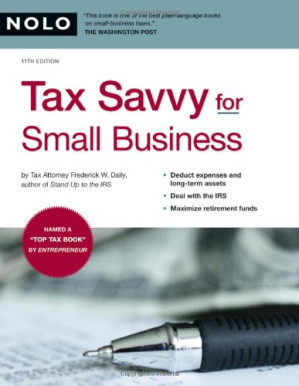
Tax Savvy for Small Business : Year-round Tax Strategies to Save You Money 🔍
Frederick Daily J.D.
NOLO, Business & economics : Faxation : General, 11. ed, Berkeley, Calif, 2007
英语 [en] · PDF · 6.1MB · 2007 · 📘 非小说类图书 · 🚀/lgli/lgrs/nexusstc/upload/zlib · Save
描述
The essential tax-strategy book for entrepreneurs who call themselves "boss". Named "Best Tax Book" by Entrepreneur.com. Knowing the ins and outs of the tax code is vital to the health of every small business. Virtually every decision a business makes has tax consequences that can affect its bottom line -- and the IRS is always watching. Tax Savvy for Small Business provides valuable strategies that will free up your time and money for what counts -- running your business, and running it effectively. It explains how to deduct current and capitalized expenses, write off up to $108,000 of long-term assets each year, compare different business structures, take advantage of fringe benefits, keep records that will head off trouble with the IRS, get tax breaks from business losses, deal with payroll taxes, negotiate payment plans for late taxes, handle an audit, get IRS penalties and interest reduced, maximize retirement funds and use retirement funds as a tax break. Tax Savvy for Small Business provides the latest tax breaks, rules, forms and publications. You'll also find a list of the top 25 business deductions -- the best deductions to take and how to claim them.
备用文件名
lgli/D:\!genesis\library.nu\_314652.51d9ccf2e10cc9c17a5f617da20cd057.pdf
备用文件名
lgrsnf/D:\!genesis\library.nu\_314652.51d9ccf2e10cc9c17a5f617da20cd057.pdf
备用文件名
nexusstc/Tax Savvy for Small Business/51d9ccf2e10cc9c17a5f617da20cd057.pdf
备用文件名
zlib/Business & Economics/Accounting/Frederick Daily J.D./Tax Savvy for Small Business_1011318.pdf
备选作者
Daily, Frederick W.; Laurence, Bethany K.
备选作者
Frederick W. Daily, Bethany K. Laurence
备选作者
Daily J.D., Frederick
备用版本
United States, United States of America
备用版本
MH Sub I. LLC, Berkeley, CA, 2007
备用版本
11 edition, November 15, 2007
备用版本
11th ed, Berkeley, CA, 2007
元数据中的注释
до 2011-01
元数据中的注释
lg587107
元数据中的注释
{"edition":"11","isbns":["1413307175","9781413307177"],"last_page":394,"publisher":"NOLO"}
备用描述
Table of Contents......Page 9
Your Tax Savvy Companion......Page 17
1. Tax Basics......Page 19
How Tax Law Is Made and Administered: The Short Course......Page 20
Where to Find Tax Rules......Page 21
Marginal Tax Rate and Tax Brackets......Page 23
The Alternative Minimum Tax (AMT)......Page 24
2. Deductible Business Expenses and Income......Page 25
What Is a Deductible Business Expense?......Page 27
Is It a Current or Future Year Expense?......Page 29
Top 25 Deductions for Businesses......Page 30
The General Business Credit......Page 40
Vehicle Expenses......Page 41
How and Where to Claim Expense Deductions......Page 46
What Is—And Isn’t—Income?......Page 47
3. Writing Off Business Assets......Page 51
When Various Expenses May Be Deducted......Page 53
Section 179: Expensing Business Assets......Page 55
Depreciating Business Assets......Page 58
Tax Basis of Business Assets......Page 65
Leasing Instead of Buying Assets......Page 69
When You Dispose of Business Assets: Depreciation Recapture Tax......Page 71
Tax Errors in Depreciation......Page 72
4. Bookkeeping and Accounting......Page 75
Why You Need a Bookkeeping System......Page 76
Manual or Computer System?......Page 77
What Kinds of Records to Keep......Page 81
How Long Records Should Be Kept......Page 85
Bookkeeping Methods of Tracking Income and Expenses......Page 86
Timing Methods of Accounting: Cash and Accrual......Page 87
Accounting Periods: Calendar Year or Fiscal Year......Page 89
5. Business Losses and Failures......Page 91
Unincorporated Business Losses......Page 92
Incorporated Business Losses......Page 94
6. Tax Concerns of Employers......Page 97
Employer Identification Numbers......Page 98
What Are Payroll Taxes?......Page 99
Reporting and Depositing Payroll Taxes......Page 101
Classifying Workers: Employee or Independent Contractor?......Page 109
Misclassifying Employees as Independent Contractors......Page 112
IRS Filing and Payment Requirements for Employers......Page 115
Record Keeping for Your Workers......Page 116
7. Sole Proprietorships......Page 119
Solo Income and Expenses......Page 120
Solos’ Tax Forms: Schedule C Is Your Friend......Page 122
What If My Solo Biz Loses Money?......Page 126
How Solos Are Taxed......Page 127
Record Keeping for Solos......Page 130
Outgrowing the Solo......Page 131
8. C Corporations......Page 133
Types of Corporations......Page 135
How C Corporations Are Taxed......Page 137
Tax Benefits of C Corporations......Page 142
Incorporating Your Business......Page 144
The Importance of Issuing Section 1244 Stock......Page 147
Taking Money Out of a C Corporation......Page 149
Dissolving a C Corporation......Page 153
9. S Corporations......Page 157
Should You Choose S Corporation Status?......Page 158
Tax Reporting for S Corporations......Page 161
How S Corporation Shareholders Are Taxed......Page 164
Electing S Corporation Status......Page 165
Revoking S Corporation Status......Page 167
Dissolving an S Corporation......Page 168
10. Partnerships......Page 171
Tax Reporting by Partnerships......Page 173
Tax Obligations of Partners......Page 174
Partnership Losses......Page 179
Partnership Contributions......Page 180
Selling or Transferring a Partnership Interest......Page 183
Ending a Partnership......Page 185
11. Limited Liability Companies......Page 187
Taxes......Page 188
Comparing LLCs With Other Entities......Page 189
The Limited Liability Company (LLC)......Page 190
Terminating a Limited Liability Company......Page 192
12. Qualified Personal Service Corporations......Page 195
Qualified Personal Service Corporations (QPSCs)......Page 196
QPSCs & Taxes......Page 197
Potential Tax Problems......Page 198
Dissolving a Qualified Personal Service Corporation......Page 199
13. Family Businesses......Page 201
Income Splitting Lowers Taxes......Page 202
A Spouse in the Business......Page 205
Preserving a Family Business After Death......Page 206
14. Microbusinesses and Home-Based Businesses......Page 213
Deducting Part of the Cost of Your Home......Page 214
Calculating Your Home Office Deduction......Page 218
Tax When Selling the Home Office......Page 221
A Microbusiness as a Tax Shelter......Page 222
15. Fringe Benefits......Page 227
How Fringe Benefits Save Taxes......Page 229
Meals......Page 230
Travel and Lodging......Page 231
Clubs and Athletic Facilities......Page 233
Health Benefits......Page 234
Education Benefits......Page 236
Gifts, Rewards, Discounts, and Free Services for Employees......Page 237
Special Benefits for C Corporation Employees Only......Page 238
16. Retirement Plans......Page 243
Advantages of Retirement Plans......Page 244
Overview of Retirement Plan Types......Page 245
Details About Each Type of Retirement Plan......Page 246
Where to Go for a Retirement Plan......Page 255
Potential Tax Problems With Retirement Plans......Page 256
Withdrawing Money From Retirement Plans......Page 257
Closing Your Business and Your Plans......Page 258
17. Buying a Business......Page 261
Buying the Assets of a Business......Page 262
Buying Shares of Stock......Page 263
Assigning a Price to Business Assets......Page 266
State and Local Transfer Taxes......Page 269
18. Selling a Business......Page 271
Reporting the Sale of a Sole Proprietorship......Page 272
The Importance of an Arms-Length Deal......Page 273
How to Protect Yourself From IRS Challenges......Page 274
19. When You Can’t Pay Your Taxes......Page 277
Getting More Time to Pay......Page 278
Paying in Installments......Page 279
What to Expect When the IRS Gets Serious......Page 280
Dealing With a Monster Tax Bill......Page 284
When the IRS Can Take Your Assets......Page 286
20. Audits......Page 291
Who Gets Audited?......Page 293
How the IRS Audits Small Businesses......Page 295
The Auditor’s Powers......Page 296
Should You Get Audit Help?......Page 298
What to Bring to an Audit......Page 299
What Auditors Look for When Examining a Business......Page 301
How to Behave at an Audit......Page 306
How to Negotiate With an Auditor......Page 307
Your Options After Getting an Audit Report......Page 309
When Your Audit Is Final......Page 311
21. Appealing IRS Audits......Page 313
IRS Appeals......Page 314
Contesting an Audit in Court......Page 316
22. Penalties and Interest......Page 321
Common Reasons for Penalties......Page 322
Understanding Penalty and Interest Notices......Page 323
How to Get Penalties Reduced or Eliminated......Page 324
Designating Payments on Delinquent Tax Bills......Page 326
23. Help Beyond the Book......Page 329
Finding Answers to Tax Questions......Page 330
Finding and Using a Tax Pro......Page 336
24. Answers to 25 Frequently Asked Tax Questions......Page 341
Glossary......Page 349
Appendix......Page 359
IRS Publications List......Page 360
Forms Checklist and Due Dates......Page 361
Quick and Easy Access to IRS Tax Help and Tax Products......Page 362
Index......Page 363
Your Tax Savvy Companion......Page 17
1. Tax Basics......Page 19
How Tax Law Is Made and Administered: The Short Course......Page 20
Where to Find Tax Rules......Page 21
Marginal Tax Rate and Tax Brackets......Page 23
The Alternative Minimum Tax (AMT)......Page 24
2. Deductible Business Expenses and Income......Page 25
What Is a Deductible Business Expense?......Page 27
Is It a Current or Future Year Expense?......Page 29
Top 25 Deductions for Businesses......Page 30
The General Business Credit......Page 40
Vehicle Expenses......Page 41
How and Where to Claim Expense Deductions......Page 46
What Is—And Isn’t—Income?......Page 47
3. Writing Off Business Assets......Page 51
When Various Expenses May Be Deducted......Page 53
Section 179: Expensing Business Assets......Page 55
Depreciating Business Assets......Page 58
Tax Basis of Business Assets......Page 65
Leasing Instead of Buying Assets......Page 69
When You Dispose of Business Assets: Depreciation Recapture Tax......Page 71
Tax Errors in Depreciation......Page 72
4. Bookkeeping and Accounting......Page 75
Why You Need a Bookkeeping System......Page 76
Manual or Computer System?......Page 77
What Kinds of Records to Keep......Page 81
How Long Records Should Be Kept......Page 85
Bookkeeping Methods of Tracking Income and Expenses......Page 86
Timing Methods of Accounting: Cash and Accrual......Page 87
Accounting Periods: Calendar Year or Fiscal Year......Page 89
5. Business Losses and Failures......Page 91
Unincorporated Business Losses......Page 92
Incorporated Business Losses......Page 94
6. Tax Concerns of Employers......Page 97
Employer Identification Numbers......Page 98
What Are Payroll Taxes?......Page 99
Reporting and Depositing Payroll Taxes......Page 101
Classifying Workers: Employee or Independent Contractor?......Page 109
Misclassifying Employees as Independent Contractors......Page 112
IRS Filing and Payment Requirements for Employers......Page 115
Record Keeping for Your Workers......Page 116
7. Sole Proprietorships......Page 119
Solo Income and Expenses......Page 120
Solos’ Tax Forms: Schedule C Is Your Friend......Page 122
What If My Solo Biz Loses Money?......Page 126
How Solos Are Taxed......Page 127
Record Keeping for Solos......Page 130
Outgrowing the Solo......Page 131
8. C Corporations......Page 133
Types of Corporations......Page 135
How C Corporations Are Taxed......Page 137
Tax Benefits of C Corporations......Page 142
Incorporating Your Business......Page 144
The Importance of Issuing Section 1244 Stock......Page 147
Taking Money Out of a C Corporation......Page 149
Dissolving a C Corporation......Page 153
9. S Corporations......Page 157
Should You Choose S Corporation Status?......Page 158
Tax Reporting for S Corporations......Page 161
How S Corporation Shareholders Are Taxed......Page 164
Electing S Corporation Status......Page 165
Revoking S Corporation Status......Page 167
Dissolving an S Corporation......Page 168
10. Partnerships......Page 171
Tax Reporting by Partnerships......Page 173
Tax Obligations of Partners......Page 174
Partnership Losses......Page 179
Partnership Contributions......Page 180
Selling or Transferring a Partnership Interest......Page 183
Ending a Partnership......Page 185
11. Limited Liability Companies......Page 187
Taxes......Page 188
Comparing LLCs With Other Entities......Page 189
The Limited Liability Company (LLC)......Page 190
Terminating a Limited Liability Company......Page 192
12. Qualified Personal Service Corporations......Page 195
Qualified Personal Service Corporations (QPSCs)......Page 196
QPSCs & Taxes......Page 197
Potential Tax Problems......Page 198
Dissolving a Qualified Personal Service Corporation......Page 199
13. Family Businesses......Page 201
Income Splitting Lowers Taxes......Page 202
A Spouse in the Business......Page 205
Preserving a Family Business After Death......Page 206
14. Microbusinesses and Home-Based Businesses......Page 213
Deducting Part of the Cost of Your Home......Page 214
Calculating Your Home Office Deduction......Page 218
Tax When Selling the Home Office......Page 221
A Microbusiness as a Tax Shelter......Page 222
15. Fringe Benefits......Page 227
How Fringe Benefits Save Taxes......Page 229
Meals......Page 230
Travel and Lodging......Page 231
Clubs and Athletic Facilities......Page 233
Health Benefits......Page 234
Education Benefits......Page 236
Gifts, Rewards, Discounts, and Free Services for Employees......Page 237
Special Benefits for C Corporation Employees Only......Page 238
16. Retirement Plans......Page 243
Advantages of Retirement Plans......Page 244
Overview of Retirement Plan Types......Page 245
Details About Each Type of Retirement Plan......Page 246
Where to Go for a Retirement Plan......Page 255
Potential Tax Problems With Retirement Plans......Page 256
Withdrawing Money From Retirement Plans......Page 257
Closing Your Business and Your Plans......Page 258
17. Buying a Business......Page 261
Buying the Assets of a Business......Page 262
Buying Shares of Stock......Page 263
Assigning a Price to Business Assets......Page 266
State and Local Transfer Taxes......Page 269
18. Selling a Business......Page 271
Reporting the Sale of a Sole Proprietorship......Page 272
The Importance of an Arms-Length Deal......Page 273
How to Protect Yourself From IRS Challenges......Page 274
19. When You Can’t Pay Your Taxes......Page 277
Getting More Time to Pay......Page 278
Paying in Installments......Page 279
What to Expect When the IRS Gets Serious......Page 280
Dealing With a Monster Tax Bill......Page 284
When the IRS Can Take Your Assets......Page 286
20. Audits......Page 291
Who Gets Audited?......Page 293
How the IRS Audits Small Businesses......Page 295
The Auditor’s Powers......Page 296
Should You Get Audit Help?......Page 298
What to Bring to an Audit......Page 299
What Auditors Look for When Examining a Business......Page 301
How to Behave at an Audit......Page 306
How to Negotiate With an Auditor......Page 307
Your Options After Getting an Audit Report......Page 309
When Your Audit Is Final......Page 311
21. Appealing IRS Audits......Page 313
IRS Appeals......Page 314
Contesting an Audit in Court......Page 316
22. Penalties and Interest......Page 321
Common Reasons for Penalties......Page 322
Understanding Penalty and Interest Notices......Page 323
How to Get Penalties Reduced or Eliminated......Page 324
Designating Payments on Delinquent Tax Bills......Page 326
23. Help Beyond the Book......Page 329
Finding Answers to Tax Questions......Page 330
Finding and Using a Tax Pro......Page 336
24. Answers to 25 Frequently Asked Tax Questions......Page 341
Glossary......Page 349
Appendix......Page 359
IRS Publications List......Page 360
Forms Checklist and Due Dates......Page 361
Quick and Easy Access to IRS Tax Help and Tax Products......Page 362
Index......Page 363
备用描述
Table of Contents 9
Your Tax Savvy Companion 17
Part 1: The Basics 19
1. Tax Basics 19
How Tax Law Is Made and Administered: The Short Course 20
Where to Find Tax Rules 21
Marginal Tax Rate and Tax Brackets 23
The Alternative Minimum Tax (AMT) 24
2. Deductible Business Expenses and Income 25
What Is a Deductible Business Expense? 27
Is It a Current or Future Year Expense? 29
Top 25 Deductions for Businesses 30
The General Business Credit 40
Vehicle Expenses 41
How and Where to Claim Expense Deductions 46
What Is—And Isn’t—Income? 47
3. Writing Off Business Assets 51
When Various Expenses May Be Deducted 53
Section 179: Expensing Business Assets 55
Depreciating Business Assets 58
Tax Basis of Business Assets 65
Leasing Instead of Buying Assets 69
When You Dispose of Business Assets: Depreciation Recapture Tax 71
Tax Errors in Depreciation 72
4. Bookkeeping and Accounting 75
Why You Need a Bookkeeping System 76
Should You Hire a Bookkeeper? 77
Manual or Computer System? 77
What Kinds of Records to Keep 81
How Long Records Should Be Kept 85
Bookkeeping Methods of Tracking Income and Expenses 86
Timing Methods of Accounting: Cash and Accrual 87
Accounting Periods: Calendar Year or Fiscal Year 89
5. Business Losses and Failures 91
Unincorporated Business Losses 92
Incorporated Business Losses 94
6. Tax Concerns of Employers 97
Employer Identification Numbers 98
What Are Payroll Taxes? 99
Reporting and Depositing Payroll Taxes 101
Classifying Workers: Employee or Independent Contractor? 109
Misclassifying Employees as Independent Contractors 112
IRS Filing and Payment Requirements for Employers 115
Record Keeping for Your Workers 116
Part 2: The Structure of Your Business 119
7. Sole Proprietorships 119
What It Means to Be a Solo—From a Tax Perspective 120
To Be or Not to Be—A Solo 120
Solo Income and Expenses 120
Solos’ Tax Forms: Schedule C Is Your Friend 122
What If My Solo Biz Loses Money? 126
How Solos Are Taxed 127
Record Keeping for Solos 130
When a Solo Closes Up Shop 131
Death of a Solo 131
Outgrowing the Solo 131
8. C Corporations 133
Types of Corporations 135
How C Corporations Are Taxed 137
Tax Benefits of C Corporations 142
Incorporating Your Business 144
The Importance of Issuing Section 1244 Stock 147
Taking Money Out of a C Corporation 149
Tax Pitfalls of C Corporations 153
Dissolving a C Corporation 153
9. S Corporations 157
An Overview of S Corporations 158
Should You Choose S Corporation Status? 158
Tax Reporting for S Corporations 161
How S Corporation Shareholders Are Taxed 164
Social Security and Medicare Taxes 165
Electing S Corporation Status 165
Revoking S Corporation Status 167
Dissolving an S Corporation 168
10. Partnerships 171
Partnership Tax Status 173
Tax Reporting by Partnerships 173
Tax Obligations of Partners 174
Partnership Losses 179
Partnership Contributions 180
Getting Money Out of a Partnership 183
Partnership Expenses 183
Selling or Transferring a Partnership Interest 183
Ending a Partnership 185
11. Limited Liability Companies 187
Taxes 188
Comparing LLCs With Other Entities 189
The Limited Liability Company (LLC) 190
Terminating a Limited Liability Company 192
12. Qualified Personal Service Corporations 195
Qualified Personal Service Corporations (QPSCs) 196
QPSCs & Taxes 197
Fringe Benefits 198
Potential Tax Problems 198
Transferring Shares 199
Dissolving a Qualified Personal Service Corporation 199
Part 3: Thinking Small 201
13. Family Businesses 201
The Legal Structure of a Family Business 202
Income Splitting Lowers Taxes 202
A Spouse in the Business 205
Preserving a Family Business After Death 206
14. Microbusinesses and Home-Based Businesses 213
Business Expenses Incurred at Home 214
Deducting Part of the Cost of Your Home 214
Calculating Your Home Office Deduction 218
Tax When Selling the Home Office 221
A Microbusiness as a Tax Shelter 222
Part 4: Fringe Benefits 227
15. Fringe Benefits 227
How Fringe Benefits Save Taxes 229
Retirement Benefits 230
Motor Vehicles 230
Meals 230
Travel and Lodging 231
Clubs and Athletic Facilities 233
Association Dues and Subscriptions 234
Health Benefits 234
Day Care Benefits 236
Education Benefits 236
Gifts, Rewards, Discounts, and Free Services for Employees 237
Adoption Assistance 238
Special Benefits for C Corporation Employees Only 238
16. Retirement Plans 243
Advantages of Retirement Plans 244
Overview of Retirement Plan Types 245
Details About Each Type of Retirement Plan 246
Where to Go for a Retirement Plan 255
Potential Tax Problems With Retirement Plans 256
Withdrawing Money From Retirement Plans 257
Closing Your Business and Your Plans 258
Part 5: Buying or Selling a Business 261
17. Buying a Business 261
Buying the Assets of a Business 262
Buying Shares of Stock 263
Assigning a Price to Business Assets 266
State and Local Transfer Taxes 269
18. Selling a Business 271
Reporting the Sale of a Sole Proprietorship 272
The Importance of an Arms-Length Deal 273
How to Protect Yourself From IRS Challenges 274
Part 6: Dealing With the IRS 277
19. When You Can’t Pay Your Taxes 277
If You Owe Less Than $25,000 278
Getting More Time to Pay 278
Paying in Installments 279
What to Expect When the IRS Gets Serious 280
Dealing With a Monster Tax Bill 284
When the IRS Can Take Your Assets 286
20. Audits 291
Who Gets Audited? 293
How Long Do You Have to Worry About an Audit? 295
How the IRS Audits Small Businesses 295
The Auditor’s Powers 296
Should You Get Audit Help? 298
Preparing for Your Audit 299
What to Bring to an Audit 299
Don’t Rush a Field Audit 301
What Auditors Look for When Examining a Business 301
How to Behave at an Audit 306
How to Negotiate With an Auditor 307
Your Options After Getting an Audit Report 309
When Your Audit Is Final 311
21. Appealing IRS Audits 313
IRS Appeals 314
Contesting an Audit in Court 316
22. Penalties and Interest 321
Common Reasons for Penalties 322
Interest on Tax Bills 323
Understanding Penalty and Interest Notices 323
How to Get Penalties Reduced or Eliminated 324
How to Get Interest Charges Removed 326
Designating Payments on Delinquent Tax Bills 326
23. Help Beyond the Book 329
Finding Answers to Tax Questions 330
Finding and Using a Tax Pro 336
24. Answers to 25 Frequently Asked Tax Questions 341
Glossary 349
Appendix 359
IRS Publications List 360
Forms Checklist and Due Dates 361
Quick and Easy Access to IRS Tax Help and Tax Products 362
Index 363
Your Tax Savvy Companion 17
Part 1: The Basics 19
1. Tax Basics 19
How Tax Law Is Made and Administered: The Short Course 20
Where to Find Tax Rules 21
Marginal Tax Rate and Tax Brackets 23
The Alternative Minimum Tax (AMT) 24
2. Deductible Business Expenses and Income 25
What Is a Deductible Business Expense? 27
Is It a Current or Future Year Expense? 29
Top 25 Deductions for Businesses 30
The General Business Credit 40
Vehicle Expenses 41
How and Where to Claim Expense Deductions 46
What Is—And Isn’t—Income? 47
3. Writing Off Business Assets 51
When Various Expenses May Be Deducted 53
Section 179: Expensing Business Assets 55
Depreciating Business Assets 58
Tax Basis of Business Assets 65
Leasing Instead of Buying Assets 69
When You Dispose of Business Assets: Depreciation Recapture Tax 71
Tax Errors in Depreciation 72
4. Bookkeeping and Accounting 75
Why You Need a Bookkeeping System 76
Should You Hire a Bookkeeper? 77
Manual or Computer System? 77
What Kinds of Records to Keep 81
How Long Records Should Be Kept 85
Bookkeeping Methods of Tracking Income and Expenses 86
Timing Methods of Accounting: Cash and Accrual 87
Accounting Periods: Calendar Year or Fiscal Year 89
5. Business Losses and Failures 91
Unincorporated Business Losses 92
Incorporated Business Losses 94
6. Tax Concerns of Employers 97
Employer Identification Numbers 98
What Are Payroll Taxes? 99
Reporting and Depositing Payroll Taxes 101
Classifying Workers: Employee or Independent Contractor? 109
Misclassifying Employees as Independent Contractors 112
IRS Filing and Payment Requirements for Employers 115
Record Keeping for Your Workers 116
Part 2: The Structure of Your Business 119
7. Sole Proprietorships 119
What It Means to Be a Solo—From a Tax Perspective 120
To Be or Not to Be—A Solo 120
Solo Income and Expenses 120
Solos’ Tax Forms: Schedule C Is Your Friend 122
What If My Solo Biz Loses Money? 126
How Solos Are Taxed 127
Record Keeping for Solos 130
When a Solo Closes Up Shop 131
Death of a Solo 131
Outgrowing the Solo 131
8. C Corporations 133
Types of Corporations 135
How C Corporations Are Taxed 137
Tax Benefits of C Corporations 142
Incorporating Your Business 144
The Importance of Issuing Section 1244 Stock 147
Taking Money Out of a C Corporation 149
Tax Pitfalls of C Corporations 153
Dissolving a C Corporation 153
9. S Corporations 157
An Overview of S Corporations 158
Should You Choose S Corporation Status? 158
Tax Reporting for S Corporations 161
How S Corporation Shareholders Are Taxed 164
Social Security and Medicare Taxes 165
Electing S Corporation Status 165
Revoking S Corporation Status 167
Dissolving an S Corporation 168
10. Partnerships 171
Partnership Tax Status 173
Tax Reporting by Partnerships 173
Tax Obligations of Partners 174
Partnership Losses 179
Partnership Contributions 180
Getting Money Out of a Partnership 183
Partnership Expenses 183
Selling or Transferring a Partnership Interest 183
Ending a Partnership 185
11. Limited Liability Companies 187
Taxes 188
Comparing LLCs With Other Entities 189
The Limited Liability Company (LLC) 190
Terminating a Limited Liability Company 192
12. Qualified Personal Service Corporations 195
Qualified Personal Service Corporations (QPSCs) 196
QPSCs & Taxes 197
Fringe Benefits 198
Potential Tax Problems 198
Transferring Shares 199
Dissolving a Qualified Personal Service Corporation 199
Part 3: Thinking Small 201
13. Family Businesses 201
The Legal Structure of a Family Business 202
Income Splitting Lowers Taxes 202
A Spouse in the Business 205
Preserving a Family Business After Death 206
14. Microbusinesses and Home-Based Businesses 213
Business Expenses Incurred at Home 214
Deducting Part of the Cost of Your Home 214
Calculating Your Home Office Deduction 218
Tax When Selling the Home Office 221
A Microbusiness as a Tax Shelter 222
Part 4: Fringe Benefits 227
15. Fringe Benefits 227
How Fringe Benefits Save Taxes 229
Retirement Benefits 230
Motor Vehicles 230
Meals 230
Travel and Lodging 231
Clubs and Athletic Facilities 233
Association Dues and Subscriptions 234
Health Benefits 234
Day Care Benefits 236
Education Benefits 236
Gifts, Rewards, Discounts, and Free Services for Employees 237
Adoption Assistance 238
Special Benefits for C Corporation Employees Only 238
16. Retirement Plans 243
Advantages of Retirement Plans 244
Overview of Retirement Plan Types 245
Details About Each Type of Retirement Plan 246
Where to Go for a Retirement Plan 255
Potential Tax Problems With Retirement Plans 256
Withdrawing Money From Retirement Plans 257
Closing Your Business and Your Plans 258
Part 5: Buying or Selling a Business 261
17. Buying a Business 261
Buying the Assets of a Business 262
Buying Shares of Stock 263
Assigning a Price to Business Assets 266
State and Local Transfer Taxes 269
18. Selling a Business 271
Reporting the Sale of a Sole Proprietorship 272
The Importance of an Arms-Length Deal 273
How to Protect Yourself From IRS Challenges 274
Part 6: Dealing With the IRS 277
19. When You Can’t Pay Your Taxes 277
If You Owe Less Than $25,000 278
Getting More Time to Pay 278
Paying in Installments 279
What to Expect When the IRS Gets Serious 280
Dealing With a Monster Tax Bill 284
When the IRS Can Take Your Assets 286
20. Audits 291
Who Gets Audited? 293
How Long Do You Have to Worry About an Audit? 295
How the IRS Audits Small Businesses 295
The Auditor’s Powers 296
Should You Get Audit Help? 298
Preparing for Your Audit 299
What to Bring to an Audit 299
Don’t Rush a Field Audit 301
What Auditors Look for When Examining a Business 301
How to Behave at an Audit 306
How to Negotiate With an Auditor 307
Your Options After Getting an Audit Report 309
When Your Audit Is Final 311
21. Appealing IRS Audits 313
IRS Appeals 314
Contesting an Audit in Court 316
22. Penalties and Interest 321
Common Reasons for Penalties 322
Interest on Tax Bills 323
Understanding Penalty and Interest Notices 323
How to Get Penalties Reduced or Eliminated 324
How to Get Interest Charges Removed 326
Designating Payments on Delinquent Tax Bills 326
23. Help Beyond the Book 329
Finding Answers to Tax Questions 330
Finding and Using a Tax Pro 336
24. Answers to 25 Frequently Asked Tax Questions 341
Glossary 349
Appendix 359
IRS Publications List 360
Forms Checklist and Due Dates 361
Quick and Easy Access to IRS Tax Help and Tax Products 362
Index 363
备用描述
The essential tax-strategy book for entrepreneurs who call themselves "boss."Named a "Best Tax Book" by EntrepreneurKnowing the ins and outs of the tax code is vital to the health of every small business. Virtually every decision a business makes has tax consequences that can affect its bottom line -- and the IRS is always watching.Tax Savvy for Small Business provides valuable strategies that will free up your time and money for what counts -- running your business, and running it effectively. It explains how to:deduct current and capitalized expenses write off up to $108,000 of long-term assets each year compare different business structures take advantage of fringe benefitskeep records that will head off trouble with the IRS get tax breaks from business losses deal with payroll taxes negotiate payment plans for late taxes handle an audit get IRS penalties and interest reduced maximize retirement fundsuse retirement funds as a tax break Completely updated, the 11th edition of Tax Savvy for Small Business provides the latest tax breaks, rules, forms and publications. You'll also find a list of the top 25 business deductions – the best deductions to take and how to claim them.List of FormsIRS Publications ListForms Checklist and Due DatesQuick and Easy Access to IRS Tax Help and Tax Products (Publication 2053-A)
备用描述
Provides small business owners with what they need to know about federal taxes, and explains how to make the best tax decisions, maximize deductions and profits, appeal audit decisions, and stay out of trouble with the IRS
开源日期
2011-06-04
🚀 快速下载
成为会员以支持书籍、论文等的长期保存。为了感谢您对我们的支持,您将获得高速下载权益。❤️
如果您在本月捐款,您将获得双倍的快速下载次数。
🐢 低速下载
由可信的合作方提供。 更多信息请参见常见问题解答。 (可能需要验证浏览器——无限次下载!)
- 低速服务器(合作方提供) #1 (稍快但需要排队)
- 低速服务器(合作方提供) #2 (稍快但需要排队)
- 低速服务器(合作方提供) #3 (稍快但需要排队)
- 低速服务器(合作方提供) #4 (稍快但需要排队)
- 低速服务器(合作方提供) #5 (无需排队,但可能非常慢)
- 低速服务器(合作方提供) #6 (无需排队,但可能非常慢)
- 低速服务器(合作方提供) #7 (无需排队,但可能非常慢)
- 低速服务器(合作方提供) #8 (无需排队,但可能非常慢)
- 低速服务器(合作方提供) #9 (无需排队,但可能非常慢)
- 下载后: 在我们的查看器中打开
所有选项下载的文件都相同,应该可以安全使用。即使这样,从互联网下载文件时始终要小心。例如,确保您的设备更新及时。
外部下载
-
对于大文件,我们建议使用下载管理器以防止中断。
推荐的下载管理器:JDownloader -
您将需要一个电子书或 PDF 阅读器来打开文件,具体取决于文件格式。
推荐的电子书阅读器:Anna的档案在线查看器、ReadEra和Calibre -
使用在线工具进行格式转换。
推荐的转换工具:CloudConvert和PrintFriendly -
您可以将 PDF 和 EPUB 文件发送到您的 Kindle 或 Kobo 电子阅读器。
推荐的工具:亚马逊的“发送到 Kindle”和djazz 的“发送到 Kobo/Kindle” -
支持作者和图书馆
✍️ 如果您喜欢这个并且能够负担得起,请考虑购买原版,或直接支持作者。
📚 如果您当地的图书馆有这本书,请考虑在那里免费借阅。
下面的文字仅以英文继续。
总下载量:
“文件的MD5”是根据文件内容计算出的哈希值,并且基于该内容具有相当的唯一性。我们这里索引的所有影子图书馆都主要使用MD5来标识文件。
一个文件可能会出现在多个影子图书馆中。有关我们编译的各种数据集的信息,请参见数据集页面。
有关此文件的详细信息,请查看其JSON 文件。 Live/debug JSON version. Live/debug page.