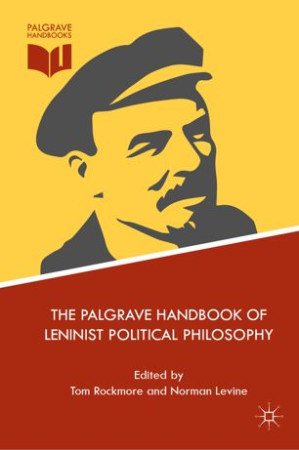
The Palgrave Handbook of Leninist Political Philosophy 🔍
Tom Rockmore; Norman Levine; SpringerLink (Online service)
Palgrave Macmillan UK : Imprint: Palgrave Macmillan, 1st edition 2018, London, 2018
英语 [en] · PDF · 4.8MB · 2018 · 📘 非小说类图书 · 🚀/lgli/lgrs/nexusstc/scihub/upload/zlib · Save
描述
This intellectually discomfiting, disturbingly provocative, yet still thoroughly scholarly Handbook reproduces the intellectual ferment that accompanied the Russian Revolution including the wholly polarising effect at that time of Vladimir Ilyich Lenin. __The Palgrave Handbook of Leninist Political Philosophy__ does not settle for one safe interpretation of the thought of this world-historic figure but rather revels in a clash of viewpoints. Most interestingly it presents a contrast between the Western editors who emphasise pure democracy and Marxian humanism with many of the contributing scholars who take a more sanguine view of the Leninist political project. Perhaps reflecting the current Western political crisis, some of the volume’s other European and North American scholars more closely align with their colleagues from the Global South.
**Key Features**:
· Places particular emphasis on the key elements of Lenin’s thought – the dictatorship of the proletariat (which is trenchantly defended), the nature of the dialectic and the New Economic Policy· Additional comprehensive coverage includes the theory of the party, Bolshevism, imperialism, and the class struggle in the countryside
· Examines the relation of Lenin’s thought to the ideas of his most influential contemporaries (including Luxemburg, Stalin and Trotsky) as well as the most eminent thinker to interpret Lenin since his death – György Lukács
This Handbook is essential reading for scholars, researchers and advanced students in political philosophy, political theory, the history of political ideas, economics, international relations and world history. It is also ideal for the general reader who wishes to understand some of the most powerful ideas that have shaped the modern world and that may yet shake the world again.
**Key Features**:
· Places particular emphasis on the key elements of Lenin’s thought – the dictatorship of the proletariat (which is trenchantly defended), the nature of the dialectic and the New Economic Policy· Additional comprehensive coverage includes the theory of the party, Bolshevism, imperialism, and the class struggle in the countryside
· Examines the relation of Lenin’s thought to the ideas of his most influential contemporaries (including Luxemburg, Stalin and Trotsky) as well as the most eminent thinker to interpret Lenin since his death – György Lukács
This Handbook is essential reading for scholars, researchers and advanced students in political philosophy, political theory, the history of political ideas, economics, international relations and world history. It is also ideal for the general reader who wishes to understand some of the most powerful ideas that have shaped the modern world and that may yet shake the world again.
备用文件名
upload/motw_shc_2025_10/shc/The Palgrave Handbook of Lenini - Tom Rockmore.pdf
备用文件名
motw/The Palgrave Handbook of Lenini - Tom Rockmore.epub
备用文件名
motw/The Palgrave Handbook of Lenini - Tom Rockmore.pdf
备用文件名
lgli/O:\genesis4\!!!springer\10.1057%2F978-1-137-51650-3.pdf
备用文件名
lgrsnf/O:\genesis4\!!!springer\10.1057%2F978-1-137-51650-3.pdf
备用文件名
nexusstc/The Palgrave Handbook of Leninist Political Philosophy/45e019f8aeec1544084b18008290ea48.pdf
备用文件名
scihub/10.1057/978-1-137-51650-3.pdf
备用文件名
zlib/Society, Politics & Philosophy/Tom Rockmore, Norman Levine/The Palgrave Handbook of Leninist Political Philosophy_3664688.pdf
备选标题
Global Enterprise Management, Volume I New Perspectives on Challenges and Future Developments
备选作者
Tom Rockmore, Norman Levine, editors
备选作者
Adobe InDesign CC 2015 (Windows)
备选作者
Rockmore, Tom; Levine, Norman
备选作者
Author
备用出版商
Macmillan Education UK
备用出版商
Springer Nature
备用出版商
Red Globe Press
备用版本
Palgrave handbooks, London, United Kingdom, 2018
备用版本
United Kingdom and Ireland, United Kingdom
备用版本
Springer Nature, London, 2018
备用版本
Basingstoke, Hampshire, 2018
备用版本
1st ed. 2018, FR, 2019
备用版本
Jan 09, 2019
备用版本
2, 20181219
备用版本
2017
元数据中的注释
sm73429660
元数据中的注释
producers:
Adobe PDF Library 15.0
Adobe PDF Library 15.0
元数据中的注释
{"edition":"1","isbns":["1137516496","113751650X","9781137516497","9781137516503"],"publisher":"Palgrave Macmillan"}
元数据中的注释
Memory of the World Librarian: outernationale
元数据中的注释
Указ.: с. 549-562
Библиогр. в конце ст.
Библиогр. в конце ст.
元数据中的注释
РГБ
元数据中的注释
Russian State Library [rgb] MARC:
=001 010410152
=005 20200921120429.0
=008 200908s2018\\\\xxk||||\\\\\\\0||\|\eng|d
=017 \\ $a И4355-20 $b RuMoRGB
=020 \\ $a 978-1-137-51649-7
=040 \\ $a RuMoRGB $b rus $e rcr
=041 0\ $a eng
=044 \\ $a xxk
=084 \\ $a Ю3(0)6-609,0 $2 rubbk
=084 \\ $a А353,0 $2 rubbk
=084 \\ $a Т3(2Р)64-72,014.2 $2 rubbk
=245 04 $a The Palgrave handbook of Leninist political philosophy $c Tom Rockmore, Norman Levine, editors
=260 \\ $a London $b Palgrave Macmillan $c cop. 2018
=300 \\ $a VIII, 562 с. $c 24 см
=336 \\ $a Текст (визуальный)
=337 \\ $a непосредственный
=490 0\ $a Palgrave handbooks
=500 \\ $a Указ.: с. 549-562
=504 \\ $a Библиогр. в конце ст.
=650 \7 $a Философия -- История философии -- Всемирная история философии -- Новейшая философия -- Анализ и критика философии марксизма $2 rubbk
=650 \7 $a Марксизм-ленинизм -- Жизнь и деятельность К. Маркса, Ф. Энгельса, В. И. Ленина -- Жизнь и деятельность В. И. Ленина -- Развитие В. И. Лениным теории марксизма $2 rubbk
=650 \7 $a История. Исторические науки -- Российская Федерация -- Период с 1991 г. -- Культура. Идеология. Быт -- Идеология -- Публицистика $2 rubbk
=700 1\ $a Rockmore, Tom $d 1942- $e ред.
=852 \\ $a РГБ $b RZ $j РЗ 6/542 $x 81
=001 010410152
=005 20200921120429.0
=008 200908s2018\\\\xxk||||\\\\\\\0||\|\eng|d
=017 \\ $a И4355-20 $b RuMoRGB
=020 \\ $a 978-1-137-51649-7
=040 \\ $a RuMoRGB $b rus $e rcr
=041 0\ $a eng
=044 \\ $a xxk
=084 \\ $a Ю3(0)6-609,0 $2 rubbk
=084 \\ $a А353,0 $2 rubbk
=084 \\ $a Т3(2Р)64-72,014.2 $2 rubbk
=245 04 $a The Palgrave handbook of Leninist political philosophy $c Tom Rockmore, Norman Levine, editors
=260 \\ $a London $b Palgrave Macmillan $c cop. 2018
=300 \\ $a VIII, 562 с. $c 24 см
=336 \\ $a Текст (визуальный)
=337 \\ $a непосредственный
=490 0\ $a Palgrave handbooks
=500 \\ $a Указ.: с. 549-562
=504 \\ $a Библиогр. в конце ст.
=650 \7 $a Философия -- История философии -- Всемирная история философии -- Новейшая философия -- Анализ и критика философии марксизма $2 rubbk
=650 \7 $a Марксизм-ленинизм -- Жизнь и деятельность К. Маркса, Ф. Энгельса, В. И. Ленина -- Жизнь и деятельность В. И. Ленина -- Развитие В. И. Лениным теории марксизма $2 rubbk
=650 \7 $a История. Исторические науки -- Российская Федерация -- Период с 1991 г. -- Культура. Идеология. Быт -- Идеология -- Публицистика $2 rubbk
=700 1\ $a Rockmore, Tom $d 1942- $e ред.
=852 \\ $a РГБ $b RZ $j РЗ 6/542 $x 81
备用描述
Contents 5
Editors and Contributors 7
1 Introduction 9
The Handbook of Leninist Political Philosophy in Context 13
Organizational Structure 14
Lenin and Philosophy 15
Lenin and Individual Figures 23
Part I Lenin and Political Philosophy 68
2 Which Kind of Dialectician Was Lenin? 69
Lenin The Political Thinker 73
Lenin and the Concreteness of Truth 77
Did Lenin Change His Mind? 81
Lenin’s Anti-Kantianism as Anti-Revisionism 83
Lenin on “Elements of Dialectics” 85
Lenin and Bukharin’s “Scholasticism” 88
Literature 92
3 Lenin’s Philosophy in Intellectual Context 95
Bibliography 122
4 Lenin and Philosophy: On the Philosophical Significance of Materialism and Empiriocriticism 127
I 129
II 133
III 135
IV 145
References 161
Part II Lenin and Individual Figures 165
5 Engels’ Co-option of Lenin 166
Lenin’s Misinterpretations 171
Lenin’s Failure to Properly Assess Texts of Marx He Knew 173
On the Jewish Question 173
Critique of Hegel’s Philosophy of Right: Introduction 174
Critical Marginal Notes on the Article “The King of Prussia and Social Reform.” By a Prussian 175
Labor Certificates 180
The Metric Regarding Production and Distribution 180
The Concepts of Equality and Right 183
“The Antithesis Between Mental and Physical Labor” 186
“The Enslaving Subordination of the Individual to the Division of Labor” 186
References 204
6 Luxemburg and Lenin 205
Introduction 205
The Critique of Organizational Centralism 206
Luxemburg and Lenin During and After the 1905 Revolution 210
Luxemburg’s Work in Polish Social Democracy from 1908 to 1914 and its Relation to Debates on the National Question 215
Luxemburg’s Critical Response to the 1917 Russian Revolution 218
Conclusion 225
Bibliography 231
7 Lenin and Trotsky 234
Trotsky’s Critique of Lenin’s Jacobinism (1903–1904) 234
Trotsky and Lenin on the Russian Revolution of 1905 236
The Prominence of the Political 243
Russian Revolutions of 1917 245
Civil War and Dictatorship 247
Trotsky After Lenin’s Death 252
Lenin, Trotsky, Stalin 254
Sources 257
8 Lenin and Stalin, Theory and Politics 260
Conclusion 278
Bibliography 282
9 Lukács as Leninist 284
Lukács as a Revolutionary Marxist 285
Lukács on Marx’s Contribution to Epistemology 289
Lukács on Marx in HCC 290
Lukács on Engels and the Thing in Itself in HCC 292
Lukács’ View in Lenin: A Study on the Unity of His Thought 296
TD and Lukács’ Defense of HCC 301
Lenin on the Thing in Itself in Materialism and Empiriocriticism: Critical Comments on a Reactionary Philosophy 305
Lukács’ Critique of Engels in TD 307
Lukács on Lenin in The Ontology of Social Being 308
Conclusion: Lukács and Lenin 312
Part III Lenin and Problems 314
10 Lenin on Socialism and the Party in the Long Revolution 315
Prelude 316
Theoretical Starting Points 318
Conclusion: Disenchantment and Despair 349
Bibliography 352
11 Lenin’s Conception of the Party 355
Before Lenin 355
Lenin’s Theory of the Party and Bolshevism 358
Lenin’s Theory of the Party 359
Luxemburg’s Critique 362
The Debate After 1917 364
The Tenth Congress of the Bolshevik Party 370
Latin America: Neither a Replica nor a Copy, but a Heroic Creation 373
Cuba: The Revolution and the Party 373
Latin America: A Party of the New Model 378
12 A Few Questions Concerning Lenin’s Conception of the Dictatorship of the Proletariat 383
I 384
II 388
III 391
IV 396
13 “Extracting the Democratic Kernel”: Lenin and the Peasants 403
Marx and the Mir 404
Plekhanov and Peasant Passivity 407
Lenin and the Critique of Populism 409
Class Struggle in the Democratic Revolution 411
An Alliance of Workers and Peasants 415
Class Alliance in Theory and Practice 419
The Peasant Movement and Historical Materialism 421
Peasant Ideology and Proletarian Hegemony 424
Works Cited 429
14 The Impact of the SPD Model on Lenin and Bolshevism 432
Social Democratic Roots in Marx and Engels 434
Ferdinand Lassalle and the Permanent Campaign 435
SPD as Model Party 438
Karl Kautsky and the SPD Model 441
Lenin, a Russian Social Democrat 445
Basic Goals of Russian Revolutionary Social Democracy 446
Underground of a New Type 449
The SPD Model After 1905 452
The SPD Model After 1917: Political Freedom vs. the Permanent Campaign 454
15 Lenin and Imperialism 458
The Bloodiest Storm in History 458
Against Kautsky 461
The Ambiguities of Finance 472
Imperialism and Anti-Colonial Revolt 476
Bibliography 481
16 Lenin and the New Economic Policy 484
From War Communism to the NEP 485
Lenin on the Soviet Party State 489
The Limits of the NEP 492
Lenin’s Legacy 495
From the NEP to the Administrative Command Economy 497
The Non-Economic Dimension 502
Stalin and the End of the NEP 504
Conclusion 506
17 NEP, the Logical Sequel to the Bolshevik Seizure of Power 508
Seizure of Power 509
A Coercive Regime 512
War Communism and Popular Unrest 516
New Economic Policy (NEP) 519
The NEP and the Transition to Socialism 522
Conclusion 525
References 529
18 Lenin’s NEP and Deng Xiaoping’s Economic Reform 532
On the Historical Context of the NEP in 1921 and the Economic Reform in 1978 532
A Shared Problem Facing Both Lenin and Deng 539
The NEP in 1921 and the Economic Reform in 1978 542
Conclusion 546
References 548
Index 550
Editors and Contributors 7
1 Introduction 9
The Handbook of Leninist Political Philosophy in Context 13
Organizational Structure 14
Lenin and Philosophy 15
Lenin and Individual Figures 23
Part I Lenin and Political Philosophy 68
2 Which Kind of Dialectician Was Lenin? 69
Lenin The Political Thinker 73
Lenin and the Concreteness of Truth 77
Did Lenin Change His Mind? 81
Lenin’s Anti-Kantianism as Anti-Revisionism 83
Lenin on “Elements of Dialectics” 85
Lenin and Bukharin’s “Scholasticism” 88
Literature 92
3 Lenin’s Philosophy in Intellectual Context 95
Bibliography 122
4 Lenin and Philosophy: On the Philosophical Significance of Materialism and Empiriocriticism 127
I 129
II 133
III 135
IV 145
References 161
Part II Lenin and Individual Figures 165
5 Engels’ Co-option of Lenin 166
Lenin’s Misinterpretations 171
Lenin’s Failure to Properly Assess Texts of Marx He Knew 173
On the Jewish Question 173
Critique of Hegel’s Philosophy of Right: Introduction 174
Critical Marginal Notes on the Article “The King of Prussia and Social Reform.” By a Prussian 175
Labor Certificates 180
The Metric Regarding Production and Distribution 180
The Concepts of Equality and Right 183
“The Antithesis Between Mental and Physical Labor” 186
“The Enslaving Subordination of the Individual to the Division of Labor” 186
References 204
6 Luxemburg and Lenin 205
Introduction 205
The Critique of Organizational Centralism 206
Luxemburg and Lenin During and After the 1905 Revolution 210
Luxemburg’s Work in Polish Social Democracy from 1908 to 1914 and its Relation to Debates on the National Question 215
Luxemburg’s Critical Response to the 1917 Russian Revolution 218
Conclusion 225
Bibliography 231
7 Lenin and Trotsky 234
Trotsky’s Critique of Lenin’s Jacobinism (1903–1904) 234
Trotsky and Lenin on the Russian Revolution of 1905 236
The Prominence of the Political 243
Russian Revolutions of 1917 245
Civil War and Dictatorship 247
Trotsky After Lenin’s Death 252
Lenin, Trotsky, Stalin 254
Sources 257
8 Lenin and Stalin, Theory and Politics 260
Conclusion 278
Bibliography 282
9 Lukács as Leninist 284
Lukács as a Revolutionary Marxist 285
Lukács on Marx’s Contribution to Epistemology 289
Lukács on Marx in HCC 290
Lukács on Engels and the Thing in Itself in HCC 292
Lukács’ View in Lenin: A Study on the Unity of His Thought 296
TD and Lukács’ Defense of HCC 301
Lenin on the Thing in Itself in Materialism and Empiriocriticism: Critical Comments on a Reactionary Philosophy 305
Lukács’ Critique of Engels in TD 307
Lukács on Lenin in The Ontology of Social Being 308
Conclusion: Lukács and Lenin 312
Part III Lenin and Problems 314
10 Lenin on Socialism and the Party in the Long Revolution 315
Prelude 316
Theoretical Starting Points 318
Conclusion: Disenchantment and Despair 349
Bibliography 352
11 Lenin’s Conception of the Party 355
Before Lenin 355
Lenin’s Theory of the Party and Bolshevism 358
Lenin’s Theory of the Party 359
Luxemburg’s Critique 362
The Debate After 1917 364
The Tenth Congress of the Bolshevik Party 370
Latin America: Neither a Replica nor a Copy, but a Heroic Creation 373
Cuba: The Revolution and the Party 373
Latin America: A Party of the New Model 378
12 A Few Questions Concerning Lenin’s Conception of the Dictatorship of the Proletariat 383
I 384
II 388
III 391
IV 396
13 “Extracting the Democratic Kernel”: Lenin and the Peasants 403
Marx and the Mir 404
Plekhanov and Peasant Passivity 407
Lenin and the Critique of Populism 409
Class Struggle in the Democratic Revolution 411
An Alliance of Workers and Peasants 415
Class Alliance in Theory and Practice 419
The Peasant Movement and Historical Materialism 421
Peasant Ideology and Proletarian Hegemony 424
Works Cited 429
14 The Impact of the SPD Model on Lenin and Bolshevism 432
Social Democratic Roots in Marx and Engels 434
Ferdinand Lassalle and the Permanent Campaign 435
SPD as Model Party 438
Karl Kautsky and the SPD Model 441
Lenin, a Russian Social Democrat 445
Basic Goals of Russian Revolutionary Social Democracy 446
Underground of a New Type 449
The SPD Model After 1905 452
The SPD Model After 1917: Political Freedom vs. the Permanent Campaign 454
15 Lenin and Imperialism 458
The Bloodiest Storm in History 458
Against Kautsky 461
The Ambiguities of Finance 472
Imperialism and Anti-Colonial Revolt 476
Bibliography 481
16 Lenin and the New Economic Policy 484
From War Communism to the NEP 485
Lenin on the Soviet Party State 489
The Limits of the NEP 492
Lenin’s Legacy 495
From the NEP to the Administrative Command Economy 497
The Non-Economic Dimension 502
Stalin and the End of the NEP 504
Conclusion 506
17 NEP, the Logical Sequel to the Bolshevik Seizure of Power 508
Seizure of Power 509
A Coercive Regime 512
War Communism and Popular Unrest 516
New Economic Policy (NEP) 519
The NEP and the Transition to Socialism 522
Conclusion 525
References 529
18 Lenin’s NEP and Deng Xiaoping’s Economic Reform 532
On the Historical Context of the NEP in 1921 and the Economic Reform in 1978 532
A Shared Problem Facing Both Lenin and Deng 539
The NEP in 1921 and the Economic Reform in 1978 542
Conclusion 546
References 548
Index 550
备用描述
This intellectually discomfiting, disturbingly provocative, yet still thoroughly scholarly Handbook reproduces the intellectual ferment that accompanied the Russian Revolution including the wholly polarising effect at that time of Vladimir Ilyich Lenin. The Palgrave Handbook of Leninist Political Philosophy does not settle for one safe interpretation of the thought of this world-historic figure but rather revels in a clash of viewpoints. Most interestingly it presents a contrast between the Western editors who emphasise pure democracy and Marxian humanism with many of the contributing scholars who take a more sanguine view of the Leninist political project. Perhaps reflecting the current Western political crisis, some of the volume’s other European and North American scholars more closely align with their colleagues from the Global South.
Key Features :
· Places particular emphasis on the key elements of Lenin’s thought – the dictatorship of the proletariat (which is trenchantly defended), the nature of the dialectic and the New Economic Policy
· Additional comprehensive coverage includes the theory of the party, Bolshevism, imperialism, and the class struggle in the countryside
· Examines the relation of Lenin’s thought to the ideas of his most influential contemporaries (including Luxemburg, Stalin and Trotsky) as well as the most eminent thinker to interpret Lenin since his death – György Lukács
This Handbook is essential reading for scholars, researchers and advanced students in political philosophy, political theory, the history of political ideas, economics, international relations and world history. It is also ideal for the general reader who wishes to understand some of the most powerful ideas that have shaped the modern world and that may yet shake the world again.
**
From the Back Cover
This intellectually discomfiting, disturbingly provocative, yet still thoroughly scholarly Handbook reproduces the intellectual ferment that accompanied the Russian Revolution including the wholly polarising effect at that time of Vladimir Ilyich Lenin. The Palgrave Handbook of Leninist Political Philosophy does not settle for one safe interpretation of the thought of this world-historic figure but rather revels in a clash of viewpoints. Most interestingly it presents a contrast between the Western editors who emphasise pure democracy and Marxian humanism with many of the contributing scholars who take a more sanguine view of the Leninist political project. Perhaps reflecting the current Western political crisis, some of the volume’s other European and North American scholars more closely align with their colleagues from the Global South.
Key Features :
· Places particular emphasis on the key elements of Lenin’s thought – the dictatorship of the proletariat (which is trenchantly defended), the nature of the dialectic and the New Economic Policy
· Additional comprehensive coverage includes the theory of the party, Bolshevism, imperialism, and the class struggle in the countryside
· Examines the relation of Lenin’s thought to the ideas of his most influential contemporaries (including Luxemburg, Stalin and Trotsky) as well as the most eminent thinker to interpret Lenin since his death – György Lukács
This Handbook is essential reading for scholars, researchers and advanced students in political philosophy, political theory, the history of political ideas, economics, international relations and world history. It is also ideal for the general reader who wishes to understand some of the most powerful ideas that have shaped the modern world and that may yet shake the world again.
About the Author
Tom Rockmore is Distinguished Professor of Humanities, Professor of Philosophy and Member of the Institute of Foreign Philosophy in Peking University, China. His area of research encompasses all of modern philosophy, with special attention to aspects of German idealism.
Norman Levine is an independent scholar who has published six books (three of which have been translated into Chinese) and 40 scholarly articles on Marxist thought. An annual invitee to lecture at Beijing University, China, he has also lectured at the University of Havana, Cuba.
Key Features :
· Places particular emphasis on the key elements of Lenin’s thought – the dictatorship of the proletariat (which is trenchantly defended), the nature of the dialectic and the New Economic Policy
· Additional comprehensive coverage includes the theory of the party, Bolshevism, imperialism, and the class struggle in the countryside
· Examines the relation of Lenin’s thought to the ideas of his most influential contemporaries (including Luxemburg, Stalin and Trotsky) as well as the most eminent thinker to interpret Lenin since his death – György Lukács
This Handbook is essential reading for scholars, researchers and advanced students in political philosophy, political theory, the history of political ideas, economics, international relations and world history. It is also ideal for the general reader who wishes to understand some of the most powerful ideas that have shaped the modern world and that may yet shake the world again.
**
From the Back Cover
This intellectually discomfiting, disturbingly provocative, yet still thoroughly scholarly Handbook reproduces the intellectual ferment that accompanied the Russian Revolution including the wholly polarising effect at that time of Vladimir Ilyich Lenin. The Palgrave Handbook of Leninist Political Philosophy does not settle for one safe interpretation of the thought of this world-historic figure but rather revels in a clash of viewpoints. Most interestingly it presents a contrast between the Western editors who emphasise pure democracy and Marxian humanism with many of the contributing scholars who take a more sanguine view of the Leninist political project. Perhaps reflecting the current Western political crisis, some of the volume’s other European and North American scholars more closely align with their colleagues from the Global South.
Key Features :
· Places particular emphasis on the key elements of Lenin’s thought – the dictatorship of the proletariat (which is trenchantly defended), the nature of the dialectic and the New Economic Policy
· Additional comprehensive coverage includes the theory of the party, Bolshevism, imperialism, and the class struggle in the countryside
· Examines the relation of Lenin’s thought to the ideas of his most influential contemporaries (including Luxemburg, Stalin and Trotsky) as well as the most eminent thinker to interpret Lenin since his death – György Lukács
This Handbook is essential reading for scholars, researchers and advanced students in political philosophy, political theory, the history of political ideas, economics, international relations and world history. It is also ideal for the general reader who wishes to understand some of the most powerful ideas that have shaped the modern world and that may yet shake the world again.
About the Author
Tom Rockmore is Distinguished Professor of Humanities, Professor of Philosophy and Member of the Institute of Foreign Philosophy in Peking University, China. His area of research encompasses all of modern philosophy, with special attention to aspects of German idealism.
Norman Levine is an independent scholar who has published six books (three of which have been translated into Chinese) and 40 scholarly articles on Marxist thought. An annual invitee to lecture at Beijing University, China, he has also lectured at the University of Havana, Cuba.
备用描述
Front Matter ....Pages i-viii
Introduction (Tom Rockmore)....Pages 1-59
Front Matter ....Pages 61-61
Which Kind of Dialectician Was Lenin? (Vesa Oittinen)....Pages 63-88
Lenin’s Philosophy in Intellectual Context (Daniela Steila)....Pages 89-120
Lenin and Philosophy: On the Philosophical Significance of Materialism and Empiriocriticism (Marina F. Bykova)....Pages 121-158
Front Matter ....Pages 159-159
Engels’ Co-option of Lenin (Norman Levine)....Pages 161-199
Luxemburg and Lenin (Peter Hudis)....Pages 201-229
Lenin and Trotsky (Michael Löwy, Paul Le Blanc)....Pages 231-256
Lenin and Stalin, Theory and Politics (Wladislaw Hedeler)....Pages 257-280
Lukács as Leninist (Tom Rockmore)....Pages 281-310
Front Matter ....Pages 311-311
Lenin on Socialism and the Party in the Long Revolution (Neil Harding)....Pages 313-352
Lenin’s Conception of the Party (Natasha Gómez Velázquez)....Pages 353-380
A Few Questions Concerning Lenin’s Conception of the Dictatorship of the Proletariat ( An Qinian)....Pages 381-400
“Extracting the Democratic Kernel”: Lenin and the Peasants (Alan Shandro)....Pages 401-429
The Impact of the SPD Model on Lenin and Bolshevism (Lars T. Lih)....Pages 431-456
Lenin and Imperialism (Alex Callinicos)....Pages 457-482
Lenin and the New Economic Policy (Edward A. Rees)....Pages 483-506
NEP, the Logical Sequel to the Bolshevik Seizure of Power (Paresh Chattopadhyay)....Pages 507-530
Lenin’s NEP and Deng Xiaoping’s Economic Reform ( Wei Xiaoping (魏小萍))....Pages 531-548
Back Matter ....Pages 549-562
Introduction (Tom Rockmore)....Pages 1-59
Front Matter ....Pages 61-61
Which Kind of Dialectician Was Lenin? (Vesa Oittinen)....Pages 63-88
Lenin’s Philosophy in Intellectual Context (Daniela Steila)....Pages 89-120
Lenin and Philosophy: On the Philosophical Significance of Materialism and Empiriocriticism (Marina F. Bykova)....Pages 121-158
Front Matter ....Pages 159-159
Engels’ Co-option of Lenin (Norman Levine)....Pages 161-199
Luxemburg and Lenin (Peter Hudis)....Pages 201-229
Lenin and Trotsky (Michael Löwy, Paul Le Blanc)....Pages 231-256
Lenin and Stalin, Theory and Politics (Wladislaw Hedeler)....Pages 257-280
Lukács as Leninist (Tom Rockmore)....Pages 281-310
Front Matter ....Pages 311-311
Lenin on Socialism and the Party in the Long Revolution (Neil Harding)....Pages 313-352
Lenin’s Conception of the Party (Natasha Gómez Velázquez)....Pages 353-380
A Few Questions Concerning Lenin’s Conception of the Dictatorship of the Proletariat ( An Qinian)....Pages 381-400
“Extracting the Democratic Kernel”: Lenin and the Peasants (Alan Shandro)....Pages 401-429
The Impact of the SPD Model on Lenin and Bolshevism (Lars T. Lih)....Pages 431-456
Lenin and Imperialism (Alex Callinicos)....Pages 457-482
Lenin and the New Economic Policy (Edward A. Rees)....Pages 483-506
NEP, the Logical Sequel to the Bolshevik Seizure of Power (Paresh Chattopadhyay)....Pages 507-530
Lenin’s NEP and Deng Xiaoping’s Economic Reform ( Wei Xiaoping (魏小萍))....Pages 531-548
Back Matter ....Pages 549-562
开源日期
2018-12-21
🚀 快速下载
成为会员以支持书籍、论文等的长期保存。为了感谢您对我们的支持,您将获得高速下载权益。❤️
如果您在本月捐款,您将获得双倍的快速下载次数。
- 高速服务器(合作方提供) #1 (推荐)
- 高速服务器(合作方提供) #2 (推荐)
- 高速服务器(合作方提供) #3 (推荐)
- 高速服务器(合作方提供) #4 (推荐)
- 高速服务器(合作方提供) #5 (推荐)
- 高速服务器(合作方提供) #6 (推荐)
- 高速服务器(合作方提供) #7
- 高速服务器(合作方提供) #8
- 高速服务器(合作方提供) #9
- 高速服务器(合作方提供) #10
- 高速服务器(合作方提供) #11
- 高速服务器(合作方提供) #12
- 高速服务器(合作方提供) #13
- 高速服务器(合作方提供) #14
- 高速服务器(合作方提供) #15
- 高速服务器(合作方提供) #16
- 高速服务器(合作方提供) #17
- 高速服务器(合作方提供) #18
- 高速服务器(合作方提供) #19
- 高速服务器(合作方提供) #20
- 高速服务器(合作方提供) #21
- 高速服务器(合作方提供) #22
🐢 低速下载
由可信的合作方提供。 更多信息请参见常见问题解答。 (可能需要验证浏览器——无限次下载!)
- 低速服务器(合作方提供) #1 (稍快但需要排队)
- 低速服务器(合作方提供) #2 (稍快但需要排队)
- 低速服务器(合作方提供) #3 (稍快但需要排队)
- 低速服务器(合作方提供) #4 (稍快但需要排队)
- 低速服务器(合作方提供) #5 (无需排队,但可能非常慢)
- 低速服务器(合作方提供) #6 (无需排队,但可能非常慢)
- 低速服务器(合作方提供) #7 (无需排队,但可能非常慢)
- 低速服务器(合作方提供) #8 (无需排队,但可能非常慢)
- 低速服务器(合作方提供) #9 (无需排队,但可能非常慢)
- 低速服务器(合作方提供) #10 (稍快但需要排队)
- 低速服务器(合作方提供) #11 (稍快但需要排队)
- 低速服务器(合作方提供) #12 (稍快但需要排队)
- 低速服务器(合作方提供) #13 (稍快但需要排队)
- 低速服务器(合作方提供) #14 (无需排队,但可能非常慢)
- 低速服务器(合作方提供) #15 (无需排队,但可能非常慢)
- 低速服务器(合作方提供) #16 (无需排队,但可能非常慢)
- 低速服务器(合作方提供) #17 (无需排队,但可能非常慢)
- 低速服务器(合作方提供) #18 (无需排队,但可能非常慢)
- 下载后: 在我们的查看器中打开
所有选项下载的文件都相同,应该可以安全使用。即使这样,从互联网下载文件时始终要小心。例如,确保您的设备更新及时。
外部下载
-
对于大文件,我们建议使用下载管理器以防止中断。
推荐的下载管理器:JDownloader -
您将需要一个电子书或 PDF 阅读器来打开文件,具体取决于文件格式。
推荐的电子书阅读器:Anna的档案在线查看器、ReadEra和Calibre -
使用在线工具进行格式转换。
推荐的转换工具:CloudConvert和PrintFriendly -
您可以将 PDF 和 EPUB 文件发送到您的 Kindle 或 Kobo 电子阅读器。
推荐的工具:亚马逊的“发送到 Kindle”和djazz 的“发送到 Kobo/Kindle” -
支持作者和图书馆
✍️ 如果您喜欢这个并且能够负担得起,请考虑购买原版,或直接支持作者。
📚 如果您当地的图书馆有这本书,请考虑在那里免费借阅。
下面的文字仅以英文继续。
总下载量:
“文件的MD5”是根据文件内容计算出的哈希值,并且基于该内容具有相当的唯一性。我们这里索引的所有影子图书馆都主要使用MD5来标识文件。
一个文件可能会出现在多个影子图书馆中。有关我们编译的各种数据集的信息,请参见数据集页面。
有关此文件的详细信息,请查看其JSON 文件。 Live/debug JSON version. Live/debug page.