nexusstc/Cognitive and Working Memory Training: Perspectives from Psychology, Neuroscience, and Human Development/448f2a996cbedcb8212ce1b1efd37df6.pdf
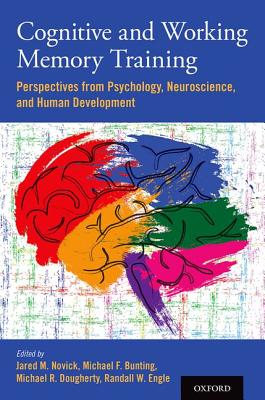
Cognitive and working memory training : perspectives from psychology, neuroscience, and human development 🔍
Jared M. Novick; Michael F. Bunting; Michael R. Dougherty; Randall W. Engle
Oxford University Press, USA, Hardcover, 2019
英语 [en] · PDF · 252.4MB · 2019 · 📘 非小说类图书 · 🚀/lgli/lgrs/nexusstc/zlib · Save
描述
Cognitive and Working Memory Training assembles an interdisciplinary group of distinguished authors--all experts in the field--who have been testing the efficacy of cognitive and working memory training using a combination of behavioral, neuroimaging, meta-analytic, and computational modelling methods. This edited volume is a defining resource on the practicality and utility of the field of cognitive training research in general, and working memory training in particular. Importantly, one focus of the book is on the notion of transfer--namely, the extent to which cognitive training--be it through music, video-game play, or working memory demanding interventions at school--generalizes to learning and performance measures that were decidedly not part of the training regimen. As most cognitive scientists (and perhaps many casual observers) recognize, the notions of cognitive training and transfer have been widely controversial for many reasons, including disagreement over the reliabilipmental perspective -- Review of the evidence on, and fundamental questions about, efforts to improve executive functions, including working memory / Adele Diamond and Daphne S. Ling -- Fundamental questions surrounding efforts to improve cognitive function through video game training / Adam Eichenbaum, Daphne Bavelier, and C. Shawn Green -- Logical and methodological considerations in cognitive training research / Benjaim Katz and Priti Shah -- Music training: contributions to executive function / Brooke M. Okada and L. Robert Slevc -- Effectivenss of training in task switching: new insights and open issues from a life-span view / Jutta Kray and Sandra Dörrenbächer -- Epilogue: Don't buy the snake oil / Michael R. Dougherty and Randall W. Engle. ty of outcomes and consensus on methodological "best practices," and even the ecological validity of laboratory-based tests. This collection does not resolve these debates of course; but its contribution is to address them directly by creating an exchange in a single compendium among scientists who, in separate research publications, do not always reach the same conclusions. The book is organized around comprehensive overview chapters from different disciplinary perspectives--Cognitive Psychology (by Hicks and Engle), Neuroscience (by Kuchinsky and Haarmann), and Development (by Ling and Diamond)--that define major issues, terms, and themes in the field, with a pointed set of challenge questions to which other scientists respond in subsequent chapters. The goal of this volume is to educate. It is designed for students and researchers, and perhaps the armchair psychologist. Crucially, the contributors recognize that it is good for science to persistently confront our understanding of anperspective -- Review of the evidence on, and fundamental questions about, efforts to improve executive functions, including working memory / Adele Diamond and Daphne S. Ling -- Fundamental questions surrounding efforts to improve cognitive function through video game training / Adam Eichenbaum, Daphne Bavelier, and C. Shawn Green -- Logical and methodological considerations in cognitive training research / Benjaim Katz and Priti Shah -- Music training: contributions to executive function / Brooke M. Okada and L. Robert Slevc -- Effectivenss of training in task switching: new insights and open issues from a life-span view / Jutta Kray and Sandra Dörrenbächer -- Epilogue: Don't buy the snake oil / Michael R. Dougherty and Randall W. Engle. area: Debate and alternative viewpoints, backed by theory, data, and inferences drawn from the evidence, is what advances scientific knowledge. This book probes established paradigms in cognitive training research, and the long-form of these chapters (not found in scientific journals) allows detailed exploration of the current state of the science. Such breadth intends to invite novel ways of thinking about the nature of cognitive and perceptual plasticity, which may enlighten either new efforts at training, new inferences about prior results, or both.--Amazon.com
备用文件名
lgli/Working memory training 2020.pdf
备用文件名
lgrsnf/Working memory training 2020.pdf
备用文件名
zlib/Society, Politics & Philosophy/Social Sciences/Jared M. Novick; Michael F. Bunting; Michael R. Dougherty; Randall W. Engle/Cognitive and Working Memory Training: Perspectives from Psychology, Neuroscience, and Human Development_5573516.pdf
备选作者
Jared M. [VNV Novick; Michael F, [VNV Bunting; Michael R, [VNV Doughty; Randall W, [VNV Engle
备选作者
Jared M. Novick; Michael R. Dougherty; Michael F. Bunting; Randall W. Engle
备用出版商
Oxford University Press, Incorporated
备用出版商
IRL Press at Oxford University Press
备用出版商
Oxford Institute for Energy Studies
备用出版商
German Historical Institute London
备用版本
United Kingdom and Ireland, United Kingdom
备用版本
New York, NY, 2020
备用版本
PS, 2019
元数据中的注释
lg2546234
元数据中的注释
{"isbns":["0190076178","0199974462","9780190076177","9780199974467"],"last_page":588,"publisher":"Oxford University Press"}
备用描述
Cognitive and Working Memory Training assembles an interdisciplinary group of distinguished authors--all experts in the field--who have been testing the efficacy of cognitive and working memory training using a combination of behavioral, neuroimaging, meta-analytic, and computational modelling methods. This edited volume is a defining resource on the practicality and utility of the field of cognitive training research in general, and working memory training in particular. Importantly, one focus of the book is on the notion of transfer--namely, the extent to which cognitive training--be it through music, video-game play, or working memory demanding interventions at school--generalizes to learning and performance measures that were decidedly not part of the training regimen. As most cognitive scientists (and perhaps many casual observers) recognize, the notions of cognitive training and transfer have been widely controversial for many reasons, including disagreement over the reliabilipmental perspective -- Review of the evidence on, and fundamental questions about, efforts to improve executive functions, including working memory / Adele Diamond and Daphne S. Ling -- Fundamental questions surrounding efforts to improve cognitive function through video game training / Adam Eichenbaum, Daphne Bavelier, and C. Shawn Green -- Logical and methodological considerations in cognitive training research / Benjaim Katz and Priti Shah -- Music training: contributions to executive function / Brooke M. Okada and L. Robert Slevc -- Effectivenss of training in task switching: new insights and open issues from a life-span view / Jutta Kray and Sandra Dörrenbächer -- Epilogue: Don't buy the snake oil / Michael R. Dougherty and Randall W. Engle. ty of outcomes and consensus on methodological "best practices," and even the ecological validity of laboratory-based tests. This collection does not resolve these debates of course; but its contribution is to address them directly by creating an exchange in a single compendium among scientists who, in separate research publications, do not always reach the same conclusions. The book is organized around comprehensive overview chapters from different disciplinary perspectives--Cognitive Psychology (by Hicks and Engle), Neuroscience (by Kuchinsky and Haarmann), and Development (by Ling and Diamond)--that define major issues, terms, and themes in the field, with a pointed set of challenge questions to which other scientists respond in subsequent chapters. The goal of this volume is to educate. It is designed for students and researchers, and perhaps the armchair psychologist. Crucially, the contributors recognize that it is good for science to persistently confront our understanding of anperspective -- Review of the evidence on, and fundamental questions about, efforts to improve executive functions, including working memory / Adele Diamond and Daphne S. Ling -- Fundamental questions surrounding efforts to improve cognitive function through video game training / Adam Eichenbaum, Daphne Bavelier, and C. Shawn Green -- Logical and methodological considerations in cognitive training research / Benjaim Katz and Priti Shah -- Music training: contributions to executive function / Brooke M. Okada and L. Robert Slevc -- Effectivenss of training in task switching: new insights and open issues from a life-span view / Jutta Kray and Sandra Dörrenbächer -- Epilogue: Don't buy the snake oil / Michael R. Dougherty and Randall W. Engle. area: Debate and alternative viewpoints, backed by theory, data, and inferences drawn from the evidence, is what advances scientific knowledge. This book probes established paradigms in cognitive training research, and the long-form of these chapters (not found in scientific journals) allows detailed exploration of the current state of the science. Such breadth intends to invite novel ways of thinking about the nature of cognitive and perceptual plasticity, which may enlighten either new efforts at training, new inferences about prior results, or both.--Amazon.com
备用描述
"We have assembled an interdisciplinary group of distinguished authors--all experts in the field--who have been testing the efficacy of cognitive and working-memory training using a combination of behavioral, neuroimaging, meta-analytic, and computational modelling methods. This edited volume is a defining resource on the practicality, utility, and validity of the field of cognitive training research in general, and working memory training in particular. Importantly, one focus of the book is on the notion of transfer-namely, the extent to which cognitive training generalizes to learning and performance measures that were decidedly not part of the training regimen"--Publisher's description
备用描述
Novick, Bunting, Dougherty And Engle Query An Interdisciplinary Group Of Distinguished Researchers In Cognitive Science About The Efficacy Of Cognitive And Working Memory Training Using A Combination Of Behavioural, Neuroimaging, Meta-analytic And Computational Modelling Methods.
备用描述
__Cognitive and Working Memory Training__
开源日期
2020-06-17
🚀 快速下载
成为会员以支持书籍、论文等的长期保存。为了感谢您对我们的支持,您将获得高速下载权益。❤️
如果您在本月捐款,您将获得双倍的快速下载次数。
🐢 低速下载
由可信的合作方提供。 更多信息请参见常见问题解答。 (可能需要验证浏览器——无限次下载!)
- 低速服务器(合作方提供) #1 (稍快但需要排队)
- 低速服务器(合作方提供) #2 (稍快但需要排队)
- 低速服务器(合作方提供) #3 (稍快但需要排队)
- 低速服务器(合作方提供) #4 (稍快但需要排队)
- 低速服务器(合作方提供) #5 (无需排队,但可能非常慢)
- 低速服务器(合作方提供) #6 (无需排队,但可能非常慢)
- 低速服务器(合作方提供) #7 (无需排队,但可能非常慢)
- 低速服务器(合作方提供) #8 (无需排队,但可能非常慢)
- 低速服务器(合作方提供) #9 (无需排队,但可能非常慢)
- 下载后: 在我们的查看器中打开
所有选项下载的文件都相同,应该可以安全使用。即使这样,从互联网下载文件时始终要小心。例如,确保您的设备更新及时。
外部下载
-
对于大文件,我们建议使用下载管理器以防止中断。
推荐的下载管理器:JDownloader -
您将需要一个电子书或 PDF 阅读器来打开文件,具体取决于文件格式。
推荐的电子书阅读器:Anna的档案在线查看器、ReadEra和Calibre -
使用在线工具进行格式转换。
推荐的转换工具:CloudConvert和PrintFriendly -
您可以将 PDF 和 EPUB 文件发送到您的 Kindle 或 Kobo 电子阅读器。
推荐的工具:亚马逊的“发送到 Kindle”和djazz 的“发送到 Kobo/Kindle” -
支持作者和图书馆
✍️ 如果您喜欢这个并且能够负担得起,请考虑购买原版,或直接支持作者。
📚 如果您当地的图书馆有这本书,请考虑在那里免费借阅。
下面的文字仅以英文继续。
总下载量:
“文件的MD5”是根据文件内容计算出的哈希值,并且基于该内容具有相当的唯一性。我们这里索引的所有影子图书馆都主要使用MD5来标识文件。
一个文件可能会出现在多个影子图书馆中。有关我们编译的各种数据集的信息,请参见数据集页面。
有关此文件的详细信息,请查看其JSON 文件。 Live/debug JSON version. Live/debug page.