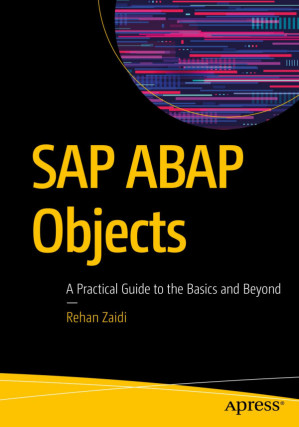
SAP ABAP Objects : A Practical Guide to the Basics and Beyond 🔍
Rehan Zaidi
Apress, Incorporated, 1st edition, Berkeley, CA, 2019
英语 [en] · PDF · 13.8MB · 2019 · 📘 非小说类图书 · 🚀/lgli/lgrs/nexusstc/scihub/upload/zlib · Save
描述
Understand ABAP objects—the object-oriented extension of the SAP language ABAP—in the latest release of SAP NetWeaver 7.5, and its newest advancements. This book begins with the programming of objects in general and the basics of the ABAP language that a developer needs to know to get started. The most important topics needed to perform daily support jobs and ensure successful projects are covered.
ABAP is a vast community with developers working in a variety of functional areas. You will be able to apply the concepts in this book to your area. **__SAP ABAP Objects__**is goal directed, rather than a collection of theoretical topics. It doesn't just touch on the surface of ABAP objects, but goes in depth from building the basic foundation (e.g., classes and objects created locally and globally) to the intermediary areas (e.g., ALV programming, method chaining, polymorphism, simple and nested interfaces), and then finally into the advanced topics (e.g., shared memory, persistent objects). You will know how to use best practices to make better programs via ABAP objects.
**What You’ll Learn**
* Know the latest advancements in ABAP objects with the new SAP Netweaver system
* Understand object-oriented ABAP classes and their components
* Use object creation and instance-methods calls
* Be familiar with the functions of the global class builder
* Be exposed to advanced topics
* Incorporate best practices for making object-oriented ABAP programs
**Who This Book Is For**
ABAP developers, ABAP programming analysts, and junior ABAP developers. Included are: ABAP developers for all modules of SAP, both new learners and developers with some experience or little programming experience in general; students studying ABAP at the college/university level; senior non-ABAP programmers with considerable experience who are willing to switch to SAP/ABAP; and any functional consultants who want or have recently switched to ABAP technical.
ABAP is a vast community with developers working in a variety of functional areas. You will be able to apply the concepts in this book to your area. **__SAP ABAP Objects__**is goal directed, rather than a collection of theoretical topics. It doesn't just touch on the surface of ABAP objects, but goes in depth from building the basic foundation (e.g., classes and objects created locally and globally) to the intermediary areas (e.g., ALV programming, method chaining, polymorphism, simple and nested interfaces), and then finally into the advanced topics (e.g., shared memory, persistent objects). You will know how to use best practices to make better programs via ABAP objects.
**What You’ll Learn**
* Know the latest advancements in ABAP objects with the new SAP Netweaver system
* Understand object-oriented ABAP classes and their components
* Use object creation and instance-methods calls
* Be familiar with the functions of the global class builder
* Be exposed to advanced topics
* Incorporate best practices for making object-oriented ABAP programs
**Who This Book Is For**
ABAP developers, ABAP programming analysts, and junior ABAP developers. Included are: ABAP developers for all modules of SAP, both new learners and developers with some experience or little programming experience in general; students studying ABAP at the college/university level; senior non-ABAP programmers with considerable experience who are willing to switch to SAP/ABAP; and any functional consultants who want or have recently switched to ABAP technical.
备用文件名
lgli/N:\!genesis_\0day\new030220\springer\10.1007%2F978-1-4842-4964-2.pdf
备用文件名
lgrsnf/N:\!genesis_\0day\new030220\springer\10.1007%2F978-1-4842-4964-2.pdf
备用文件名
nexusstc/SAP ABAP Objects: A Practical Guide to the Basics and Beyond/3e2c1914e97c736c0a01d7f57bc006da.pdf
备用文件名
scihub/10.1007/978-1-4842-4964-2.pdf
备用文件名
zlib/Computers/Programming/Rehan Zaidi/SAP ABAP Objects: A Practical Guide to the Basics and Beyond_5397933.pdf
备选作者
Zaidi, Rehan
备用出版商
Springer Nature
备用版本
United States, United States of America
备用版本
Springer Nature, Berkeley, CA, 2019
备用版本
New York, 2019
备用版本
Sep 27, 2019
备用版本
1, 20190927
元数据中的注释
sm77519416
元数据中的注释
producers:
Adobe PDF Library 10.0.1
Adobe PDF Library 10.0.1
元数据中的注释
{"edition":"1","isbns":["1484249631","148424964X","9781484249635","9781484249642"],"publisher":"Apress","source":"libgen_rs"}
元数据中的注释
Source title: SAP ABAP Objects: A Practical Guide to the Basics and Beyond
备用描述
Table of Contents 5
About the Author 10
About the Technical Reviewer 11
Chapter 1: Creating Classes and Objects 12
Classes and Their Components 13
Local Classes 15
Global Classes 17
Object Creation and Instance-Method Calls 21
Methods and Method Calls 23
Static Components 24
A Full-Fledged Demo 26
The IS INSTANCE OF Predicate Expression 31
Deferred Class Specification 33
Summary 34
Chapter 2: Class Components in Detail 35
Finding the Type of an Object Reference Variable: Revisited 36
Using the New Operator to Create an Object 37
Defining Our Own Types in Classes 41
Constants in Classes 42
Dictionary Types for Global Classes 44
Static Constructor 46
Method Revisited 49
Specifying Internal Tables as Method Parameters 49
Inline Declarations While Calling Methods 53
Functional Methods 54
Specifying Exporting and Returning Parameters for Functional Methods 57
Methods Calling Other Methods 61
Method Chaining 61
Event Handling in ABAP Objects 63
A Working Example 64
Triggering and Handling the PLAYER_CREATED Event 64
Summary 70
Chapter 3: More on Object-Oriented ABAP 71
Inheritance: Super and Subclasses 71
Redefining Methods 76
Instance Constructors 76
Working Example 78
Casting and Polymorphism 83
Global Subclasses and Redefinition of Methods 91
Interfaces 97
Creating Global Interfaces 101
Abstract and Final Classes 104
Friendships 107
Summary 110
Chapter 4: Class Builder 111
Transaction SE80 111
The Class Builder and Its Features 114
Class Builder Tabs 116
Useful Functions of the Class Builder 117
Where-Used Lists 117
Useful Buttons on the SE24 Tab 122
Class Browser 123
Testing Classes in SE24 124
Testing a Static Method 125
Testing Instance Methods 129
Testing Methods Using Table Parameters 138
Summary 145
Chapter 5: Exceptions, Shared, and Persistent Objects 146
Exception Handling and Exception Classes 146
RAISE and TRY .. ENDTRY Statements 148
Resumable Exceptions 149
Creating an Exception Class 149
Public Instantiation 151
Using Message Classes for Exception Class Text 153
A Working Example 155
Singleton Classes 159
Persistent Objects 163
Storing and Reading Persistent Objects 169
Shared Memory Objects 172
The GET_DATA and SET_DATA Methods 173
Additional Settings 176
Versioning Switched On 177
Writing and Reading Data Into Shared Memory 178
Summary 181
Chapter 6: More Topics in Object-Oriented ABAP 182
Using the New Operator to Create an Object 182
ALV Object Model 186
Adding Header Texts to ALV Columns 189
Method Chaining 192
Object-Oriented Transactions 194
Refactoring Assistant 201
Moving Components from a Class to its Direct Subclass 203
Moving Components from a Class to an Implemented Interface 204
Moving Components from a Class to an Associated Class 207
Enhancement of Classes 208
Example 1. PreExit and PostExit Methods 209
Example 2. Overwrite Method 215
Statements/Constructs Not Allowed in Object-Oriented ABAP 217
Naming Variables 217
Using Logical Operators 218
CASE Statement Usage 219
Using ON CHANGE OF 219
Restrictions to Using the TYPES Statement 219
Restrictions to Using DATA Declarations and Constants 220
Untyped Field-Symbols 220
Internal Table-Related Statements 221
Database Table-Related Statements 222
Untyped Method Parameters 222
Summary 223
Chapter 7: ABAP Unit Test-Driven Development 224
Testing Need and Phases 224
Basics of ABAP Unit Test Driven Development 226
Unit Test Benefits 228
Demo Example 229
Executing a Unit Test 233
Methods in CL_ABAP_UNIT_ASSERT for Testing 236
ABAP Unit Results in Code Inspector 239
Exceptions in ABAP Unit Tests 242
Enabling and Executing ABAP Unit Browser 243
Summary 246
Chapter 8: Creating ABAP Classes Using Eclipse 247
Installing Eclipse and Loading ABAP Perspective 247
Creating an ABAP Project in Eclipse 250
Creating a Global Class in Eclipse 252
Creating a Local Class in Eclipse 257
Method Wizard in Eclipse 259
Unit Test Templates Using Eclipse 262
Modifying Templates 264
Summary 267
Index 268
About the Author 10
About the Technical Reviewer 11
Chapter 1: Creating Classes and Objects 12
Classes and Their Components 13
Local Classes 15
Global Classes 17
Object Creation and Instance-Method Calls 21
Methods and Method Calls 23
Static Components 24
A Full-Fledged Demo 26
The IS INSTANCE OF Predicate Expression 31
Deferred Class Specification 33
Summary 34
Chapter 2: Class Components in Detail 35
Finding the Type of an Object Reference Variable: Revisited 36
Using the New Operator to Create an Object 37
Defining Our Own Types in Classes 41
Constants in Classes 42
Dictionary Types for Global Classes 44
Static Constructor 46
Method Revisited 49
Specifying Internal Tables as Method Parameters 49
Inline Declarations While Calling Methods 53
Functional Methods 54
Specifying Exporting and Returning Parameters for Functional Methods 57
Methods Calling Other Methods 61
Method Chaining 61
Event Handling in ABAP Objects 63
A Working Example 64
Triggering and Handling the PLAYER_CREATED Event 64
Summary 70
Chapter 3: More on Object-Oriented ABAP 71
Inheritance: Super and Subclasses 71
Redefining Methods 76
Instance Constructors 76
Working Example 78
Casting and Polymorphism 83
Global Subclasses and Redefinition of Methods 91
Interfaces 97
Creating Global Interfaces 101
Abstract and Final Classes 104
Friendships 107
Summary 110
Chapter 4: Class Builder 111
Transaction SE80 111
The Class Builder and Its Features 114
Class Builder Tabs 116
Useful Functions of the Class Builder 117
Where-Used Lists 117
Useful Buttons on the SE24 Tab 122
Class Browser 123
Testing Classes in SE24 124
Testing a Static Method 125
Testing Instance Methods 129
Testing Methods Using Table Parameters 138
Summary 145
Chapter 5: Exceptions, Shared, and Persistent Objects 146
Exception Handling and Exception Classes 146
RAISE and TRY .. ENDTRY Statements 148
Resumable Exceptions 149
Creating an Exception Class 149
Public Instantiation 151
Using Message Classes for Exception Class Text 153
A Working Example 155
Singleton Classes 159
Persistent Objects 163
Storing and Reading Persistent Objects 169
Shared Memory Objects 172
The GET_DATA and SET_DATA Methods 173
Additional Settings 176
Versioning Switched On 177
Writing and Reading Data Into Shared Memory 178
Summary 181
Chapter 6: More Topics in Object-Oriented ABAP 182
Using the New Operator to Create an Object 182
ALV Object Model 186
Adding Header Texts to ALV Columns 189
Method Chaining 192
Object-Oriented Transactions 194
Refactoring Assistant 201
Moving Components from a Class to its Direct Subclass 203
Moving Components from a Class to an Implemented Interface 204
Moving Components from a Class to an Associated Class 207
Enhancement of Classes 208
Example 1. PreExit and PostExit Methods 209
Example 2. Overwrite Method 215
Statements/Constructs Not Allowed in Object-Oriented ABAP 217
Naming Variables 217
Using Logical Operators 218
CASE Statement Usage 219
Using ON CHANGE OF 219
Restrictions to Using the TYPES Statement 219
Restrictions to Using DATA Declarations and Constants 220
Untyped Field-Symbols 220
Internal Table-Related Statements 221
Database Table-Related Statements 222
Untyped Method Parameters 222
Summary 223
Chapter 7: ABAP Unit Test-Driven Development 224
Testing Need and Phases 224
Basics of ABAP Unit Test Driven Development 226
Unit Test Benefits 228
Demo Example 229
Executing a Unit Test 233
Methods in CL_ABAP_UNIT_ASSERT for Testing 236
ABAP Unit Results in Code Inspector 239
Exceptions in ABAP Unit Tests 242
Enabling and Executing ABAP Unit Browser 243
Summary 246
Chapter 8: Creating ABAP Classes Using Eclipse 247
Installing Eclipse and Loading ABAP Perspective 247
Creating an ABAP Project in Eclipse 250
Creating a Global Class in Eclipse 252
Creating a Local Class in Eclipse 257
Method Wizard in Eclipse 259
Unit Test Templates Using Eclipse 262
Modifying Templates 264
Summary 267
Index 268
备用描述
Understand ABAP objects—the object-oriented extension of the SAP language ABAP—in the latest release of SAP NetWeaver 7.5, and its newest advancements. This book begins with the programming of objects in general and the basics of the ABAP language that a developer needs to know to get started. The most important topics needed to perform daily support jobs and ensure successful projects are covered.
ABAP is a vast community with developers working in a variety of functional areas. You will be able to apply the concepts in this book to your area. SAP ABAP Objects is goal directed, rather than a collection of theoretical topics. It doesn't just touch on the surface of ABAP objects, but goes in depth from building the basic foundation (e.g., classes and objects created locally and globally) to the intermediary areas (e.g., ALV programming, method chaining, polymorphism, simple and nested interfaces), and then finally into the advanced topics (e.g., shared memory, persistent objects). You will know how to use best practices to make better programs via ABAP objects.
What You'll Learn
Know the latest advancements in ABAP objects with the new SAP Netweaver system
Understand object-oriented ABAP classes and their components
Use object creation and instance-methods calls
Be familiar with the functions of the global class builder
Be exposed to advanced topics
Incorporate best practices for making object-oriented ABAP programs
Who This Book Is For
ABAP developers, ABAP programming analysts, and junior ABAP developers. Included are: ABAP developers for all modules of SAP, both new learners and developers with some experience or little programming experience in general; students studying ABAP at the college/university level; senior non-ABAP programmers with considerable experience who are willing to switch to SAP/ABAP; and any functional consultants who want or have recently switched to ABAP technical.
ABAP is a vast community with developers working in a variety of functional areas. You will be able to apply the concepts in this book to your area. SAP ABAP Objects is goal directed, rather than a collection of theoretical topics. It doesn't just touch on the surface of ABAP objects, but goes in depth from building the basic foundation (e.g., classes and objects created locally and globally) to the intermediary areas (e.g., ALV programming, method chaining, polymorphism, simple and nested interfaces), and then finally into the advanced topics (e.g., shared memory, persistent objects). You will know how to use best practices to make better programs via ABAP objects.
What You'll Learn
Know the latest advancements in ABAP objects with the new SAP Netweaver system
Understand object-oriented ABAP classes and their components
Use object creation and instance-methods calls
Be familiar with the functions of the global class builder
Be exposed to advanced topics
Incorporate best practices for making object-oriented ABAP programs
Who This Book Is For
ABAP developers, ABAP programming analysts, and junior ABAP developers. Included are: ABAP developers for all modules of SAP, both new learners and developers with some experience or little programming experience in general; students studying ABAP at the college/university level; senior non-ABAP programmers with considerable experience who are willing to switch to SAP/ABAP; and any functional consultants who want or have recently switched to ABAP technical.
备用描述
Front Matter ....Pages i-xiii
Creating Classes and Objects (Rehan Zaidi)....Pages 1-23
Class Components in Detail (Rehan Zaidi)....Pages 25-60
More on Object-Oriented ABAP (Rehan Zaidi)....Pages 61-100
Class Builder (Rehan Zaidi)....Pages 101-135
Exceptions, Shared, and Persistent Objects (Rehan Zaidi)....Pages 137-172
More Topics in Object-Oriented ABAP (Rehan Zaidi)....Pages 173-214
ABAP Unit Test-Driven Development (Rehan Zaidi)....Pages 215-237
Creating ABAP Classes Using Eclipse (Rehan Zaidi)....Pages 239-259
Back Matter ....Pages 261-266
Creating Classes and Objects (Rehan Zaidi)....Pages 1-23
Class Components in Detail (Rehan Zaidi)....Pages 25-60
More on Object-Oriented ABAP (Rehan Zaidi)....Pages 61-100
Class Builder (Rehan Zaidi)....Pages 101-135
Exceptions, Shared, and Persistent Objects (Rehan Zaidi)....Pages 137-172
More Topics in Object-Oriented ABAP (Rehan Zaidi)....Pages 173-214
ABAP Unit Test-Driven Development (Rehan Zaidi)....Pages 215-237
Creating ABAP Classes Using Eclipse (Rehan Zaidi)....Pages 239-259
Back Matter ....Pages 261-266
备用描述
Keine Beschreibung vorhanden.
Erscheinungsdatum: 27.09.2019
Erscheinungsdatum: 27.09.2019
开源日期
2019-10-21
🚀 快速下载
成为会员以支持书籍、论文等的长期保存。为了感谢您对我们的支持,您将获得高速下载权益。❤️
如果您在本月捐款,您将获得双倍的快速下载次数。
- 高速服务器(合作方提供) #1 (推荐)
- 高速服务器(合作方提供) #2 (推荐)
- 高速服务器(合作方提供) #3 (推荐)
- 高速服务器(合作方提供) #4 (推荐)
- 高速服务器(合作方提供) #5 (推荐)
- 高速服务器(合作方提供) #6 (推荐)
- 高速服务器(合作方提供) #7
- 高速服务器(合作方提供) #8
- 高速服务器(合作方提供) #9
- 高速服务器(合作方提供) #10
- 高速服务器(合作方提供) #11
- 高速服务器(合作方提供) #12
- 高速服务器(合作方提供) #13
- 高速服务器(合作方提供) #14
- 高速服务器(合作方提供) #15
- 高速服务器(合作方提供) #16
- 高速服务器(合作方提供) #17
- 高速服务器(合作方提供) #18
- 高速服务器(合作方提供) #19
- 高速服务器(合作方提供) #20
- 高速服务器(合作方提供) #21
- 高速服务器(合作方提供) #22
🐢 低速下载
由可信的合作方提供。 更多信息请参见常见问题解答。 (可能需要验证浏览器——无限次下载!)
- 低速服务器(合作方提供) #1 (稍快但需要排队)
- 低速服务器(合作方提供) #2 (稍快但需要排队)
- 低速服务器(合作方提供) #3 (稍快但需要排队)
- 低速服务器(合作方提供) #4 (稍快但需要排队)
- 低速服务器(合作方提供) #5 (无需排队,但可能非常慢)
- 低速服务器(合作方提供) #6 (无需排队,但可能非常慢)
- 低速服务器(合作方提供) #7 (无需排队,但可能非常慢)
- 低速服务器(合作方提供) #8 (无需排队,但可能非常慢)
- 低速服务器(合作方提供) #9 (无需排队,但可能非常慢)
- 低速服务器(合作方提供) #10 (稍快但需要排队)
- 低速服务器(合作方提供) #11 (稍快但需要排队)
- 低速服务器(合作方提供) #12 (稍快但需要排队)
- 低速服务器(合作方提供) #13 (稍快但需要排队)
- 低速服务器(合作方提供) #14 (无需排队,但可能非常慢)
- 低速服务器(合作方提供) #15 (无需排队,但可能非常慢)
- 低速服务器(合作方提供) #16 (无需排队,但可能非常慢)
- 低速服务器(合作方提供) #17 (无需排队,但可能非常慢)
- 低速服务器(合作方提供) #18 (无需排队,但可能非常慢)
- 下载后: 在我们的查看器中打开
所有选项下载的文件都相同,应该可以安全使用。即使这样,从互联网下载文件时始终要小心。例如,确保您的设备更新及时。
外部下载
-
对于大文件,我们建议使用下载管理器以防止中断。
推荐的下载管理器:JDownloader -
您将需要一个电子书或 PDF 阅读器来打开文件,具体取决于文件格式。
推荐的电子书阅读器:Anna的档案在线查看器、ReadEra和Calibre -
使用在线工具进行格式转换。
推荐的转换工具:CloudConvert和PrintFriendly -
您可以将 PDF 和 EPUB 文件发送到您的 Kindle 或 Kobo 电子阅读器。
推荐的工具:亚马逊的“发送到 Kindle”和djazz 的“发送到 Kobo/Kindle” -
支持作者和图书馆
✍️ 如果您喜欢这个并且能够负担得起,请考虑购买原版,或直接支持作者。
📚 如果您当地的图书馆有这本书,请考虑在那里免费借阅。
下面的文字仅以英文继续。
总下载量:
“文件的MD5”是根据文件内容计算出的哈希值,并且基于该内容具有相当的唯一性。我们这里索引的所有影子图书馆都主要使用MD5来标识文件。
一个文件可能会出现在多个影子图书馆中。有关我们编译的各种数据集的信息,请参见数据集页面。
有关此文件的详细信息,请查看其JSON 文件。 Live/debug JSON version. Live/debug page.