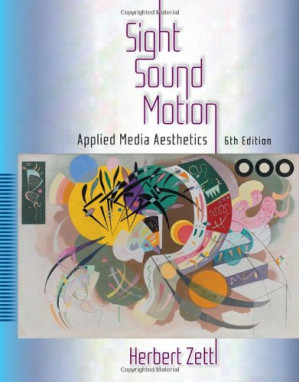
Sight, Sound, Motion: Applied Media Aesthetics (Wadsworth Series in Broadcast and Production) 🔍
Herbert Zettl
Wadsworth Publishing, 6, 2010
英语 [en] · PDF · 16.0MB · 2010 · 📘 非小说类图书 · 🚀/lgli/lgrs/nexusstc/upload/zlib · Save
描述
Media aesthetics have gained prominence with the dramatic advances in the digital technology of video and electronic cinema, making Herb Zettl's SIGHT SOUND MOTION: APPLIED MEDIA AESTHETICS more applicable than ever. The Sixth Edition of SIGHT SOUND MOTION continues to be the most comprehensive book on the market, not only describing the major aesthetic image elements—light and color, space, time-motion, and sound—but also presenting in-depth coverage on how they are creatively used in television and film. Zettl's thorough coverage of aesthetic theory and the application of that theory place this contemporary and highly relevant text in a class by itself. Richly illustrated, this edition features strong visuals that often draw on traditional art forms, such as painting, sculpture, and dance.
备用文件名
nexusstc/Sight, Sound, Motion: Applied Media Aesthetics (Wadsworth Series in Broadcast and Production)/35a59fb315e450dea9e0b0a1597b51e4.pdf
备用文件名
lgli/_445593.35a59fb315e450dea9e0b0a1597b51e4.pdf
备用文件名
lgrsnf/_445593.35a59fb315e450dea9e0b0a1597b51e4.pdf
备用文件名
zlib/Society, Politics & Philosophy/Anthropology/Herbert Zettl/Sight, Sound, Motion: Applied Media Aesthetics (Wadsworth Series in Broadcast and Production)_1174031.pdf
备选标题
Sight, Sound, Motion: Applied Media Aesthetics, 6th ed.
备选标题
9781111326357.pdf
备选作者
Zettl, Herbert
备用出版商
CENGAGE Learning Custom Publishing
备用出版商
Wadsworth Cengage Learning
备用出版商
Concept Media
备用出版商
Brooks/Cole
备用版本
Wadsworth series in broadcast and production, 6th ed., Boston, MA, Massachusetts, 2011
备用版本
United States, United States of America
备用版本
6. ed., 7. print, Boston, Mass, 2009
元数据中的注释
2011 12 30
元数据中的注释
lg735978
元数据中的注释
producers:
Acrobat Distiller 9.2.0 (Macintosh)
Acrobat Distiller 9.2.0 (Macintosh)
元数据中的注释
{"edition":"6","isbns":["0495802964","9780495802969"],"last_page":461,"publisher":"Wadsworth Publishing"}
元数据中的注释
Includes bibliographical references (p. 405-408) and index.
备用描述
Front Cover......Page 1
Title Page......Page 2
Copyright......Page 5
Contents......Page 10
About the Author......Page 26
Preface......Page 28
Prologue......Page 32
1 Applied Media Aesthetics......Page 34
Art and Experience......Page 35
APPLIED AESTHETICS AND CONTEXTUAL PERCEPTION......Page 36
Selective Seeing and Selective Perception......Page 37
Associative Context......Page 39
Aesthetic Context......Page 40
THE MEDIUM AS STRUCTURAL AGENT......Page 42
APPLIED MEDIA AESTHETICS: METHOD......Page 43
Analysis and Synthesis......Page 44
Content......Page 11
RESPONSIBILITY......Page 45
SUMMARY......Page 46
NOTES......Page 47
THE NATURE OF LIGHT......Page 50
LIGHTING PURPOSES AND FUNCTIONS......Page 51
THE NATURE OF SHADOWS......Page 52
Attached and Cast Shadows......Page 53
Falloff......Page 56
Tactile Orientation......Page 57
Time Orientation......Page 59
Establishing Mood and Atmosphere......Page 61
Above- and Below-eye-level Key-light Position......Page 62
Predictive Lighting......Page 63
Light and Lighting Instruments as Dramatic Agents......Page 64
SUMMARY......Page 65
NOTES......Page 66
STANDARD LIGHTING TECHNIQUES......Page 68
Analysis of Chiaroscuro Lighting......Page 69
Functions of Chiaroscuro Lighting......Page 71
Cameo Lighting......Page 73
Functions of Flat Lighting......Page 75
SILHOUETTE LIGHTING......Page 77
MEDIA-ENHANCED AND MEDIA-GENERATED LIGHTING......Page 78
Single-camera Lighting......Page 79
THE AESTHETIC EDGE: UNUSUAL LIGHTING......Page 80
SUMMARY......Page 81
NOTES......Page 82
WHAT IS COLOR?......Page 84
Basic Physiological Factors......Page 85
Basic Aesthetic Perception Factors......Page 94
Color Models......Page 95
HOW WE MIX COLOR......Page 96
Additive Color Mixing......Page 97
Subtractive Color Mixing......Page 98
Light Environment......Page 99
Color Temperature......Page 101
Surrounding Colors......Page 102
Brightness and Color Constancy......Page 103
COLOR ENERGY......Page 104
SUMMARY......Page 105
NOTES......Page 107
INFORMATIONAL FUNCTION OF COLOR......Page 110
Color Symbolism......Page 111
Color Energy......Page 112
Expressing the Essential Quality of an Event......Page 113
Adding Excitement and Drama......Page 114
Desaturation Theory......Page 115
Colorizing Film......Page 116
SUMMARY......Page 117
NOTES......Page 118
Horizontal Orientation......Page 120
Standard Aspect Ratios......Page 121
Framing in the 4 × 3 Aspect Ratio......Page 123
Framing in the 16 × 9 Aspect Ratio......Page 124
FLEXIBLE ASPECT RATIO......Page 126
Matching Aspect Ratios......Page 127
Aspect Ratios of Mobile Video Media......Page 129
Secondary Frames......Page 130
Screens Within the Screen......Page 131
OBJECT SIZE......Page 132
Relation to Screen Area......Page 133
Scale......Page 134
IMAGE SIZE......Page 136
Mobile Video Media as Companion......Page 137
SUMMARY......Page 138
NOTES......Page 140
MAIN DIRECTIONS: HORIZONTAL AND VERTICAL......Page 142
Tilting the Horizontal Plane......Page 143
MAGNETISM OF THE FRAME......Page 145
Headroom......Page 146
Pull of the Side Edges......Page 147
Attraction of Mass......Page 149
Up/Down Diagonals......Page 150
Screen-left and Screen-right Asymmetry......Page 151
Figure/Ground Characteristics......Page 153
PSYCHOLOGICAL CLOSURE......Page 155
Gestalt......Page 156
High- and Low-defi nition Images......Page 157
Facilitating Closure......Page 158
Vector Types......Page 160
Vector Magnitude......Page 162
Vector Directions......Page 163
SUMMARY......Page 164
NOTES......Page 165
8 Structuring the Two-dimensional Field: Interplay of Screen Forces......Page 168
STABILIZING THE FIELD THROUGH DISTRIBUTION OF GRAPHIC MASS AND MAGNETIC FORCE......Page 169
Off -center......Page 170
Counterweighting......Page 171
Noseroom and Leadroom......Page 172
Graphic Vectors......Page 174
Dynamic Balance......Page 175
Pushing Dynamics......Page 178
OBJECT FRAMING......Page 179
Facilitating Closure......Page 180
Premature Closure......Page 181
Illogical Closure......Page 182
THE AESTHETIC EDGE: UNUSUAL COMPOSITIONS......Page 183
MULTIPLE SCREENS......Page 184
Increased Information Density......Page 185
DIVIDING THE SCREEN: GRAPHIC BLOCKS......Page 186
DIVIDING THE SCREEN: SCREENS WITHIN THE SCREEN......Page 187
SUMMARY......Page 191
NOTES......Page 192
THE Z-AXIS......Page 194
GRAPHIC DEPTH FACTORS......Page 196
Overlapping Planes......Page 197
Relative Size......Page 198
Height in Plane......Page 199
Linear Perspective......Page 200
Aerial Perspective......Page 202
Overlapping Planes: Narrow-angle Lens......Page 203
Relative Size: Wide-angle Lens......Page 204
Linear Perspective: Wide-angle Lens......Page 205
Linear Perspective: Narrow-angle Lens......Page 206
Working with Aerial Perspective......Page 207
Stereoscopic 3D Versus Standard 3D: Technical Difference......Page 209
Stereoscopic 3D Versus Standard 3D: Aesthetic Difference......Page 211
SUMMARY......Page 212
NOTES......Page 213
10 Structuring the Three-dimensional Field: Screen Volume and Effects......Page 216
VOLUME DUALITY......Page 217
Dominant Positive Volume......Page 218
Dominant Negative Volume......Page 220
Applications of Volume Duality......Page 221
Z-AXIS ARTICULATION......Page 222
Narrow-angle Lens distortion......Page 223
Wide-angle Lens Distortion......Page 225
Z-AXIS BLOCKING......Page 227
Graphication......Page 231
First- and Second-order Space......Page 232
Personification......Page 233
Topological and Structural Changes......Page 234
Spatial Paradoxes......Page 235
SUMMARY......Page 238
NOTES......Page 239
11 Building Screen Space: Visualization......Page 242
Deductive Approach......Page 243
Inductive Approach......Page 245
WAYS OF LOOKING......Page 246
Creating an Event......Page 247
FIELD OF VIEW......Page 249
POV: Looking Up and Looking Down......Page 251
POV: Objective Viewpoint to Subjective Point of View......Page 253
POV: Subjective Camera......Page 255
Angles for Continuity......Page 258
Angles for Multiple Viewpoints......Page 259
Angles for Event Intensification......Page 261
SUMMARY......Page 263
NOTES......Page 266
THE SIGNIFICANCE OF TIME......Page 268
WHAT IS TIME?......Page 271
TYPES OF TIME......Page 272
Subjective Time......Page 273
Biological Time......Page 276
Past/Present/Future......Page 277
The Present as Subjective Time......Page 279
Event Density......Page 280
Event Intensity......Page 281
Experience Intensity......Page 282
Live Television and Event Time......Page 283
Live Television and Open Future......Page 284
Uninterrupted Video Recording of a Live Event......Page 285
Instant Replays......Page 286
TIME IN EDITED VIDEO AND FILM......Page 287
SUMMARY......Page 288
NOTES......Page 289
FILM MOTION AND ITS BASIC STRUCTURAL UNIT......Page 292
The Film Look......Page 294
LARGE-SCREEN DIGITAL CINEMA......Page 297
MOTION FRAMES OF REFERENCE......Page 298
Motion Paradox......Page 299
Induced Motion Through Figure/Ground Reversal......Page 300
Lens Choice and Blocking......Page 301
Slow Motion......Page 304
Accelerated Motion......Page 306
SUMMARY......Page 308
NOTES......Page 309
Clock Time......Page 312
Running Time......Page 313
Shot Time......Page 314
Story Time......Page 315
Rhythm......Page 316
Pace......Page 21
PLOT TIME AND CHARACTER TIME......Page 317
PRINCIPAL MOTIONS AND THEIR FUNCTIONS......Page 318
Primary Motion and Functions......Page 319
Secondary Motion and Functions......Page 320
Tertiary Motion and Functions......Page 323
SUMMARY......Page 330
NOTES......Page 332
SOUND AND NOISE......Page 334
Television Sound......Page 335
Film Sound......Page 338
Literal, or Diegetic, Sounds......Page 339
Nonliteral, or Nondiegetic, Sounds......Page 340
Literal and Nonliteral Sound Combinations......Page 341
INFORMATION FUNCTION OF SOUND......Page 342
Dialogue......Page 343
Direct Address......Page 344
Narration......Page 345
Space......Page 346
Situation......Page 348
Mood......Page 349
Energy......Page 350
STRUCTURAL FUNCTIONS OF SOUND......Page 351
Rhythm......Page 22
Figure/Ground......Page 352
Sound Perspective......Page 353
SUMMARY......Page 354
NOTES......Page 355
16 Structuring the Five-dimensional Field: Sound Structures and Sound/Picture Combinations......Page 358
Timbre......Page 359
Loudness (Dynamics)......Page 361
Attack/Decay......Page 362
Melody......Page 364
Harmony......Page 366
Polyphony......Page 367
STRUCTURED IMPROVISATIONS AND NOTATION OF INDETERMINATE MUSIC......Page 375
Homophonic Structures......Page 376
Polyphonic Structures......Page 377
PICTURE/SOUND MATCHING CRITERIA......Page 379
Historical/Geographical......Page 380
STRUCTURAL ANALYSIS......Page 381
SUMMARY......Page 386
NOTES......Page 390
Instantaneous Editing......Page 392
GRAPHIC VECTOR CONTINUITY PRINCIPLES......Page 393
Continuing, Converging, and Diverging Index Vectors......Page 394
Index Vector–Target Object Continuity......Page 397
Successive Z-axis Index Vectors......Page 399
Index Vector Line and Position Continuity......Page 400
Continuing, Converging, and Diverging Motion Vectors......Page 404
Z-axis Motion Vectors and Continuity......Page 407
Motion Vector Line......Page 408
ADDITIONAL CONTINUITY FACTORS......Page 411
Subject Continuity......Page 412
Appearance Continuity......Page 413
Audio Continuity......Page 414
SUMMARY......Page 415
NOTES......Page 416
18 Visual Narrative: The Syntax of Complexity Editing......Page 418
Sequential Analytical Montage......Page 419
Sectional Analytical Montage......Page 421
IDEA-ASSOCIATIVE MONTAGE......Page 423
Comparison Montage......Page 424
Collision Montage......Page 425
METRIC MONTAGE......Page 429
Sequential Analytical A/V montage......Page 430
MEDIA AESTHETICS AND THE HUMAN CONDITION......Page 432
SUMMARY......Page 433
NOTES......Page 434
Glossary......Page 436
Bibliography......Page 444
Photo Credits......Page 448
Index......Page 450
Title Page......Page 2
Copyright......Page 5
Contents......Page 10
About the Author......Page 26
Preface......Page 28
Prologue......Page 32
1 Applied Media Aesthetics......Page 34
Art and Experience......Page 35
APPLIED AESTHETICS AND CONTEXTUAL PERCEPTION......Page 36
Selective Seeing and Selective Perception......Page 37
Associative Context......Page 39
Aesthetic Context......Page 40
THE MEDIUM AS STRUCTURAL AGENT......Page 42
APPLIED MEDIA AESTHETICS: METHOD......Page 43
Analysis and Synthesis......Page 44
Content......Page 11
RESPONSIBILITY......Page 45
SUMMARY......Page 46
NOTES......Page 47
THE NATURE OF LIGHT......Page 50
LIGHTING PURPOSES AND FUNCTIONS......Page 51
THE NATURE OF SHADOWS......Page 52
Attached and Cast Shadows......Page 53
Falloff......Page 56
Tactile Orientation......Page 57
Time Orientation......Page 59
Establishing Mood and Atmosphere......Page 61
Above- and Below-eye-level Key-light Position......Page 62
Predictive Lighting......Page 63
Light and Lighting Instruments as Dramatic Agents......Page 64
SUMMARY......Page 65
NOTES......Page 66
STANDARD LIGHTING TECHNIQUES......Page 68
Analysis of Chiaroscuro Lighting......Page 69
Functions of Chiaroscuro Lighting......Page 71
Cameo Lighting......Page 73
Functions of Flat Lighting......Page 75
SILHOUETTE LIGHTING......Page 77
MEDIA-ENHANCED AND MEDIA-GENERATED LIGHTING......Page 78
Single-camera Lighting......Page 79
THE AESTHETIC EDGE: UNUSUAL LIGHTING......Page 80
SUMMARY......Page 81
NOTES......Page 82
WHAT IS COLOR?......Page 84
Basic Physiological Factors......Page 85
Basic Aesthetic Perception Factors......Page 94
Color Models......Page 95
HOW WE MIX COLOR......Page 96
Additive Color Mixing......Page 97
Subtractive Color Mixing......Page 98
Light Environment......Page 99
Color Temperature......Page 101
Surrounding Colors......Page 102
Brightness and Color Constancy......Page 103
COLOR ENERGY......Page 104
SUMMARY......Page 105
NOTES......Page 107
INFORMATIONAL FUNCTION OF COLOR......Page 110
Color Symbolism......Page 111
Color Energy......Page 112
Expressing the Essential Quality of an Event......Page 113
Adding Excitement and Drama......Page 114
Desaturation Theory......Page 115
Colorizing Film......Page 116
SUMMARY......Page 117
NOTES......Page 118
Horizontal Orientation......Page 120
Standard Aspect Ratios......Page 121
Framing in the 4 × 3 Aspect Ratio......Page 123
Framing in the 16 × 9 Aspect Ratio......Page 124
FLEXIBLE ASPECT RATIO......Page 126
Matching Aspect Ratios......Page 127
Aspect Ratios of Mobile Video Media......Page 129
Secondary Frames......Page 130
Screens Within the Screen......Page 131
OBJECT SIZE......Page 132
Relation to Screen Area......Page 133
Scale......Page 134
IMAGE SIZE......Page 136
Mobile Video Media as Companion......Page 137
SUMMARY......Page 138
NOTES......Page 140
MAIN DIRECTIONS: HORIZONTAL AND VERTICAL......Page 142
Tilting the Horizontal Plane......Page 143
MAGNETISM OF THE FRAME......Page 145
Headroom......Page 146
Pull of the Side Edges......Page 147
Attraction of Mass......Page 149
Up/Down Diagonals......Page 150
Screen-left and Screen-right Asymmetry......Page 151
Figure/Ground Characteristics......Page 153
PSYCHOLOGICAL CLOSURE......Page 155
Gestalt......Page 156
High- and Low-defi nition Images......Page 157
Facilitating Closure......Page 158
Vector Types......Page 160
Vector Magnitude......Page 162
Vector Directions......Page 163
SUMMARY......Page 164
NOTES......Page 165
8 Structuring the Two-dimensional Field: Interplay of Screen Forces......Page 168
STABILIZING THE FIELD THROUGH DISTRIBUTION OF GRAPHIC MASS AND MAGNETIC FORCE......Page 169
Off -center......Page 170
Counterweighting......Page 171
Noseroom and Leadroom......Page 172
Graphic Vectors......Page 174
Dynamic Balance......Page 175
Pushing Dynamics......Page 178
OBJECT FRAMING......Page 179
Facilitating Closure......Page 180
Premature Closure......Page 181
Illogical Closure......Page 182
THE AESTHETIC EDGE: UNUSUAL COMPOSITIONS......Page 183
MULTIPLE SCREENS......Page 184
Increased Information Density......Page 185
DIVIDING THE SCREEN: GRAPHIC BLOCKS......Page 186
DIVIDING THE SCREEN: SCREENS WITHIN THE SCREEN......Page 187
SUMMARY......Page 191
NOTES......Page 192
THE Z-AXIS......Page 194
GRAPHIC DEPTH FACTORS......Page 196
Overlapping Planes......Page 197
Relative Size......Page 198
Height in Plane......Page 199
Linear Perspective......Page 200
Aerial Perspective......Page 202
Overlapping Planes: Narrow-angle Lens......Page 203
Relative Size: Wide-angle Lens......Page 204
Linear Perspective: Wide-angle Lens......Page 205
Linear Perspective: Narrow-angle Lens......Page 206
Working with Aerial Perspective......Page 207
Stereoscopic 3D Versus Standard 3D: Technical Difference......Page 209
Stereoscopic 3D Versus Standard 3D: Aesthetic Difference......Page 211
SUMMARY......Page 212
NOTES......Page 213
10 Structuring the Three-dimensional Field: Screen Volume and Effects......Page 216
VOLUME DUALITY......Page 217
Dominant Positive Volume......Page 218
Dominant Negative Volume......Page 220
Applications of Volume Duality......Page 221
Z-AXIS ARTICULATION......Page 222
Narrow-angle Lens distortion......Page 223
Wide-angle Lens Distortion......Page 225
Z-AXIS BLOCKING......Page 227
Graphication......Page 231
First- and Second-order Space......Page 232
Personification......Page 233
Topological and Structural Changes......Page 234
Spatial Paradoxes......Page 235
SUMMARY......Page 238
NOTES......Page 239
11 Building Screen Space: Visualization......Page 242
Deductive Approach......Page 243
Inductive Approach......Page 245
WAYS OF LOOKING......Page 246
Creating an Event......Page 247
FIELD OF VIEW......Page 249
POV: Looking Up and Looking Down......Page 251
POV: Objective Viewpoint to Subjective Point of View......Page 253
POV: Subjective Camera......Page 255
Angles for Continuity......Page 258
Angles for Multiple Viewpoints......Page 259
Angles for Event Intensification......Page 261
SUMMARY......Page 263
NOTES......Page 266
THE SIGNIFICANCE OF TIME......Page 268
WHAT IS TIME?......Page 271
TYPES OF TIME......Page 272
Subjective Time......Page 273
Biological Time......Page 276
Past/Present/Future......Page 277
The Present as Subjective Time......Page 279
Event Density......Page 280
Event Intensity......Page 281
Experience Intensity......Page 282
Live Television and Event Time......Page 283
Live Television and Open Future......Page 284
Uninterrupted Video Recording of a Live Event......Page 285
Instant Replays......Page 286
TIME IN EDITED VIDEO AND FILM......Page 287
SUMMARY......Page 288
NOTES......Page 289
FILM MOTION AND ITS BASIC STRUCTURAL UNIT......Page 292
The Film Look......Page 294
LARGE-SCREEN DIGITAL CINEMA......Page 297
MOTION FRAMES OF REFERENCE......Page 298
Motion Paradox......Page 299
Induced Motion Through Figure/Ground Reversal......Page 300
Lens Choice and Blocking......Page 301
Slow Motion......Page 304
Accelerated Motion......Page 306
SUMMARY......Page 308
NOTES......Page 309
Clock Time......Page 312
Running Time......Page 313
Shot Time......Page 314
Story Time......Page 315
Rhythm......Page 316
Pace......Page 21
PLOT TIME AND CHARACTER TIME......Page 317
PRINCIPAL MOTIONS AND THEIR FUNCTIONS......Page 318
Primary Motion and Functions......Page 319
Secondary Motion and Functions......Page 320
Tertiary Motion and Functions......Page 323
SUMMARY......Page 330
NOTES......Page 332
SOUND AND NOISE......Page 334
Television Sound......Page 335
Film Sound......Page 338
Literal, or Diegetic, Sounds......Page 339
Nonliteral, or Nondiegetic, Sounds......Page 340
Literal and Nonliteral Sound Combinations......Page 341
INFORMATION FUNCTION OF SOUND......Page 342
Dialogue......Page 343
Direct Address......Page 344
Narration......Page 345
Space......Page 346
Situation......Page 348
Mood......Page 349
Energy......Page 350
STRUCTURAL FUNCTIONS OF SOUND......Page 351
Rhythm......Page 22
Figure/Ground......Page 352
Sound Perspective......Page 353
SUMMARY......Page 354
NOTES......Page 355
16 Structuring the Five-dimensional Field: Sound Structures and Sound/Picture Combinations......Page 358
Timbre......Page 359
Loudness (Dynamics)......Page 361
Attack/Decay......Page 362
Melody......Page 364
Harmony......Page 366
Polyphony......Page 367
STRUCTURED IMPROVISATIONS AND NOTATION OF INDETERMINATE MUSIC......Page 375
Homophonic Structures......Page 376
Polyphonic Structures......Page 377
PICTURE/SOUND MATCHING CRITERIA......Page 379
Historical/Geographical......Page 380
STRUCTURAL ANALYSIS......Page 381
SUMMARY......Page 386
NOTES......Page 390
Instantaneous Editing......Page 392
GRAPHIC VECTOR CONTINUITY PRINCIPLES......Page 393
Continuing, Converging, and Diverging Index Vectors......Page 394
Index Vector–Target Object Continuity......Page 397
Successive Z-axis Index Vectors......Page 399
Index Vector Line and Position Continuity......Page 400
Continuing, Converging, and Diverging Motion Vectors......Page 404
Z-axis Motion Vectors and Continuity......Page 407
Motion Vector Line......Page 408
ADDITIONAL CONTINUITY FACTORS......Page 411
Subject Continuity......Page 412
Appearance Continuity......Page 413
Audio Continuity......Page 414
SUMMARY......Page 415
NOTES......Page 416
18 Visual Narrative: The Syntax of Complexity Editing......Page 418
Sequential Analytical Montage......Page 419
Sectional Analytical Montage......Page 421
IDEA-ASSOCIATIVE MONTAGE......Page 423
Comparison Montage......Page 424
Collision Montage......Page 425
METRIC MONTAGE......Page 429
Sequential Analytical A/V montage......Page 430
MEDIA AESTHETICS AND THE HUMAN CONDITION......Page 432
SUMMARY......Page 433
NOTES......Page 434
Glossary......Page 436
Bibliography......Page 444
Photo Credits......Page 448
Index......Page 450
备用描述
Applied media aesthetics
The first aesthetic field : Light
Structuring the first aesthetic field : Lighting
The extended first field : Color
Structuring color : Function and composition
The two-dimensional field : Area
The two-dimensional field : Forces within the screen
Structuring the two-dimensional field : Interplay of screen forces
The three-dimensional field : Depth and volume
Structuring the three-dimensional field : Screen volume and effects
Building screen space : Visualization
The four-dimensional field : Time
The four-dimensional field : Motion
Structuring the four-dimensional field : Timing and principal motions
The five-dimensional field : Sound
Structuring the five-dimensional field : Sound structures and sound/picture combinations
Visual narrative : the syntax of continuity editing
Visual narrative : the syntax of complexity editing.
The first aesthetic field : Light
Structuring the first aesthetic field : Lighting
The extended first field : Color
Structuring color : Function and composition
The two-dimensional field : Area
The two-dimensional field : Forces within the screen
Structuring the two-dimensional field : Interplay of screen forces
The three-dimensional field : Depth and volume
Structuring the three-dimensional field : Screen volume and effects
Building screen space : Visualization
The four-dimensional field : Time
The four-dimensional field : Motion
Structuring the four-dimensional field : Timing and principal motions
The five-dimensional field : Sound
Structuring the five-dimensional field : Sound structures and sound/picture combinations
Visual narrative : the syntax of continuity editing
Visual narrative : the syntax of complexity editing.
开源日期
2012-02-04
🚀 快速下载
成为会员以支持书籍、论文等的长期保存。为了感谢您对我们的支持,您将获得高速下载权益。❤️
如果您在本月捐款,您将获得双倍的快速下载次数。
🐢 低速下载
由可信的合作方提供。 更多信息请参见常见问题解答。 (可能需要验证浏览器——无限次下载!)
- 低速服务器(合作方提供) #1 (稍快但需要排队)
- 低速服务器(合作方提供) #2 (稍快但需要排队)
- 低速服务器(合作方提供) #3 (稍快但需要排队)
- 低速服务器(合作方提供) #4 (稍快但需要排队)
- 低速服务器(合作方提供) #5 (无需排队,但可能非常慢)
- 低速服务器(合作方提供) #6 (无需排队,但可能非常慢)
- 低速服务器(合作方提供) #7 (无需排队,但可能非常慢)
- 低速服务器(合作方提供) #8 (无需排队,但可能非常慢)
- 低速服务器(合作方提供) #9 (无需排队,但可能非常慢)
- 下载后: 在我们的查看器中打开
所有选项下载的文件都相同,应该可以安全使用。即使这样,从互联网下载文件时始终要小心。例如,确保您的设备更新及时。
外部下载
-
对于大文件,我们建议使用下载管理器以防止中断。
推荐的下载管理器:JDownloader -
您将需要一个电子书或 PDF 阅读器来打开文件,具体取决于文件格式。
推荐的电子书阅读器:Anna的档案在线查看器、ReadEra和Calibre -
使用在线工具进行格式转换。
推荐的转换工具:CloudConvert和PrintFriendly -
您可以将 PDF 和 EPUB 文件发送到您的 Kindle 或 Kobo 电子阅读器。
推荐的工具:亚马逊的“发送到 Kindle”和djazz 的“发送到 Kobo/Kindle” -
支持作者和图书馆
✍️ 如果您喜欢这个并且能够负担得起,请考虑购买原版,或直接支持作者。
📚 如果您当地的图书馆有这本书,请考虑在那里免费借阅。
下面的文字仅以英文继续。
总下载量:
“文件的MD5”是根据文件内容计算出的哈希值,并且基于该内容具有相当的唯一性。我们这里索引的所有影子图书馆都主要使用MD5来标识文件。
一个文件可能会出现在多个影子图书馆中。有关我们编译的各种数据集的信息,请参见数据集页面。
有关此文件的详细信息,请查看其JSON 文件。 Live/debug JSON version. Live/debug page.