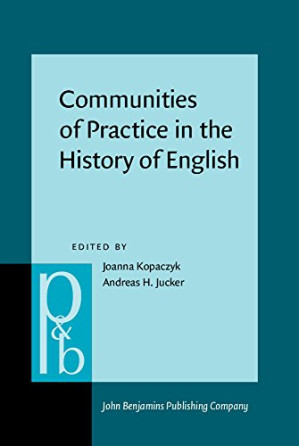
Communities of Practice in the History of English. 🔍
Joanna Kopaczyk (ed.), Andreas H. Jucker (ed.)
John Benjamins Publishing Company; Benjamins Publishing Company, John, Pragmatics & Beyond New Series, Pragmatics & Beyond New Series 235, 2013
英语 [en] · PDF · 4.2MB · 2013 · 📘 非小说类图书 · 🚀/lgli/lgrs/nexusstc/upload/zlib · Save
描述
Languages change and they keep changing as a result of communicative interactions and practices in the context of communities of language users. This book includes articles that showcases a range of such communities and their practices as loci of language change in the history of English.
备用文件名
nexusstc/Communities of Practice in the History of English/192b896e06afe48ceae1c6fa600ecf2b.pdf
备用文件名
lgli/Communities_of_Practice_in_the_History_of_Englis-978 90 272 5640 9.pdf
备用文件名
lgrsnf/Communities_of_Practice_in_the_History_of_Englis-978 90 272 5640 9.pdf
备用文件名
zlib/Languages/Grammar, dictionaries & phrasebooks/Joanna Kopaczyk (ed.), Andreas H. Jucker (ed.)/Communities of Practice in the History of English_2573355.pdf
备选作者
edited by Joanna Kopaczyk, Adam Mickiewicz University, Poznan; Andreas H. Jucker, University of Zurich
备选作者
Jucker, Andreas H.; Kopaczyk, Joanna
备选作者
Kopaczyk, Joanna,Jucker, Andreas H.
备用版本
Pragmatics & Beyond new series -- v. 235, Amsterdam, Philadelphia, Netherlands, 2013
备用版本
Pragmatics & beyond, volume 235, Amsterdam ; Philadelphia, 2013
备用版本
John Benjamins Publishing Co., Amsterdam, 2013
备用版本
Netherlands, Netherlands
元数据中的注释
0
元数据中的注释
lg1379219
元数据中的注释
producers:
Adobe PDF Library 10.0.1
Adobe PDF Library 10.0.1
元数据中的注释
{"container_title":"Pragmatics & Beyond New Series","isbns":["9027256403","9027271208","9789027256409","9789027271204"],"issns":["0922-842X"],"last_page":298,"publisher":"John Benjamins Publishing Company","series":"Pragmatics & Beyond New Series 235"}
元数据中的注释
Includes bibliographical references and indexes.
备用描述
P&BNS 235
Communities of Practice in the History of English 2
Editorial page
3
Title page
4
LCC data
5
Table of contents 6
Preface 8
Communities of practice as a locus of language change 10
1. Introduction 10
2. Community frameworks in (historical) linguistics 11
3. Communities of practice in historical linguistics 15
4. Chapter overview 17
4.1 Letter writers 19
4.2 Scribes and printers 20
4.3 Professionals 21
Notes 23
References 24
I. Letter writers 26
The role of communities of practice in the emergence of Scottish Standard English 28
1. Introduction 28
2. The prestige language in eighteenth century Scotland 29
3. The Select Society of Edinburgh 30
4. The lists of Scotticisms 32
5. Lord Fife and his factors 34
6. The Fife-Rose Corpus 36
7. Fife’s background 37
8. Scotticisms in the Fife-Rose Corpus 39
9. Topic-driven use of Scotticisms 40
10. Fife’s bilingualism 44
11. Fife’s pragmatic use of Scots 46
12. Fife’s language and the emergence of Scottish Standard English 48
Notes 51
References 51
Mixing genres and reinforcing community ties in nineteenth-century Scottish correspondence 56
1. Introduction and corpus description 56
1.1 Register and dialect in personal letters 58
2. Religious references in familiar letters 59
2.1 Crystallized expressions in opening and closing formulae 59
2.2 Religious references in the body of the letter 60
3. Religious references in business letters 65
4. Concluding remarks 66
Notes 67
References 67
Appendix 68
Communities of practice, idiolects, and community grammar 70
1. Introductory remarks 70
2. Corpus structure 71
3. Background information 74
4. Results and discussion 77
4.1 Distribution of was and were as dependent on subject type 77
4.2 Communities of practice, individual and community grammar(s) 80
5. Community grammar and conclusions 87
Acknowledgements 88
Notes 88
References 90
Community or communities of practice? 1820 petitioners in the Cape Colony 92
1. Introduction 92
1.1 Data 94
1.2 Outline 94
2. Mr. John Bold’s written requests 95
3. Petitioning as an everyday practice 97
3.1 Genre 98
3.2 Genre shifts and self-presentation 99
4. Community of practice 100
4.1 Periphery and core: experts and learners 100
4.2 Two communities? 106
5. Conclusions 107
Acknowledgements 109
Notes 109
References 109
II. Scribes and printers 112
Crafting text languages: Spelling systems in manuscripts of the "Man of Law’s Tale" 114
1. Setting the scene: The community of book artisans in medieval London 114
2. Community within a community: Middle English scribes 115
3. Communio scriptorum as a community of practice 116
4. Individuality in community: Scribal responses to exemplar copies 117
5. The community of the “Man of Law’s Tale” scribes 118
6. Negotiating the meaning of the littera: Potestatic representations in MLT MSS 119
6.1 Litterae representing potestas /ʃ/ 120
6.2 Litterae representing potestas /x/ 123
7. What’s in a symbol? Abbreviations in the MLT MSS 124
7.1 Superscript ‘i’ 125
7.2 Brevigraph 126
8. Conclusion: Crafting text languages as a means of establishing community of practice 127
Acknowledgements 128
Notes 128
References 129
Typographical and graphomorphemic features of five editions of the Kalender of Shepherdes 132
1. Introduction 132
2. Community of practice: Theoretical assumptions 133
3. Early modern printers as a community of practice 134
4. The Kalender of Shepherdes: Printers’ joint enterprise and shared repertoire 136
4.1 Collaborative relationships among the printers 136
4.2 Typographical features in the KS editions as part of printers’ shared repertoire of resources 138
4.3 Abbreviations as printers’ typographical tool for line justification 140
5. Conclusions 151
Acknowledgements 151
Notes 152
References 153
Appendix 155
Printing houses as communities of practice: Orthography in early modern medical books 160
1. Introduction 160
2. Background: Communities of practice 162
2.1 Early modern medical writers 162
2.2 Early modern printers 163
3. Orthographic standardization and printing 165
4. Data 167
4.1 Spelling and annotation in EMEMT 168
4.2 VARDing 169
5. Findings 171
5.1 Pre-standard spellings 171
5.2 Brevigraphs and macrons 174
6. Conclusions 178
Acknowledgements 179
Notes 180
References 182
Elizabeth Montagu’s Shakespeare essay (1769): The final draft and the first edition 186
1. Introduction 186
2. Two communities of practice 188
2.1 Elizabeth Montagu and the essay 188
2.2 The first edition and printing house practices 190
3. The draft of the essay 193
4. Linguistic variation between the draft and the edition 196
4.1 Spelling 198
4.2 Punctuation 200
4.3 Capitalization 200
5. Conclusion 202
Acknowledgements 203
Notes 203
References 204
III. Professionals 208
Of ledenum bocum to engliscum gereorde: Bilingual communities of practice in Anglo-Saxon England 210
1. Introduction 210
2. Dictionary evidence and previous research 214
3. Corpus evidence 215
3.1 Anglo-Latin 215
3.2 Old English 220
4. Conclusions and suggestions 226
Notes 227
References 229
Appendix 1 232
How a community of practice creates text community: Middle Scots legal and administrative discourse 234
1. Setting the context 234
2. Notaries and clerks as a community of practice 235
3. Tracing fixed patterns in Middle Scots legal and administrative texts 238
4. Medieval Scottish burghs as text communities 240
5. Accessing the text community through lexical bundles 241
5.1 The authorities and the community 242
5.2 Collective reference 245
5.3 Heirs and will executors 248
5.4 Named individuals 249
5.5 Other individuals 252
6. Conclusions 255
Notes 256
References 257
Early Modern English community of medical practitioners 260
1. Introduction 260
2. Communities of Practice as a framework for historical research 262
3. Communities of Practice and their written legacy 263
4. The theory of four humors by Galen 264
5. Corpus linguistic analysis of the language of physicians and surgeons 265
6. Conclusions 274
Acknowledgements 275
Notes 276
References 276
The formation of the Royal Society as a community of practice and discourse 278
1. Introduction 278
2. The Royal Society as a community of practice 279
2.1 Composition 280
2.2 Network 282
3. The Royal Society as a community of discourse 283
3.1 Linguistic conventions 284
3.2 Stylistic conventions 285
3.3 Generic conventions 290
4. Conclusions 291
Notes 292
References 293
Index of names 296
Index of subjects 298
Communities of Practice in the History of English 2
Editorial page
3
Title page
4
LCC data
5
Table of contents 6
Preface 8
Communities of practice as a locus of language change 10
1. Introduction 10
2. Community frameworks in (historical) linguistics 11
3. Communities of practice in historical linguistics 15
4. Chapter overview 17
4.1 Letter writers 19
4.2 Scribes and printers 20
4.3 Professionals 21
Notes 23
References 24
I. Letter writers 26
The role of communities of practice in the emergence of Scottish Standard English 28
1. Introduction 28
2. The prestige language in eighteenth century Scotland 29
3. The Select Society of Edinburgh 30
4. The lists of Scotticisms 32
5. Lord Fife and his factors 34
6. The Fife-Rose Corpus 36
7. Fife’s background 37
8. Scotticisms in the Fife-Rose Corpus 39
9. Topic-driven use of Scotticisms 40
10. Fife’s bilingualism 44
11. Fife’s pragmatic use of Scots 46
12. Fife’s language and the emergence of Scottish Standard English 48
Notes 51
References 51
Mixing genres and reinforcing community ties in nineteenth-century Scottish correspondence 56
1. Introduction and corpus description 56
1.1 Register and dialect in personal letters 58
2. Religious references in familiar letters 59
2.1 Crystallized expressions in opening and closing formulae 59
2.2 Religious references in the body of the letter 60
3. Religious references in business letters 65
4. Concluding remarks 66
Notes 67
References 67
Appendix 68
Communities of practice, idiolects, and community grammar 70
1. Introductory remarks 70
2. Corpus structure 71
3. Background information 74
4. Results and discussion 77
4.1 Distribution of was and were as dependent on subject type 77
4.2 Communities of practice, individual and community grammar(s) 80
5. Community grammar and conclusions 87
Acknowledgements 88
Notes 88
References 90
Community or communities of practice? 1820 petitioners in the Cape Colony 92
1. Introduction 92
1.1 Data 94
1.2 Outline 94
2. Mr. John Bold’s written requests 95
3. Petitioning as an everyday practice 97
3.1 Genre 98
3.2 Genre shifts and self-presentation 99
4. Community of practice 100
4.1 Periphery and core: experts and learners 100
4.2 Two communities? 106
5. Conclusions 107
Acknowledgements 109
Notes 109
References 109
II. Scribes and printers 112
Crafting text languages: Spelling systems in manuscripts of the "Man of Law’s Tale" 114
1. Setting the scene: The community of book artisans in medieval London 114
2. Community within a community: Middle English scribes 115
3. Communio scriptorum as a community of practice 116
4. Individuality in community: Scribal responses to exemplar copies 117
5. The community of the “Man of Law’s Tale” scribes 118
6. Negotiating the meaning of the littera: Potestatic representations in MLT MSS 119
6.1 Litterae representing potestas /ʃ/ 120
6.2 Litterae representing potestas /x/ 123
7. What’s in a symbol? Abbreviations in the MLT MSS 124
7.1 Superscript ‘i’ 125
7.2 Brevigraph 126
8. Conclusion: Crafting text languages as a means of establishing community of practice 127
Acknowledgements 128
Notes 128
References 129
Typographical and graphomorphemic features of five editions of the Kalender of Shepherdes 132
1. Introduction 132
2. Community of practice: Theoretical assumptions 133
3. Early modern printers as a community of practice 134
4. The Kalender of Shepherdes: Printers’ joint enterprise and shared repertoire 136
4.1 Collaborative relationships among the printers 136
4.2 Typographical features in the KS editions as part of printers’ shared repertoire of resources 138
4.3 Abbreviations as printers’ typographical tool for line justification 140
5. Conclusions 151
Acknowledgements 151
Notes 152
References 153
Appendix 155
Printing houses as communities of practice: Orthography in early modern medical books 160
1. Introduction 160
2. Background: Communities of practice 162
2.1 Early modern medical writers 162
2.2 Early modern printers 163
3. Orthographic standardization and printing 165
4. Data 167
4.1 Spelling and annotation in EMEMT 168
4.2 VARDing 169
5. Findings 171
5.1 Pre-standard spellings 171
5.2 Brevigraphs and macrons 174
6. Conclusions 178
Acknowledgements 179
Notes 180
References 182
Elizabeth Montagu’s Shakespeare essay (1769): The final draft and the first edition 186
1. Introduction 186
2. Two communities of practice 188
2.1 Elizabeth Montagu and the essay 188
2.2 The first edition and printing house practices 190
3. The draft of the essay 193
4. Linguistic variation between the draft and the edition 196
4.1 Spelling 198
4.2 Punctuation 200
4.3 Capitalization 200
5. Conclusion 202
Acknowledgements 203
Notes 203
References 204
III. Professionals 208
Of ledenum bocum to engliscum gereorde: Bilingual communities of practice in Anglo-Saxon England 210
1. Introduction 210
2. Dictionary evidence and previous research 214
3. Corpus evidence 215
3.1 Anglo-Latin 215
3.2 Old English 220
4. Conclusions and suggestions 226
Notes 227
References 229
Appendix 1 232
How a community of practice creates text community: Middle Scots legal and administrative discourse 234
1. Setting the context 234
2. Notaries and clerks as a community of practice 235
3. Tracing fixed patterns in Middle Scots legal and administrative texts 238
4. Medieval Scottish burghs as text communities 240
5. Accessing the text community through lexical bundles 241
5.1 The authorities and the community 242
5.2 Collective reference 245
5.3 Heirs and will executors 248
5.4 Named individuals 249
5.5 Other individuals 252
6. Conclusions 255
Notes 256
References 257
Early Modern English community of medical practitioners 260
1. Introduction 260
2. Communities of Practice as a framework for historical research 262
3. Communities of Practice and their written legacy 263
4. The theory of four humors by Galen 264
5. Corpus linguistic analysis of the language of physicians and surgeons 265
6. Conclusions 274
Acknowledgements 275
Notes 276
References 276
The formation of the Royal Society as a community of practice and discourse 278
1. Introduction 278
2. The Royal Society as a community of practice 279
2.1 Composition 280
2.2 Network 282
3. The Royal Society as a community of discourse 283
3.1 Linguistic conventions 284
3.2 Stylistic conventions 285
3.3 Generic conventions 290
4. Conclusions 291
Notes 292
References 293
Index of names 296
Index of subjects 298
备用描述
Languages change and they keep changing as a result of communicative interactions and practices in the context of communities of language users. The articles in this volume showcase a range of such communities and their practices as loci of language change in the history of English. The notion of communities of practice takes its starting point in the work of Jean Lave and Etienne Wenger and refers to groups of people defined both through their membership in a community and through their shared practices. Three types of communities are particularly highlighted: networks of letter writers; groups of scribes and printers; and other groups of professionals, in particular administrators and scientists. In these diverse contexts in England, Scotland, the United States and South Africa, language change is not seen as an abstract process but as a response to the communicative needs and practices of groups of people engaged in interaction.
开源日期
2015-07-20
🚀 快速下载
成为会员以支持书籍、论文等的长期保存。为了感谢您对我们的支持,您将获得高速下载权益。❤️
如果您在本月捐款,您将获得双倍的快速下载次数。
🐢 低速下载
由可信的合作方提供。 更多信息请参见常见问题解答。 (可能需要验证浏览器——无限次下载!)
- 低速服务器(合作方提供) #1 (稍快但需要排队)
- 低速服务器(合作方提供) #2 (稍快但需要排队)
- 低速服务器(合作方提供) #3 (稍快但需要排队)
- 低速服务器(合作方提供) #4 (稍快但需要排队)
- 低速服务器(合作方提供) #5 (无需排队,但可能非常慢)
- 低速服务器(合作方提供) #6 (无需排队,但可能非常慢)
- 低速服务器(合作方提供) #7 (无需排队,但可能非常慢)
- 低速服务器(合作方提供) #8 (无需排队,但可能非常慢)
- 低速服务器(合作方提供) #9 (无需排队,但可能非常慢)
- 下载后: 在我们的查看器中打开
所有选项下载的文件都相同,应该可以安全使用。即使这样,从互联网下载文件时始终要小心。例如,确保您的设备更新及时。
外部下载
-
对于大文件,我们建议使用下载管理器以防止中断。
推荐的下载管理器:JDownloader -
您将需要一个电子书或 PDF 阅读器来打开文件,具体取决于文件格式。
推荐的电子书阅读器:Anna的档案在线查看器、ReadEra和Calibre -
使用在线工具进行格式转换。
推荐的转换工具:CloudConvert和PrintFriendly -
您可以将 PDF 和 EPUB 文件发送到您的 Kindle 或 Kobo 电子阅读器。
推荐的工具:亚马逊的“发送到 Kindle”和djazz 的“发送到 Kobo/Kindle” -
支持作者和图书馆
✍️ 如果您喜欢这个并且能够负担得起,请考虑购买原版,或直接支持作者。
📚 如果您当地的图书馆有这本书,请考虑在那里免费借阅。
下面的文字仅以英文继续。
总下载量:
“文件的MD5”是根据文件内容计算出的哈希值,并且基于该内容具有相当的唯一性。我们这里索引的所有影子图书馆都主要使用MD5来标识文件。
一个文件可能会出现在多个影子图书馆中。有关我们编译的各种数据集的信息,请参见数据集页面。
有关此文件的详细信息,请查看其JSON 文件。 Live/debug JSON version. Live/debug page.