upload/bibliotik/0_Other/2/2012 Catlin Tucker - Blended Learning in Grades 4-12 - Leveraging the Power of Technology to Create Student-Centered Classrooms[1stED]_Rsvl.pdf
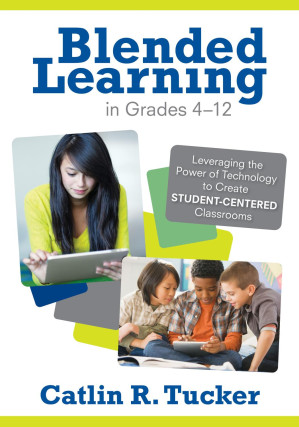
Blended Learning in Grades 4–12: Leveraging the Power of Technology to Create Student-Centered Classrooms (Corwin Teaching Essentials) 🔍
Tucker, Catlin R. (Rice)
Corwin, A SAGE Publications Company, Corwin Teaching Essentials, 1st, 2012
英语 [en] · PDF · 8.9MB · 2012 · 📘 非小说类图书 · 🚀/lgli/upload/zlib · Save
描述
Use technology to focus on your students!In this step-by-step guide, teacher and education blogger Catlin Tucker outlines the process for integrating online discussion with face-to-face instruction in a way that empowers teachers to focus their energies where they’re most needed. With concrete strategies, ready-to-use resources, and sample rubrics grounded in the Common Core State Standards, this book shows teachers how to: Increase engagement and drive higher-order thinking Prepare students for high-stakes exams without sacrificing class time Assess online work Personalize learning and differentiate lessons Move toward flipped instruction to create a student-centered classroom
备用文件名
lgli/Catlin R. Tucker - Blended Learning (2012, ).pdf
备用文件名
zlib/Education Studies & Teaching/School Education & Teaching/Catlin R. Tucker/Blended Learning in Grades 4–12: Leveraging the Power of Technology to Create Student-Centered Classrooms_19218942.pdf
备选作者
Catlin R. (Rice) Tucker
备用出版商
SAGE Publications, Incorporated
备用出版商
Corwin Press; Corwin
备用版本
Sage Publications Inc., Thousand Oaks, Calif, 2012
备用版本
United States, United States of America
备用版本
Thousand Oaks, Calif, California, 2012
备用版本
First Edition, PS, 2012
备用版本
1st edition, 2012
备用版本
First, 2012-06-13
元数据中的注释
lg2700162
元数据中的注释
producers:
Adobe PDF Library 9.9
Adobe PDF Library 9.9
元数据中的注释
Includes bibliographical references and index.
备用描述
FRONT COVER 1
BLENDED LEARNING IN GRADES 4–12 2
CONTENTS 6
WEB TOOLS CONTENTS 14
Web Tools 14
PREFACE 18
Why Did I Write This Book? 18
What Is the Purpose of This Book? 19
How Is This Book Organized? 20
Companion Website 21
ACKNOWLEDGMENTS 24
ABOUT THE AUTHOR 26
CHAPTER 1: THE 21ST CENTURY CLASSROOM 28
Crossing the Digital Divide 29
Developing 21st Century Skills Is Critical to Future Success 30
What Does the 21st Century Classroom Look Like? 32
Student-Centered Classroom 33
Chapter Summary 34
Book Study Questions 35
References 36
CHAPTER 2: BLENDED LEARNING 38
What Is Blended Learning? 38
Six Common Blended Learning Models Currently in Use 40
Emerging Blended Learning Model: Teacher-Designed Blend 41
10 Benefits of a Blended Learning Model 43
1. Save Time 43
2. Save Money 43
3. Spend Less Time Grading 43
4. Spend More Time in Class Doing What You Love 44
5. Increase One-on-One Interactions With Students 44
6. Give Students Opportunities to Practice Standardized Exams Online 44
7. Facilitate Group Work That Works 45
8. Communicate More Effectively With All Students 45
9. Build Community and Relationships 45
10. Have Fun 45
Discussions Are Critical to a Successful Blended Learning Model 45
Community-of-Inquiry Framework 49
Social Presence 49
Teaching Presence 49
Cognitive Presence 51
Chapter Summary 51
Book Study Questions 52
References 53
CHAPTER 3: THE ROLE OF THE TEACHER IN A BLENDED LEARNING MODEL 56
Choosing a Learning Platform or Learning Management System 57
Blackboard 58
Moodle 59
Edmodo 59
Schoology 59
Collaborize Classroom 59
Defining Your Role as Facilitator 60
Silent Facilitator vs. Involved Facilitator 62
Silent Facilitator 62
Involved Facilitator 63
Effectively Differentiate Instruction With Online Discussions 65
Weaving Online Work Back Into the Classroom 68
1. Online Discussions 68
2. Notes and Assignments Posted Online 68
3. Collaborative Group Work 69
4. Scientific Lab Groups 69
5. Debates 69
Chapter Summary 69
Book Study Questions 70
References 71
CHAPTER 4: THE ART OF ASKING QUESTIONS ONLINE 72
Encourage Conversations With Well-Chosen Questions 73
Question Types That Foster Conversation 73
Subjective Questions 73
Evaluative Questions 73
Problem-Solving Questions 74
Brainstorming Questions 74
Debate Questions 74
Consider These Sample Questions 74
English Question Grid 75
History/Social Studies Question Grid 77
Science Question Grid 79
Math Question Grid 80
Question Types That Kill Conversations 83
Factual Questions 83
Information-Retrieval Questions 83
Tips for Designing Strong Questions 83
Begin With an Eye-Catching Title 83
Embed Media 84
Layer Your Questions 84
Ask Controversial or Polarizing Questions 85
Encourage Students to Make Connections 85
Be Flexible 85
Focus on Topics of Interest to All Grade Levels 85
What Does a Good Online Question Look Like? 86
Chapter Summary 86
Book Study Questions 87
Reference 87
CHAPTER 5: DEVELOP A DYNAMIC LEARNING COMMUNITY ONLINE 88
Creating and Maintaining a Safe Space Online 88
The Dos and Don’ts of Student Communication Online 89
Creating a Class Code of Conduct 93
Visually Display Your Expectations for Participation on Your Site 96
Building an Online Community 97
Break the Ice Online 98
Five Student Icebreakers Adapted for an Online Community 98
Five Parent-Student Icebreakers Adapted for an Online Community 100
Start Simply to Cement Routines and Correct First Missteps 102
Teach Students to Say Something Substantial 105
Chapter Summary 109
Book Study Questions 109
References 111
INTRODUCTION TO CHAPTERS 6 THROUGH 9 112
Chapters 6 Through 9 Are Based on the Following Assumptions 113
Teaching the Common Core State Standards Using Blended Learning 114
Reference 115
CHAPTER 6: ENGLISH LANGUAGE ARTS 116
Common Core State Standards: Upper Elementary English 117
Grades 4–5 Reading Literature Standards Addressed 117
Grades 4–5 Writing Standards Addressed 118
Example Online Activity 6.1. What Does Minli Learn About Greed in the Book Where the Mountain Meets the Moon by Grace Lin? 119
Example Online Activity 6.2. Do You Prefer Reading “Casey at the Bat” or Listening to a Dramatic Reading of the Poem? 122
Common Core State Standards: Middle School English 125
Grades 6–8 Reading Literature Standards Addressed 125
Grades 6–8 Writing Standards Addressed 126
Example Online Activity 6.3. Roll of Thunder, Hear My Cry: Do You Think the Boycott of the Wallace’s Store Was the Best Way for the African American Community to Fight Racism? 127
Example Online Activity 6.4. The Adventures of Tom Sawyer: How Does Guilt Motivate Action in the Novel? 130
Common Core State Standards: High School English 132
Grades 9–12 Reading Literature Standards Addressed 133
Grades 9–12 Writing Standards Addressed 133
Example Online Activity 6.5. A Raisin in the Sun: What a Difference a Film Can Make! 134
Example Online Activity 6.6. Fahrenheit 451: Transition From Reading to Burning . . . 137
Chapter Summary 139
Book Study Questions 140
Reference 141
CHAPTER 7: HISTORY/SOCIAL STUDIES 142
Common Core State Standards: Upper Elementary History/Social Studies 143
Grades 4–5 Reading Information Standards Addressed 143
Grades 4–5 Writing Standards Addressed 144
Example Online Activity 7.1. Early United States History: Research Pre-Columbian Settlements 145
Example Online Activity 7.2. Boston Massacre: Should This Event Be Called a Massacre? 147
Common Core State Standards: Middle School History/Social Studies 149
Grades 6–8 Literacy in History/Social Studies Standards Addressed 149
Grades 6–8 Writing Standards Addressed 150
Example Online Activity 7.3. Read and Listen to Martin Luther King’s “I Have a Dream” Speech: Has King’s Dream Come True? 151
Example Online Activity 7.4. “Blood, Toil, Tears, and Sweat: Address to Parliament on May 13, 1940” by Winston Churchill 154
Common Core State Standards: High School History/Social Studies 156
Grades 9–12 History/Social Studies Literacy Standards Addressed 156
Grades 9–12 Writing Standards Addressed 157
Example Online Activity 7.5. George Washington’s “Farewell Address” (1796): Analyzing the Forces That Threaten the Nation’s Stability 158
Example Online Activity 7.6. Franklin D. Roosevelt’s “State of the Union Address”: Should the United States Have Entered World War II? 160
Chapter Summary 163
Book Study Questions 164
CHAPTER 8: SCIENCE 166
Common Core State Standards: Upper Elementary Science 166
Grades 4–5 Reading Information Standards Addressed 167
Grades 4–5 Writing Standards Addressed 167
Example Online Activity 8.1. After Reading Discovering Mars: The Amazing Story of the Red Planet, Do You Think the Government Should Spend Money to Explore Mars? 168
Example Online Activity 8.2. What Causes Hurricanes? 171
Common Core State Standards: Middle School Science 174
Grades 6–8 Literacy in Science Standards Addressed 175
Grades 6–8 Writing Standards Addressed 175
Example Online Activity 8.3. Energy Flow in an Ecosystem: Producers, Consumers, and Decomposers 176
Example Online Activity 8.4. Density and Buoyancy: Sink or Float? 178
Common Core State Standards: High School Science 180
Grades 9–12 Science Literacy Standards Addressed 181
Grades 9–12 Writing Standards Addressed 181
Example Online Activity 8.5. A. Cell Biology: Prokaryotic Cell or Eukaryotic Cell? 182
Example Online Activity 8.6. Debate: Do You Think Cloning Should Be Banned? 184
Chapter Summary 186
Book Study Questions 187
CHAPTER 9: MATH 190
Common Core State Standards: Upper Elementary Math 191
Grades 4–5 Math Standards Addressed 191
Grades 4–5 Writing Standards Addressed 192
Example Online Activity 9.1. How Would Graphing Points on a Coordinate Plane Help Solve Real-World Problems? 192
Example Online Activity 9.2. Design a Word Problem: Multiplying Fractions to Solve Real-World Problems 195
Common Core State Standards: Middle School Math 198
Grades 6–8 Math Standards Addressed 198
Grades 6–8 Writing Standards Addressed 198
Example Online Activity 9.3. Design a Survey, Take a Random Sampling, and Make a Generalization 199
Example Online Activity 9.4. Real-Life Ratios 201
Common Core State Standards: High School Math 203
Grades 9–12 Math Standards Addressed 203
Grades 9–12 Writing Standards Addressed 204
Example Online Activity 9.5. Which Is More Dangerous—Men’s Rugby or Women’s Cheerleading? 204
Example Online Activity 9.6. Algebra: How Much Is College Going to Cost You? 207
Chapter Summary 209
Book Study Questions 210
Reference 211
CHAPTER 10: FLIP YOUR INSTRUCTION WITH ONLINE DISCUSSIONS 212
What Is the Flipped Classroom? 212
“Homework” in the Flipped Classroom Model 214
Strategies for Flipping Instruction 216
What Happens in the Flipped Classroom? 218
How Can I Lesson Plan for the Flipped Classroom Model? 219
What If Students Don’t Do Their Homework? 219
Tips for Successfully Flipping Your Classroom 221
“Don’t Reinvent the Wheel” 221
Break Up Online Lecture 222
Check for Understanding With a Variety of Assessments in Class 222
Chapter Summary 225
Book Study Questions 226
Reference 227
CHAPTER 11: ASSESSING WORK ONLINE 228
Managing Online Participation 230
Rubrics 233
Online Discussion Rubric 233
Group Work Rubric 234
Upper Elementary Rubrics 235
Middle School Rubrics 238
High School Rubrics 242
Preparing Students for High-Stakes Exams 246
Standardized Exam Preparation 247
Released Test Questions Online 248
Chapter Summary 251
Book Study Questions 252
INDEX 254
BLENDED LEARNING IN GRADES 4–12 2
CONTENTS 6
WEB TOOLS CONTENTS 14
Web Tools 14
PREFACE 18
Why Did I Write This Book? 18
What Is the Purpose of This Book? 19
How Is This Book Organized? 20
Companion Website 21
ACKNOWLEDGMENTS 24
ABOUT THE AUTHOR 26
CHAPTER 1: THE 21ST CENTURY CLASSROOM 28
Crossing the Digital Divide 29
Developing 21st Century Skills Is Critical to Future Success 30
What Does the 21st Century Classroom Look Like? 32
Student-Centered Classroom 33
Chapter Summary 34
Book Study Questions 35
References 36
CHAPTER 2: BLENDED LEARNING 38
What Is Blended Learning? 38
Six Common Blended Learning Models Currently in Use 40
Emerging Blended Learning Model: Teacher-Designed Blend 41
10 Benefits of a Blended Learning Model 43
1. Save Time 43
2. Save Money 43
3. Spend Less Time Grading 43
4. Spend More Time in Class Doing What You Love 44
5. Increase One-on-One Interactions With Students 44
6. Give Students Opportunities to Practice Standardized Exams Online 44
7. Facilitate Group Work That Works 45
8. Communicate More Effectively With All Students 45
9. Build Community and Relationships 45
10. Have Fun 45
Discussions Are Critical to a Successful Blended Learning Model 45
Community-of-Inquiry Framework 49
Social Presence 49
Teaching Presence 49
Cognitive Presence 51
Chapter Summary 51
Book Study Questions 52
References 53
CHAPTER 3: THE ROLE OF THE TEACHER IN A BLENDED LEARNING MODEL 56
Choosing a Learning Platform or Learning Management System 57
Blackboard 58
Moodle 59
Edmodo 59
Schoology 59
Collaborize Classroom 59
Defining Your Role as Facilitator 60
Silent Facilitator vs. Involved Facilitator 62
Silent Facilitator 62
Involved Facilitator 63
Effectively Differentiate Instruction With Online Discussions 65
Weaving Online Work Back Into the Classroom 68
1. Online Discussions 68
2. Notes and Assignments Posted Online 68
3. Collaborative Group Work 69
4. Scientific Lab Groups 69
5. Debates 69
Chapter Summary 69
Book Study Questions 70
References 71
CHAPTER 4: THE ART OF ASKING QUESTIONS ONLINE 72
Encourage Conversations With Well-Chosen Questions 73
Question Types That Foster Conversation 73
Subjective Questions 73
Evaluative Questions 73
Problem-Solving Questions 74
Brainstorming Questions 74
Debate Questions 74
Consider These Sample Questions 74
English Question Grid 75
History/Social Studies Question Grid 77
Science Question Grid 79
Math Question Grid 80
Question Types That Kill Conversations 83
Factual Questions 83
Information-Retrieval Questions 83
Tips for Designing Strong Questions 83
Begin With an Eye-Catching Title 83
Embed Media 84
Layer Your Questions 84
Ask Controversial or Polarizing Questions 85
Encourage Students to Make Connections 85
Be Flexible 85
Focus on Topics of Interest to All Grade Levels 85
What Does a Good Online Question Look Like? 86
Chapter Summary 86
Book Study Questions 87
Reference 87
CHAPTER 5: DEVELOP A DYNAMIC LEARNING COMMUNITY ONLINE 88
Creating and Maintaining a Safe Space Online 88
The Dos and Don’ts of Student Communication Online 89
Creating a Class Code of Conduct 93
Visually Display Your Expectations for Participation on Your Site 96
Building an Online Community 97
Break the Ice Online 98
Five Student Icebreakers Adapted for an Online Community 98
Five Parent-Student Icebreakers Adapted for an Online Community 100
Start Simply to Cement Routines and Correct First Missteps 102
Teach Students to Say Something Substantial 105
Chapter Summary 109
Book Study Questions 109
References 111
INTRODUCTION TO CHAPTERS 6 THROUGH 9 112
Chapters 6 Through 9 Are Based on the Following Assumptions 113
Teaching the Common Core State Standards Using Blended Learning 114
Reference 115
CHAPTER 6: ENGLISH LANGUAGE ARTS 116
Common Core State Standards: Upper Elementary English 117
Grades 4–5 Reading Literature Standards Addressed 117
Grades 4–5 Writing Standards Addressed 118
Example Online Activity 6.1. What Does Minli Learn About Greed in the Book Where the Mountain Meets the Moon by Grace Lin? 119
Example Online Activity 6.2. Do You Prefer Reading “Casey at the Bat” or Listening to a Dramatic Reading of the Poem? 122
Common Core State Standards: Middle School English 125
Grades 6–8 Reading Literature Standards Addressed 125
Grades 6–8 Writing Standards Addressed 126
Example Online Activity 6.3. Roll of Thunder, Hear My Cry: Do You Think the Boycott of the Wallace’s Store Was the Best Way for the African American Community to Fight Racism? 127
Example Online Activity 6.4. The Adventures of Tom Sawyer: How Does Guilt Motivate Action in the Novel? 130
Common Core State Standards: High School English 132
Grades 9–12 Reading Literature Standards Addressed 133
Grades 9–12 Writing Standards Addressed 133
Example Online Activity 6.5. A Raisin in the Sun: What a Difference a Film Can Make! 134
Example Online Activity 6.6. Fahrenheit 451: Transition From Reading to Burning . . . 137
Chapter Summary 139
Book Study Questions 140
Reference 141
CHAPTER 7: HISTORY/SOCIAL STUDIES 142
Common Core State Standards: Upper Elementary History/Social Studies 143
Grades 4–5 Reading Information Standards Addressed 143
Grades 4–5 Writing Standards Addressed 144
Example Online Activity 7.1. Early United States History: Research Pre-Columbian Settlements 145
Example Online Activity 7.2. Boston Massacre: Should This Event Be Called a Massacre? 147
Common Core State Standards: Middle School History/Social Studies 149
Grades 6–8 Literacy in History/Social Studies Standards Addressed 149
Grades 6–8 Writing Standards Addressed 150
Example Online Activity 7.3. Read and Listen to Martin Luther King’s “I Have a Dream” Speech: Has King’s Dream Come True? 151
Example Online Activity 7.4. “Blood, Toil, Tears, and Sweat: Address to Parliament on May 13, 1940” by Winston Churchill 154
Common Core State Standards: High School History/Social Studies 156
Grades 9–12 History/Social Studies Literacy Standards Addressed 156
Grades 9–12 Writing Standards Addressed 157
Example Online Activity 7.5. George Washington’s “Farewell Address” (1796): Analyzing the Forces That Threaten the Nation’s Stability 158
Example Online Activity 7.6. Franklin D. Roosevelt’s “State of the Union Address”: Should the United States Have Entered World War II? 160
Chapter Summary 163
Book Study Questions 164
CHAPTER 8: SCIENCE 166
Common Core State Standards: Upper Elementary Science 166
Grades 4–5 Reading Information Standards Addressed 167
Grades 4–5 Writing Standards Addressed 167
Example Online Activity 8.1. After Reading Discovering Mars: The Amazing Story of the Red Planet, Do You Think the Government Should Spend Money to Explore Mars? 168
Example Online Activity 8.2. What Causes Hurricanes? 171
Common Core State Standards: Middle School Science 174
Grades 6–8 Literacy in Science Standards Addressed 175
Grades 6–8 Writing Standards Addressed 175
Example Online Activity 8.3. Energy Flow in an Ecosystem: Producers, Consumers, and Decomposers 176
Example Online Activity 8.4. Density and Buoyancy: Sink or Float? 178
Common Core State Standards: High School Science 180
Grades 9–12 Science Literacy Standards Addressed 181
Grades 9–12 Writing Standards Addressed 181
Example Online Activity 8.5. A. Cell Biology: Prokaryotic Cell or Eukaryotic Cell? 182
Example Online Activity 8.6. Debate: Do You Think Cloning Should Be Banned? 184
Chapter Summary 186
Book Study Questions 187
CHAPTER 9: MATH 190
Common Core State Standards: Upper Elementary Math 191
Grades 4–5 Math Standards Addressed 191
Grades 4–5 Writing Standards Addressed 192
Example Online Activity 9.1. How Would Graphing Points on a Coordinate Plane Help Solve Real-World Problems? 192
Example Online Activity 9.2. Design a Word Problem: Multiplying Fractions to Solve Real-World Problems 195
Common Core State Standards: Middle School Math 198
Grades 6–8 Math Standards Addressed 198
Grades 6–8 Writing Standards Addressed 198
Example Online Activity 9.3. Design a Survey, Take a Random Sampling, and Make a Generalization 199
Example Online Activity 9.4. Real-Life Ratios 201
Common Core State Standards: High School Math 203
Grades 9–12 Math Standards Addressed 203
Grades 9–12 Writing Standards Addressed 204
Example Online Activity 9.5. Which Is More Dangerous—Men’s Rugby or Women’s Cheerleading? 204
Example Online Activity 9.6. Algebra: How Much Is College Going to Cost You? 207
Chapter Summary 209
Book Study Questions 210
Reference 211
CHAPTER 10: FLIP YOUR INSTRUCTION WITH ONLINE DISCUSSIONS 212
What Is the Flipped Classroom? 212
“Homework” in the Flipped Classroom Model 214
Strategies for Flipping Instruction 216
What Happens in the Flipped Classroom? 218
How Can I Lesson Plan for the Flipped Classroom Model? 219
What If Students Don’t Do Their Homework? 219
Tips for Successfully Flipping Your Classroom 221
“Don’t Reinvent the Wheel” 221
Break Up Online Lecture 222
Check for Understanding With a Variety of Assessments in Class 222
Chapter Summary 225
Book Study Questions 226
Reference 227
CHAPTER 11: ASSESSING WORK ONLINE 228
Managing Online Participation 230
Rubrics 233
Online Discussion Rubric 233
Group Work Rubric 234
Upper Elementary Rubrics 235
Middle School Rubrics 238
High School Rubrics 242
Preparing Students for High-Stakes Exams 246
Standardized Exam Preparation 247
Released Test Questions Online 248
Chapter Summary 251
Book Study Questions 252
INDEX 254
备用描述
Use technology to focus on your students! You′ve heard about blended learning, which mixes online learning with traditional classroom instruction. You have the support of your principal, the backing of your district, and you are ready to take the leap. Now what? In this step-by-step guide, teacher and education blogger Catlin Tucker outlines the process for integrating online discussion with face-to-face instruction in a way that is aligned to the Common Core State Standards, works for your students, and allows you to focus your energy where it is most needed. Catlin Tucker will teach you how to: Use the online environment to increase engagement and drive higher-order thinking Design dynamic online discussion questions Create a safe space online Prepare students for high-stakes exams without sacrificing class time Assess online work Personalize learning and differentiate lessons Move toward flipped instruction, which shifts the focus of class time from teacher to student With concrete strategies, ready-to-use resources, and sample rubrics grounded in the Common Core State Standards, Blended Learning in Grades 4–12 is the ideal tool for the busy 21st-century teacher looking to create a student-centered classroom.
备用描述
You've heard about blended learning, which mixes online learning with traditional classroom instruction. You have the support of your principal, the backing of your district, and you are ready to take the leap. Now what? In this step-by-step guide, teacher and education blogger Catlin Tucker outlines the process for integrating online discussion with face-to-face instruction in a way that is aligned to the Common Core State Standards, works for your students, and allows you to focus your energy where it is most needed. Catin Tucker will teach you how to: (1) Use the online environment to increase engagement and drive higher-order thinking; (2) Prepare students for high-stakes exams without sacrificing class time; (3) Assess online work; (4) Personalize learning and differentiate lessons; and (5) Move toward flipped instruction, which shifts the focus of class time from teacher to student. With concrete strategies, ready-to-use resources, and sample rubrics grounded in the Common Core State Standards, "Blended Learning in Grades 4-12" is the ideal tool for the busy 21st-century teacher looking to create a student-centered classroom
备用描述
You've heard about blended learning, which mixes online learning with traditional classroom instruction. You have the support of your principal, the backing of your district, and you re ready to take the leap. Now what? In this step-by-step guide, teacher and education blogger Catlin R. Tucker outlines the process for integrating online discussion with face-to-face instruction in a way that is aligned to the Common Core State Standards, works for your students, and allows you to focus your energy where it is most needed. Catlin Tucker will teach you how to use the online environment to increase engagement and drive higher-order thinking; prepare students for high-stakes exams without sacrificing class time; assess online work; personalize learning and differentiate lessons; and move towards flipped instruction, which shifts the focus of classtime from teacher to student. With concrete strategies, ready-to-use resources, and sample rubrics grounded in the Common Core State Standards, Blended Learning in Grades 4-12 is the ideal tool for the busy 21st century teacher looking to create a student-centered classroom
备用描述
Use technology to focus on your students! In this step-by-step guide, teacher and education blogger Catlin Tucker outlines the process for integrating online discussion with face-to-face instruction in a way that empowers teachers to focus their energies where theyre most needed. With concrete strategies, ready-to-use resources, and sample rubrics grounded in the Common Core State Standards, this book shows teachers how
开源日期
2022-02-20
🚀 快速下载
成为会员以支持书籍、论文等的长期保存。为了感谢您对我们的支持,您将获得高速下载权益。❤️
如果您在本月捐款,您将获得双倍的快速下载次数。
🐢 低速下载
由可信的合作方提供。 更多信息请参见常见问题解答。 (可能需要验证浏览器——无限次下载!)
- 低速服务器(合作方提供) #1 (稍快但需要排队)
- 低速服务器(合作方提供) #2 (稍快但需要排队)
- 低速服务器(合作方提供) #3 (稍快但需要排队)
- 低速服务器(合作方提供) #4 (稍快但需要排队)
- 低速服务器(合作方提供) #5 (无需排队,但可能非常慢)
- 低速服务器(合作方提供) #6 (无需排队,但可能非常慢)
- 低速服务器(合作方提供) #7 (无需排队,但可能非常慢)
- 低速服务器(合作方提供) #8 (无需排队,但可能非常慢)
- 低速服务器(合作方提供) #9 (无需排队,但可能非常慢)
- 下载后: 在我们的查看器中打开
所有选项下载的文件都相同,应该可以安全使用。即使这样,从互联网下载文件时始终要小心。例如,确保您的设备更新及时。
外部下载
-
对于大文件,我们建议使用下载管理器以防止中断。
推荐的下载管理器:JDownloader -
您将需要一个电子书或 PDF 阅读器来打开文件,具体取决于文件格式。
推荐的电子书阅读器:Anna的档案在线查看器、ReadEra和Calibre -
使用在线工具进行格式转换。
推荐的转换工具:CloudConvert和PrintFriendly -
您可以将 PDF 和 EPUB 文件发送到您的 Kindle 或 Kobo 电子阅读器。
推荐的工具:亚马逊的“发送到 Kindle”和djazz 的“发送到 Kobo/Kindle” -
支持作者和图书馆
✍️ 如果您喜欢这个并且能够负担得起,请考虑购买原版,或直接支持作者。
📚 如果您当地的图书馆有这本书,请考虑在那里免费借阅。
下面的文字仅以英文继续。
总下载量:
“文件的MD5”是根据文件内容计算出的哈希值,并且基于该内容具有相当的唯一性。我们这里索引的所有影子图书馆都主要使用MD5来标识文件。
一个文件可能会出现在多个影子图书馆中。有关我们编译的各种数据集的信息,请参见数据集页面。
有关此文件的详细信息,请查看其JSON 文件。 Live/debug JSON version. Live/debug page.