upload/motw_a1d_2025_10/a1d/anybody/Richard Dawkins/The Selfish Gene_ 40th Anniversary Edition (Oxford Landmark Science) (884)/The Selfish Gene_ 40th Anniversary Edition - Richard Dawkins.pdf
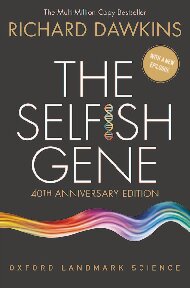
The Selfish Gene: 40th Anniversary Edition (Oxford Landmark Science) 🔍
Richard Dawkins, Lalla Ward Richard Dawkins
IRL Press at Oxford University Press, Oxford landmark science, 40th anniversary ed., 2nd impr, Oxford, 2016
英语 [en] · PDF · 1.9MB · 2016 · 📘 非小说类图书 · 🚀/lgli/lgrs/nexusstc/upload/zlib · Save
描述
The million copy international bestseller, critically acclaimed and translated into over 25 languages.
As influential today as when it was first published, The Selfish Gene has become a classic exposition of evolutionary thought. Professor Dawkins articulates a gene's eye view of evolution - a view giving centre stage to these persistent units of information, and in which organisms can be seen as vehicles for their replication. This imaginative, powerful, and stylistically brilliant work not only brought the insights of Neo-Darwinism to a wide audience, but galvanized the biology community, generating much debate and stimulating whole new areas of research. Forty years later, its insights remain as relevant today as on the day it was published.
This 40th anniversary edition includes a new epilogue from the author discussing the continuing relevance of these ideas in evolutionary biology today, as well as the original prefaces and foreword, and extracts from early reviews.
Oxford Landmark Science books are 'must-read' classics of modern science writing which have crystallized big ideas, and shaped the way we think.
**
Cover 1
THE SELFISH GENE 4
Copyright 5
Contents 6
INTRODUCTION TO 30TH ANNIVERSARY EDITION 8
PREFACE TO SECOND EDITION 20
FOREWORD TO FIRST EDITION 26
PREFACE TO FIRST EDITION 30
1. WHY ARE PEOPLE? 34
2. THE REPLICATORS 48
3. IMMORTAL COILS 59
4. THE GENE MACHINE 92
5. AGGRESSION 119
6. GENESMANSHIP 147
7. FAMILY PLANNING 174
8. BATTLE OF THE GENERATIONS 192
9. BATTLE OF THE SEXES 215
10. YOU SCRATCH MY BACK, I’LL RIDE ON YOURS 249
11. MEMES 278
12. NICE GUYS FINISH FIRST 294
13. THE LONG REACH OF THE GENE 335
EPILOGUE TO 40TH ANNIVERSARY EDITION 378
ENDNOTES 392
CHAPTER 1: Why are people? 392
p. 1 . . . all attempts to answer that question before 1859 are worthless . . . 392
p. 3 I am not advocating a morality based on evolution. 392
p. 7 . . . it is possible that the female improves the male’s sexual performanceby eating his head. 394
p. 14 . . . the fundamental unit of selection is not the species, nor the group, nor even, strictly, the individual. It is the gene . . . 394
CHAPTER 2: The replicators 395
p. 18 The simplified account I shall give [of the origin of life] is probably not too far from the truth. 395
p. 21 ‘Behold a virgin shall conceive . . . ’ 395
p. 25 Now they swarm in huge colonies, safe inside gigantic lumbering robots . . . 396
CHAPTER 3: Immortal coils 397
p. 30 . . . impossible to disentangle the contribution of one gene from that of another. 397
p. 36 The definition I want to use comes from G. C. Williams. 398
p. 43 . . . the individual is too large and too temporary a genetic unit . . . 399
p. 51 Another theory, due to Sir Peter Medawar . . . 400
p. 55 What is the good of sex? 401
p. 57 . . . the surplus DNA is . . . a parasite, or at best a harmless but useless passenger . . . (see also p. 237) 401
CHAPTER 4: The gene machine 402
p. 63 Brains may be regarded as analogous in function to computers. 402
p. 68 There is a civilization 200 light-years away, in the constellation of Andromeda. 404
p. 71 . . . strategies and tricks of the living trade . . . 404
p. 76 Perhaps consciousness arises when the brain’s simulation of the world becomes so complete that it must include a model of itself. 405
p. 78 A gene for altruistic behaviour . . . 408
p. 79 Hygienic bees 409
p. 81 This is the behaviour that can be broadly labelled communication. 409
CHAPTER 5: Aggression: stability and the selfish machine 410
p. 90 . . . evolutionarily stable strategy . . . 410
p. 97 . . . retaliator emerges as evolutionarily stable. 410
p. 98 Unfortunately, we know too little at present to assign realistic numbers to the costs and benefits of various outcomes in nature. 411
p. 104 The neatest demonstration I know of this form of behavioural asymmetry . . . 412
p. 106 Paradoxical ESS 413
p. 106 . . . a kind of dominance hierarchy [in crickets] . . . 415
p. 109 . . . the ESS concept as one of the most important advances inevolutionary theory since Darwin. 415
p. 113 Progressive evolution may be not so much a steady upward climb as a series of discrete steps from stable plateau to stable plateau. 416
CHAPTER 6: Genesmanship 416
p. 117 . . . I have never been able to understand why they have been so neglected . . . 416
p. 117 . . . I shall assume that we are talking about genes that are rare . . . 416
p. 121 . . . armadillos . . . it would be well worth somebody’s while going out to South America to have a look. 417
p. 122 Kin selection is emphatically not a special case of group selection. 419
p. 122 He deliberately excludes offspring: they don’t count as kin! 420
p. 124 But what a complicated calculation . . . 420
p. 128 . . . we have to think how animals might actually go about estimating who their close relations are . . . We know who our relations are because we are told . . . 422
p. 129 . . . the injurious effects of recessive genes which appear with inbreeding. (For some reason many anthropologists do not like thisexplanation.) 422
p. 134 Since [cuckoo hosts] are not in danger of being parasitized by members of their own species . . . 424
p. 136 Kin selection in lions 424
p. 137 If C is my identical twin . . . 425
p. 138 . . . social anthropologists might have interesting things to say. 426
CHAPTER 7: Family planning 427
p. 142 Wynne-Edwards . . . has been mainly responsible for promulgating the idea of group selection. 427
CHAPTER 8: Battle of the generations 428
p. 160 R. L. Trivers, in 1972, neatly solved the problem . . . 428
p. 175 According to him the parent will always win. 428
CHAPTER 9: Battle of the Sexes 430
p. 182 . . . how much more severe must be the conflict between mates, who are not related to each other? 430
p. 184 . . . the number of children a male can have is virtually unlimited. Female exploitation begins here. 430
p. 196 Let us take Maynard Smith’s method of analysing aggressive contests, and apply it to sex. 432
p. 198 . . . it can be shown that really there would be no oscillation. The system would converge to a stable state. 433
p. 202 . . . cases of paternal devotion . . . common among fish. Why? 434
p. 206 . . . a kind of unstable, runaway process. 434
p. 207 . . . [Zahavi’s] . . . maddeningly contrary ‘handicap principle’ 440
CHAPTER 10: You scratch my back, I’ll ride on yours 446
p. 225 . . . it seems to be only in the social insects that [the evolution of sterile workers] has actually happened. 446
p. 228 . . . a hymenopteran female is more closely related to her sisters than she is to her offspring. 449
p. 230 They found a rather convincingly close fit to the 3: 1 female to male ratio predicted . . . 454
p. 242 If a population arrives at an ESS that drives it extinct, then it goes extinct, and that is just too bad. 455
CHAPTER 11: Memes: the new replicators 456
p. 248 I would put my money on one fundamental principle . . . all life evolves by the differential survival of replicating entities. 456
p. 249 Meme 456
p. 249 . . . memes should be regarded as living structures, not just metaphorically but technically. 457
p. 252 ‘Auld Lang Syne’ 458
p. 252 If the meme is a scientific idea, its spread will depend on how acceptable it is to the population of individual scientists; a rough measure of its survival value could be obtained by counting the number of times it is referred to in successive years in scientific journals. 459
p. 255 The computers in which memes live are human brains. 464
p. 257 Blind faith can justify anything. 465
p. 260 We, alone on earth, can rebel against the tyranny of the selfish replicators. 466
BIBLIOGRAPHY 468
INDEX AND KEY TO BIBLIOGRAPHY 480
EXTRACTS FROM REVIEWS 490
Cover
1
THE SELFISH GENE 4
Copyright 5
Contents 6
INTRODUCTION TO 30TH ANNIVERSARY EDITION 8
PREFACE TO SECOND EDITION 20
FOREWORD TO FIRST EDITION 26
PREFACE TO FIRST EDITION 30
1. WHY ARE PEOPLE? 34
2. THE REPLICATORS 48
3. IMMORTAL COILS 59
4. THE GENE MACHINE 92
5. AGGRESSION 119
6. GENESMANSHIP 147
7. FAMILY PLANNING 174
8. BATTLE OF THE GENERATIONS 192
9. BATTLE OF THE SEXES 215
10. YOU SCRATCH MY BACK, I’LL RIDE ON YOURS 249
11. MEMES 278
12. NICE GUYS FINISH FIRST 294
13. THE LONG REACH OF THE GENE 335
EPILOGUE TO 40TH ANNIVERSARY EDITION 378
ENDNOTES 392
CHAPTER 1: Why are people? 392
p. 1 . . . all attempts to answer that question before 1859 are worthless . . . 392
p. 3 I am not advocating a morality based on evolution. 392
p. 7 . . . it is possible that the female improves the male’s sexual performanceby eating his head. 394
p. 14 . . . the fundamental unit of selection is not the species, nor the group, nor even, strictly, the individual. It is the gene . . . 394
CHAPTER 2: The replicators 395
p. 18 The simplified account I shall give [of the origin of life] is probably not too far from the truth. 395
p. 21 ‘Behold a virgin shall conceive . . . ’ 395
p. 25 Now they swarm in huge colonies, safe inside gigantic lumbering robots . . . 396
CHAPTER 3: Immortal coils 397
p. 30 . . . impossible to disentangle the contribution of one gene from that of another. 397
p. 36 The definition I want to use comes from G. C. Williams. 398
p. 43 . . . the individual is too large and too temporary a genetic unit . . . 399
p. 51 Another theory, due to Sir Peter Medawar . . . 400
p. 55 What is the good of sex? 401
p. 57 . . . the surplus DNA is . . . a parasite, or at best a harmless but useless passenger . . . (see also p. 237) 401
CHAPTER 4: The gene machine 402
p. 63 Brains may be regarded as analogous in function to computers. 402
p. 68 There is a civilization 200 light-years away, in the constellation of Andromeda. 404
p. 71 . . . strategies and tricks of the living trade . . . 404
p. 76 Perhaps consciousness arises when the brain’s simulation of the world becomes so complete that it must include a model of itself. 405
p. 78 A gene for altruistic behaviour . . . 408
p. 79 Hygienic bees 409
p. 81 This is the behaviour that can be broadly labelled communication. 409
CHAPTER 5: Aggression: stability and the selfish machine 410
p. 90 . . . evolutionarily stable strategy . . . 410
p. 97 . . . retaliator emerges as evolutionarily stable. 410
p. 98 Unfortunately, we know too little at present to assign realistic numbers to the costs and benefits of various outcomes in nature. 411
p. 104 The neatest demonstration I know of this form of behavioural asymmetry . . . 412
p. 106 Paradoxical ESS 413
p. 106 . . . a kind of dominance hierarchy [in crickets] . . . 415
p. 109 . . . the ESS concept as one of the most important advances inevolutionary theory since Darwin. 415
p. 113 Progressive evolution may be not so much a steady upward climb as a series of discrete steps from stable plateau to stable plateau. 416
CHAPTER 6: Genesmanship 416
p. 117 . . . I have never been able to understand why they have been so neglected . . . 416
p. 117 . . . I shall assume that we are talking about genes that are rare . . . 416
p. 121 . . . armadillos . . . it would be well worth somebody’s while going out to South America to have a look. 417
p. 122 Kin selection is emphatically not a special case of group selection. 419
p. 122 He deliberately excludes offspring: they don’t count as kin! 420
p. 124 But what a complicated calculation . . . 420
p. 128 . . . we have to think how animals might actually go about estimating who their close relations are . . . We know who our relations are because we are told . . . 422
p. 129 . . . the injurious effects of recessive genes which appear with inbreeding. (For some reason many anthropologists do not like thisexplanation.) 422
p. 134 Since [cuckoo hosts] are not in danger of being parasitized by members of their own species . . . 424
p. 136 Kin selection in lions 424
p. 137 If C is my identical twin . . . 425
p. 138 . . . social anthropologists might have interesting things to say. 426
CHAPTER 7: Family planning 427
p. 142 Wynne-Edwards . . . has been mainly responsible for promulgating the idea of group selection. 427
CHAPTER 8: Battle of the generations 428
p. 160 R. L. Trivers, in 1972, neatly solved the problem . . . 428
p. 175 According to him the parent will always win. 428
CHAPTER 9: Battle of the Sexes 430
p. 182 . . . how much more severe must be the conflict between mates, who are not related to each other? 430
p. 184 . . . the number of children a male can have is virtually unlimited. Female exploitation begins here. 430
p. 196 Let us take Maynard Smith’s method of analysing aggressive contests, and apply it to sex. 432
p. 198 . . . it can be shown that really there would be no oscillation. The system would converge to a stable state. 433
p. 202 . . . cases of paternal devotion . . . common among fish. Why? 434
p. 206 . . . a kind of unstable, runaway process. 434
p. 207 . . . [Zahavi’s] . . . maddeningly contrary ‘handicap principle’ 440
CHAPTER 10: You scratch my back, I’ll ride on yours 446
p. 225 . . . it seems to be only in the social insects that [the evolution of sterile workers] has actually happened. 446
p. 228 . . . a hymenopteran female is more closely related to her sisters than she is to her offspring. 449
p. 230 They found a rather convincingly close fit to the 3: 1 female to male ratio predicted . . . 454
p. 242 If a population arrives at an ESS that drives it extinct, then it goes extinct, and that is just too bad. 455
CHAPTER 11: Memes: the new replicators 456
p. 248 I would put my money on one fundamental principle . . . all life evolves by the differential survival of replicating entities. 456
p. 249 Meme 456
p. 249 . . . memes should be regarded as living structures, not just metaphorically but technically. 457
p. 252 ‘Auld Lang Syne’ 458
p. 252 If the meme is a scientific idea, its spread will depend on how acceptable it is to the population of individual scientists; a rough measure of its survival value could be obtained by counting the number of times it is referred to in successive years in scientific journals. 459
p. 255 The computers in which memes live are human brains. 464
p. 257 Blind faith can justify anything. 465
p. 260 We, alone on earth, can rebel against the tyranny of the selfish replicators. 466
BIBLIOGRAPHY 468
INDEX AND KEY TO BIBLIOGRAPHY 480
EXTRACTS FROM REVIEWS 490
As influential today as when it was first published, The Selfish Gene has become a classic exposition of evolutionary thought. Professor Dawkins articulates a gene's eye view of evolution - a view giving centre stage to these persistent units of information, and in which organisms can be seen as vehicles for their replication. This imaginative, powerful, and stylistically brilliant work not only brought the insights of Neo-Darwinism to a wide audience, but galvanized the biology community, generating much debate and stimulating whole new areas of research. Forty years later, its insights remain as relevant today as on the day it was published.
This 40th anniversary edition includes a new epilogue from the author discussing the continuing relevance of these ideas in evolutionary biology today, as well as the original prefaces and foreword, and extracts from early reviews.
Oxford Landmark Science books are 'must-read' classics of modern science writing which have crystallized big ideas, and shaped the way we think.
**
Cover 1
THE SELFISH GENE 4
Copyright 5
Contents 6
INTRODUCTION TO 30TH ANNIVERSARY EDITION 8
PREFACE TO SECOND EDITION 20
FOREWORD TO FIRST EDITION 26
PREFACE TO FIRST EDITION 30
1. WHY ARE PEOPLE? 34
2. THE REPLICATORS 48
3. IMMORTAL COILS 59
4. THE GENE MACHINE 92
5. AGGRESSION 119
6. GENESMANSHIP 147
7. FAMILY PLANNING 174
8. BATTLE OF THE GENERATIONS 192
9. BATTLE OF THE SEXES 215
10. YOU SCRATCH MY BACK, I’LL RIDE ON YOURS 249
11. MEMES 278
12. NICE GUYS FINISH FIRST 294
13. THE LONG REACH OF THE GENE 335
EPILOGUE TO 40TH ANNIVERSARY EDITION 378
ENDNOTES 392
CHAPTER 1: Why are people? 392
p. 1 . . . all attempts to answer that question before 1859 are worthless . . . 392
p. 3 I am not advocating a morality based on evolution. 392
p. 7 . . . it is possible that the female improves the male’s sexual performanceby eating his head. 394
p. 14 . . . the fundamental unit of selection is not the species, nor the group, nor even, strictly, the individual. It is the gene . . . 394
CHAPTER 2: The replicators 395
p. 18 The simplified account I shall give [of the origin of life] is probably not too far from the truth. 395
p. 21 ‘Behold a virgin shall conceive . . . ’ 395
p. 25 Now they swarm in huge colonies, safe inside gigantic lumbering robots . . . 396
CHAPTER 3: Immortal coils 397
p. 30 . . . impossible to disentangle the contribution of one gene from that of another. 397
p. 36 The definition I want to use comes from G. C. Williams. 398
p. 43 . . . the individual is too large and too temporary a genetic unit . . . 399
p. 51 Another theory, due to Sir Peter Medawar . . . 400
p. 55 What is the good of sex? 401
p. 57 . . . the surplus DNA is . . . a parasite, or at best a harmless but useless passenger . . . (see also p. 237) 401
CHAPTER 4: The gene machine 402
p. 63 Brains may be regarded as analogous in function to computers. 402
p. 68 There is a civilization 200 light-years away, in the constellation of Andromeda. 404
p. 71 . . . strategies and tricks of the living trade . . . 404
p. 76 Perhaps consciousness arises when the brain’s simulation of the world becomes so complete that it must include a model of itself. 405
p. 78 A gene for altruistic behaviour . . . 408
p. 79 Hygienic bees 409
p. 81 This is the behaviour that can be broadly labelled communication. 409
CHAPTER 5: Aggression: stability and the selfish machine 410
p. 90 . . . evolutionarily stable strategy . . . 410
p. 97 . . . retaliator emerges as evolutionarily stable. 410
p. 98 Unfortunately, we know too little at present to assign realistic numbers to the costs and benefits of various outcomes in nature. 411
p. 104 The neatest demonstration I know of this form of behavioural asymmetry . . . 412
p. 106 Paradoxical ESS 413
p. 106 . . . a kind of dominance hierarchy [in crickets] . . . 415
p. 109 . . . the ESS concept as one of the most important advances inevolutionary theory since Darwin. 415
p. 113 Progressive evolution may be not so much a steady upward climb as a series of discrete steps from stable plateau to stable plateau. 416
CHAPTER 6: Genesmanship 416
p. 117 . . . I have never been able to understand why they have been so neglected . . . 416
p. 117 . . . I shall assume that we are talking about genes that are rare . . . 416
p. 121 . . . armadillos . . . it would be well worth somebody’s while going out to South America to have a look. 417
p. 122 Kin selection is emphatically not a special case of group selection. 419
p. 122 He deliberately excludes offspring: they don’t count as kin! 420
p. 124 But what a complicated calculation . . . 420
p. 128 . . . we have to think how animals might actually go about estimating who their close relations are . . . We know who our relations are because we are told . . . 422
p. 129 . . . the injurious effects of recessive genes which appear with inbreeding. (For some reason many anthropologists do not like thisexplanation.) 422
p. 134 Since [cuckoo hosts] are not in danger of being parasitized by members of their own species . . . 424
p. 136 Kin selection in lions 424
p. 137 If C is my identical twin . . . 425
p. 138 . . . social anthropologists might have interesting things to say. 426
CHAPTER 7: Family planning 427
p. 142 Wynne-Edwards . . . has been mainly responsible for promulgating the idea of group selection. 427
CHAPTER 8: Battle of the generations 428
p. 160 R. L. Trivers, in 1972, neatly solved the problem . . . 428
p. 175 According to him the parent will always win. 428
CHAPTER 9: Battle of the Sexes 430
p. 182 . . . how much more severe must be the conflict between mates, who are not related to each other? 430
p. 184 . . . the number of children a male can have is virtually unlimited. Female exploitation begins here. 430
p. 196 Let us take Maynard Smith’s method of analysing aggressive contests, and apply it to sex. 432
p. 198 . . . it can be shown that really there would be no oscillation. The system would converge to a stable state. 433
p. 202 . . . cases of paternal devotion . . . common among fish. Why? 434
p. 206 . . . a kind of unstable, runaway process. 434
p. 207 . . . [Zahavi’s] . . . maddeningly contrary ‘handicap principle’ 440
CHAPTER 10: You scratch my back, I’ll ride on yours 446
p. 225 . . . it seems to be only in the social insects that [the evolution of sterile workers] has actually happened. 446
p. 228 . . . a hymenopteran female is more closely related to her sisters than she is to her offspring. 449
p. 230 They found a rather convincingly close fit to the 3: 1 female to male ratio predicted . . . 454
p. 242 If a population arrives at an ESS that drives it extinct, then it goes extinct, and that is just too bad. 455
CHAPTER 11: Memes: the new replicators 456
p. 248 I would put my money on one fundamental principle . . . all life evolves by the differential survival of replicating entities. 456
p. 249 Meme 456
p. 249 . . . memes should be regarded as living structures, not just metaphorically but technically. 457
p. 252 ‘Auld Lang Syne’ 458
p. 252 If the meme is a scientific idea, its spread will depend on how acceptable it is to the population of individual scientists; a rough measure of its survival value could be obtained by counting the number of times it is referred to in successive years in scientific journals. 459
p. 255 The computers in which memes live are human brains. 464
p. 257 Blind faith can justify anything. 465
p. 260 We, alone on earth, can rebel against the tyranny of the selfish replicators. 466
BIBLIOGRAPHY 468
INDEX AND KEY TO BIBLIOGRAPHY 480
EXTRACTS FROM REVIEWS 490
Cover
1
THE SELFISH GENE 4
Copyright 5
Contents 6
INTRODUCTION TO 30TH ANNIVERSARY EDITION 8
PREFACE TO SECOND EDITION 20
FOREWORD TO FIRST EDITION 26
PREFACE TO FIRST EDITION 30
1. WHY ARE PEOPLE? 34
2. THE REPLICATORS 48
3. IMMORTAL COILS 59
4. THE GENE MACHINE 92
5. AGGRESSION 119
6. GENESMANSHIP 147
7. FAMILY PLANNING 174
8. BATTLE OF THE GENERATIONS 192
9. BATTLE OF THE SEXES 215
10. YOU SCRATCH MY BACK, I’LL RIDE ON YOURS 249
11. MEMES 278
12. NICE GUYS FINISH FIRST 294
13. THE LONG REACH OF THE GENE 335
EPILOGUE TO 40TH ANNIVERSARY EDITION 378
ENDNOTES 392
CHAPTER 1: Why are people? 392
p. 1 . . . all attempts to answer that question before 1859 are worthless . . . 392
p. 3 I am not advocating a morality based on evolution. 392
p. 7 . . . it is possible that the female improves the male’s sexual performanceby eating his head. 394
p. 14 . . . the fundamental unit of selection is not the species, nor the group, nor even, strictly, the individual. It is the gene . . . 394
CHAPTER 2: The replicators 395
p. 18 The simplified account I shall give [of the origin of life] is probably not too far from the truth. 395
p. 21 ‘Behold a virgin shall conceive . . . ’ 395
p. 25 Now they swarm in huge colonies, safe inside gigantic lumbering robots . . . 396
CHAPTER 3: Immortal coils 397
p. 30 . . . impossible to disentangle the contribution of one gene from that of another. 397
p. 36 The definition I want to use comes from G. C. Williams. 398
p. 43 . . . the individual is too large and too temporary a genetic unit . . . 399
p. 51 Another theory, due to Sir Peter Medawar . . . 400
p. 55 What is the good of sex? 401
p. 57 . . . the surplus DNA is . . . a parasite, or at best a harmless but useless passenger . . . (see also p. 237) 401
CHAPTER 4: The gene machine 402
p. 63 Brains may be regarded as analogous in function to computers. 402
p. 68 There is a civilization 200 light-years away, in the constellation of Andromeda. 404
p. 71 . . . strategies and tricks of the living trade . . . 404
p. 76 Perhaps consciousness arises when the brain’s simulation of the world becomes so complete that it must include a model of itself. 405
p. 78 A gene for altruistic behaviour . . . 408
p. 79 Hygienic bees 409
p. 81 This is the behaviour that can be broadly labelled communication. 409
CHAPTER 5: Aggression: stability and the selfish machine 410
p. 90 . . . evolutionarily stable strategy . . . 410
p. 97 . . . retaliator emerges as evolutionarily stable. 410
p. 98 Unfortunately, we know too little at present to assign realistic numbers to the costs and benefits of various outcomes in nature. 411
p. 104 The neatest demonstration I know of this form of behavioural asymmetry . . . 412
p. 106 Paradoxical ESS 413
p. 106 . . . a kind of dominance hierarchy [in crickets] . . . 415
p. 109 . . . the ESS concept as one of the most important advances inevolutionary theory since Darwin. 415
p. 113 Progressive evolution may be not so much a steady upward climb as a series of discrete steps from stable plateau to stable plateau. 416
CHAPTER 6: Genesmanship 416
p. 117 . . . I have never been able to understand why they have been so neglected . . . 416
p. 117 . . . I shall assume that we are talking about genes that are rare . . . 416
p. 121 . . . armadillos . . . it would be well worth somebody’s while going out to South America to have a look. 417
p. 122 Kin selection is emphatically not a special case of group selection. 419
p. 122 He deliberately excludes offspring: they don’t count as kin! 420
p. 124 But what a complicated calculation . . . 420
p. 128 . . . we have to think how animals might actually go about estimating who their close relations are . . . We know who our relations are because we are told . . . 422
p. 129 . . . the injurious effects of recessive genes which appear with inbreeding. (For some reason many anthropologists do not like thisexplanation.) 422
p. 134 Since [cuckoo hosts] are not in danger of being parasitized by members of their own species . . . 424
p. 136 Kin selection in lions 424
p. 137 If C is my identical twin . . . 425
p. 138 . . . social anthropologists might have interesting things to say. 426
CHAPTER 7: Family planning 427
p. 142 Wynne-Edwards . . . has been mainly responsible for promulgating the idea of group selection. 427
CHAPTER 8: Battle of the generations 428
p. 160 R. L. Trivers, in 1972, neatly solved the problem . . . 428
p. 175 According to him the parent will always win. 428
CHAPTER 9: Battle of the Sexes 430
p. 182 . . . how much more severe must be the conflict between mates, who are not related to each other? 430
p. 184 . . . the number of children a male can have is virtually unlimited. Female exploitation begins here. 430
p. 196 Let us take Maynard Smith’s method of analysing aggressive contests, and apply it to sex. 432
p. 198 . . . it can be shown that really there would be no oscillation. The system would converge to a stable state. 433
p. 202 . . . cases of paternal devotion . . . common among fish. Why? 434
p. 206 . . . a kind of unstable, runaway process. 434
p. 207 . . . [Zahavi’s] . . . maddeningly contrary ‘handicap principle’ 440
CHAPTER 10: You scratch my back, I’ll ride on yours 446
p. 225 . . . it seems to be only in the social insects that [the evolution of sterile workers] has actually happened. 446
p. 228 . . . a hymenopteran female is more closely related to her sisters than she is to her offspring. 449
p. 230 They found a rather convincingly close fit to the 3: 1 female to male ratio predicted . . . 454
p. 242 If a population arrives at an ESS that drives it extinct, then it goes extinct, and that is just too bad. 455
CHAPTER 11: Memes: the new replicators 456
p. 248 I would put my money on one fundamental principle . . . all life evolves by the differential survival of replicating entities. 456
p. 249 Meme 456
p. 249 . . . memes should be regarded as living structures, not just metaphorically but technically. 457
p. 252 ‘Auld Lang Syne’ 458
p. 252 If the meme is a scientific idea, its spread will depend on how acceptable it is to the population of individual scientists; a rough measure of its survival value could be obtained by counting the number of times it is referred to in successive years in scientific journals. 459
p. 255 The computers in which memes live are human brains. 464
p. 257 Blind faith can justify anything. 465
p. 260 We, alone on earth, can rebel against the tyranny of the selfish replicators. 466
BIBLIOGRAPHY 468
INDEX AND KEY TO BIBLIOGRAPHY 480
EXTRACTS FROM REVIEWS 490
备用文件名
upload/duxiu_main2/读秀7.0/书库/The Selfish Gene 40th Anniversary Edition.PDF
备用文件名
upload/motw_shc_2025_10/shc/The Selfish Gene_ 40th Annivers - Charles Simonyi Chair Of Public.pdf
备用文件名
upload/motw_shc_2025_10/shc/The Selfish Gene_ 40th Anniversary Edition - Richard Dawkins.pdf
备用文件名
motw/The Selfish Gene_ 40th Annivers - Charles Simonyi Chair Of Public.pdf
备用文件名
motw/The Selfish Gene_ 40th Anniversary Edition - Richard Dawkins.epub
备用文件名
motw/The Selfish Gene_ 40th Anniversary Edition - Richard Dawkins.pdf
备用文件名
nexusstc/The Selfish Gene: 40th Anniversary Edition/0a231ce7ab392f9eea20b1b9cfa86d7c.pdf
备用文件名
lgrsnf/The Selfish Gene_ 40th Anniversary Edition - Richard Dawkins.pdf
备用文件名
zlib/Biology and other natural sciences/Richard Dawkins/The Selfish Gene: 40th Anniversary Edition_5681638.pdf
备选标题
Richard Dawkins 3 Books Collection Set (The Blind Watchmaker, The Selfish Gene, The God Delusion)
备用出版商
Penguin Books/OUP Oxford/Black Swan
备用出版商
Oxford Institute for Energy Studies
备用出版商
German Historical Institute London
备用版本
Oxford landmark science, 40th anniversary edition, Oxford, 2016
备用版本
United Kingdom and Ireland, United Kingdom
备用版本
Oxford University Press USA, Oxford, 2016
备用版本
December 31, 1995
备用版本
2020
元数据中的注释
lg2717336
元数据中的注释
producers:
Adobe PDF Library 10.0.1
Adobe PDF Library 10.0.1
元数据中的注释
{"content":{"parsed_at":1713630910,"parser":{"name":"textparser","version":"0.1.125"},"source":{"name":"grobid","version":"0.8.0"}},"edition":"4","isbns":["0198788606","9780198788607"],"last_page":544,"publisher":"Oxford University Press","series":"Oxford Landmark Science"}
元数据中的注释
Memory of the World Librarian: any body
元数据中的注释
Memory of the World Librarian: Slowrotation
元数据中的注释
Source title: The Selfish Gene: 40th Anniversary Edition (Oxford Landmark Science)
备用描述
Er kroppene våre bare overlevelsesmaskiner for genene? Knapt noen bok innen biologi har siden Darwins Om artenes opprinnelse vakt slik oppsikt og debatt som Dawkins' Det egoistiske genet. Boken maktet å gjøre genteori og evolusjonsbiologi til folkelesning. Her kan man lese om livet på jorda sett fra genenes synsvinkel. Genenes eneste mål er å bringe flest mulig kopier av seg videre til nye generasjoner, og til dette trengs et verktøy - organismen. Enhver organisme, mennesket inkludert, kan derfor betraktes som en genstyrt robot, en marionett under DNA-trådene. Med hvor blir det da av menneskets frie vilje? Fritar et slikt verdensbilde oss fra moralsk ansvar? Nei, hevder Dawkins. Mennesket er ikke totaldeterminert, men kan som eneste art gjøre opprør mot genenes diktatur. Omtalen er utarbeidet av BS
备用描述
**The million copy international bestseller, critically acclaimed and translated into over 25 languages.**__The Selfish Gene__
开源日期
2020-08-06
🚀 快速下载
成为会员以支持书籍、论文等的长期保存。为了感谢您对我们的支持,您将获得高速下载权益。❤️
如果您在本月捐款,您将获得双倍的快速下载次数。
🐢 低速下载
由可信的合作方提供。 更多信息请参见常见问题解答。 (可能需要验证浏览器——无限次下载!)
- 低速服务器(合作方提供) #1 (稍快但需要排队)
- 低速服务器(合作方提供) #2 (稍快但需要排队)
- 低速服务器(合作方提供) #3 (稍快但需要排队)
- 低速服务器(合作方提供) #4 (稍快但需要排队)
- 低速服务器(合作方提供) #5 (无需排队,但可能非常慢)
- 低速服务器(合作方提供) #6 (无需排队,但可能非常慢)
- 低速服务器(合作方提供) #7 (无需排队,但可能非常慢)
- 低速服务器(合作方提供) #8 (无需排队,但可能非常慢)
- 低速服务器(合作方提供) #9 (无需排队,但可能非常慢)
- 下载后: 在我们的查看器中打开
所有选项下载的文件都相同,应该可以安全使用。即使这样,从互联网下载文件时始终要小心。例如,确保您的设备更新及时。
外部下载
-
对于大文件,我们建议使用下载管理器以防止中断。
推荐的下载管理器:JDownloader -
您将需要一个电子书或 PDF 阅读器来打开文件,具体取决于文件格式。
推荐的电子书阅读器:Anna的档案在线查看器、ReadEra和Calibre -
使用在线工具进行格式转换。
推荐的转换工具:CloudConvert和PrintFriendly -
您可以将 PDF 和 EPUB 文件发送到您的 Kindle 或 Kobo 电子阅读器。
推荐的工具:亚马逊的“发送到 Kindle”和djazz 的“发送到 Kobo/Kindle” -
支持作者和图书馆
✍️ 如果您喜欢这个并且能够负担得起,请考虑购买原版,或直接支持作者。
📚 如果您当地的图书馆有这本书,请考虑在那里免费借阅。
下面的文字仅以英文继续。
总下载量:
“文件的MD5”是根据文件内容计算出的哈希值,并且基于该内容具有相当的唯一性。我们这里索引的所有影子图书馆都主要使用MD5来标识文件。
一个文件可能会出现在多个影子图书馆中。有关我们编译的各种数据集的信息,请参见数据集页面。
有关此文件的详细信息,请查看其JSON 文件。 Live/debug JSON version. Live/debug page.